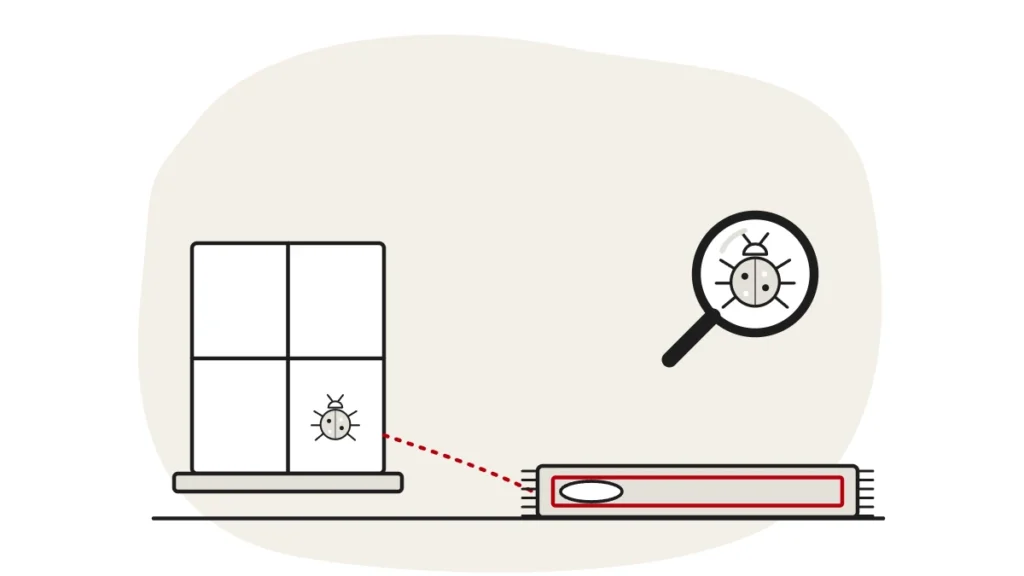
The clearest signs of carpet beetles are small, hairy larvae (“woolly bears”) in carpet edges and under furniture, their shed skins, clean-edged holes in wool, silk or feather items with no webbing, and small round beetles at windows in spring. They’re caused by larvae finding animal fibres to eat, often starting from a bird’s nest, dead insects or built-up fluff.
Reviewed by James Rhoades, Owner, ThermoPest · Last reviewed 16 October 2026
Carpet beetles are easy to miss and easy to confuse with moths. The adults are harmless and you’ll usually see them before you see the damage, while the larvae stay hidden where fluff and hair collect. This guide covers what each stage looks like, the signs to check for, what causes them in the first place, the “carpet beetle rash” people ask about, and what to do next.
What do carpet beetles look like?
In the UK you’re most likely to meet one of three species, and they look quite different from each other. The Natural History Museum describes them as follows:
- Varied carpet beetle (Anthrenus verbasci): small and round, 1.5 to 3.5mm, with a mottled pattern of white, orange and black patches on the wing cases. The BPCA compares it to a tiny mottled ladybird. The Natural History Museum says it’s more common in the London area and the southern counties.
- Two-spot or fur beetle (Attagenus pellio): longer and oval, 4.5 to 6mm, very dark brown to black with two white spots on its back.
- Brown carpet beetle (Attagenus smirnovi): oval, 2 to 5mm, brown to reddish-yellow wing cases with a darker head. It arrived in Britain in the 1970s, was first found around London, and relies on central heating to survive here.
Adults don’t eat fabric. They feed on pollen and nectar, so indoors they head for the light and end up on windowsills. Finding a few at a window in spring is often the first clue that larvae are feeding somewhere in the house.
What do carpet beetle larvae look like?
The larvae do all the damage. Varied carpet beetle larvae are the classic “woolly bears”: short, fat and covered in brown hairs, about 4 to 4.5mm long according to the Natural History Museum, with tufts of bristles at the tail end. They roll up when disturbed. Fur beetle and brown carpet beetle larvae are longer and torpedo-shaped, banded golden to bronze-brown, up to 6.5mm and 8mm respectively, with two tail tufts, and can be mistaken for a dark silverfish.
Larvae avoid light, so you’ll find them by lifting things: the edge of a rug, the carpet pile against the skirting board, the fluff between floorboards, the bottom of a wardrobe or airing cupboard.
What about carpet beetle eggs?
You’re unlikely to spot the eggs. Females lay them in cracks and crevices close to food, such as a bird’s nest, felt or the fluff under a carpet (English Heritage, BPCA). Newly hatched larvae are under 0.5mm long (Natural History Museum), so in practice the first stages you’ll notice are shed skins and damage, not eggs.
What are the signs of carpet beetles?
- Shed larval skins. Larvae moult as they grow and leave behind hollow, hairy husks that look like the larva itself. The BPCA and English Heritage both say these cast skins may be the first sign of an infestation. Look along skirting boards, under furniture and in the corners of cupboards.
- Damage to natural fibres. Wool carpets and rugs, wool and silk clothing, feather cushions and duvets, fur and leather. The Natural History Museum describes small, clean holes with no silk webbing, which is the main difference from clothes moths. On carpets this shows as bare or threadbare patches, usually at the edges, under furniture and in other spots the vacuum doesn’t reach. The BPCA notes that holes in clothing often follow the seams.
- Larvae in the skirting and under furniture. Carpet pile against the skirting board, behind the skirting itself, between floorboards and under beds, sofas and heavy furniture are the usual hiding places.
- Adults at windows. The BPCA says adults are seen in April, May and June looking for places to lay eggs. Small round or oval beetles on the windowsill, or crawling up the glass, are a strong hint.
- Fine powdery droppings (frass) under or near damaged items.
If you’re not sure whether you’re looking at beetle or moth damage, our guide on carpet beetles vs moths goes through the differences in detail.
| Sign | Carpet beetles | Clothes or carpet moths |
|---|---|---|
| Holes in fabric | Small, clean-edged, no webbing | Holes with silk webbing or tubes nearby |
| What you find | Hairy larvae and hairy shed skins | Pale caterpillars, silk cases, webbing |
| Adults | Small round or oval beetles at windows | Small buff moths that run or flutter in dark corners |
| Where damage starts | Carpet edges, under furniture, airing cupboards | Under furniture, wardrobes, folded knitwear |
What causes carpet beetles?
Carpet beetles aren’t caused by a dirty home, and they don’t need you the way bed bugs do. They need a supply of dry animal material, which is keratin: wool, fur, feathers, hair, skin flakes and dead insects. Anything that gives larvae that food, in a quiet dark spot, can start an infestation.
Bird Nests and Animal Nests
This is the classic source. The BPCA says adults lay eggs in old birds’ nests, and that larvae wander along pipes from the roof into airing cupboards. The Natural History Museum describes fur beetle larvae living in birds’ nests on feathers, droppings and dead insects before moving into houses. An old nest in the loft, eaves, a disused chimney or under a balcony is worth checking first.
Dead Insects
Larvae eat dead flies, wasps and other insects. A loft with a dead wasp nest, a window frame full of dead flies, or dead insects behind a radiator can feed them.
Pet Hair, Human Hair and Fluff
Fluff under furniture, between floorboards, under carpets and underlay, and in the bottom of wardrobes is a mix of hair, skin and fibre, which is exactly what larvae want. The BPCA lists accumulated fluff in buildings as an egg-laying site.
Natural-Fibre Items
Wool carpets and rugs, felt underlay, wool and cashmere knitwear, silk, feather cushions and duvets, fur, leather and taxidermy. The Natural History Museum notes that carpet beetles won’t feed on entirely synthetic fabrics, so a synthetic carpet itself is rarely damaged, but the hair and fluff that collect beneath it can still feed larvae.
How They Get In
Adults fly well in warm weather (English Heritage) and come in through open windows from the flowers they feed on outside. They can also arrive in second-hand furniture, rugs or clothing, and larvae move between flats and rooms along pipes and voids. The Natural History Museum mentions occasional imports on dried fruit and nuts too.
Can carpet beetles cause a rash?
Carpet beetles don’t bite. Some people do react to the hairs on the larvae or their shed skins, and this is what’s usually meant by “carpet beetle rash” or carpet beetle dermatitis. A 2024 review in the dermatology journal Cutis describes it as itchy red bumps, sometimes small blisters, that appear where skin has been in contact with larval hairs, and notes the reaction can be delayed by up to 72 hours, which is why it’s often mistaken for bites. The review says symptoms typically improve within days once the exposure stops and the rash is treated.
We can’t tell you what a rash is, and bed bug bites, flea bites and other skin conditions can look similar. The NHS page on contact dermatitis, a skin reaction to something that touches the skin, says to speak to a pharmacist if a rash is troubling you, and to see a GP if symptoms are persistent, recurrent or severe. If you’re not sure where to go, call NHS 111. Washing bedding and clothing that has been in contact with skin, and dealing with the infestation itself, are the practical steps on your side.
What temperature kills carpet beetles?
Carpet beetles are comfortable at normal room temperature. The Natural History Museum says varied carpet beetle larvae develop at 15 to 25°C, and that the brown carpet beetle depends on central heating to survive in northern Europe. Winter doesn’t clear them; larvae rest over the colder months and carry on in spring.
Our heat treatment raises rooms to 50–60°C and holds that heat until the hardest-to-reach spots stay above 50°C. Rooms don’t heat evenly, so we place temperature monitors in known cold spots and hard-to-reach areas.
Cold works on small items. The Natural History Museum advises freezing items in sealed bags in a deep freezer at -18°C for a day or two. For washable items, use the hottest wash the care label allows and tumble dry on hot where you can; wool and silk often can’t take that, which is where freezing or professional treatment comes in.
What to Do If You Find Signs of Carpet Beetles
- Find the source. Check the loft, eaves and any disused chimney for old birds’ nests or dead insects, and look at airing cupboards and the fluff under and around carpets. Removing the source matters more than killing the larvae you can see.
- Vacuum thoroughly. Carpet edges, under furniture, between floorboards, the bottom of wardrobes and the airing cupboard. Empty the vacuum into a sealed bag and put it in the outside bin.
- Deal with affected items. Wash what can be washed on the hottest setting its label allows, freeze small delicate items in sealed bags, and only throw away things that can’t be cleaned or treated.
- Store natural fibres properly. The Natural History Museum suggests keeping woollens in sealed plastic or polythene bags, and cleaning them before they go into storage.
- Don’t rely on foggers or smoke bombs. They don’t reach the fluff under carpets or the voids where larvae live, and they scatter insects into other rooms.
- Get an inspection if damage continues after cleaning, if you find larvae in more than one room, or if the likely source is somewhere you can’t safely reach.
Our carpet beetle treatment starts with finding and identifying the source. It’s heat-led, with targeted spray where larvae are confirmed. Follow-up visits depend on how far it has spread. The 12-week guarantee covers carpet beetle treatment. If you’re also finding small insects in beds or on skin, our guide to bugs that look like bed bugs will help you tell them apart.
FAQs
How do you know if you have carpet beetles?
Look for hairy larvae or their shed skins along carpet edges and under furniture, clean-edged holes or bare patches in wool, silk or feather items without any webbing, and small round beetles on windowsills in spring. One of these alone isn’t proof; two together usually are.
How common are carpet beetles in the UK?
Very common. The BPCA says carpet beetle larvae have overtaken clothes moths as the major British textile pest, and the Natural History Museum notes the varied carpet beetle is more common in the London area and southern counties.
When do carpet beetles come out?
Adults are seen mostly from spring into summer, with the BPCA naming April to June as the months they look for egg-laying sites. Larvae feed through the year in heated homes and, according to the BPCA, are most active in October before resting over winter. The BPCA says the life cycle takes about a year.
Do carpet beetles bite?
No. Adults feed on pollen and larvae feed on animal fibres and debris. The itchy bumps some people get are a skin reaction to the larval hairs, not bites. If you’re being bitten, something else is the cause; a pharmacist or GP can help with the rash, and an inspection can find what’s biting.
Are carpet beetles hard to get rid of?
They can be, because the larvae live in places that are hard to reach and the source is often outside the room where you see the damage. Cleaning and vacuuming help, but if damage continues or larvae turn up in several rooms, the source needs finding and treating properly.
Found larvae, shed skins or holes in wool?
An inspection will confirm whether it’s carpet beetles or moths, find where they’re coming from and tell you what needs treating. ThermoPest is a member of the BPCA and NPTA, and our technicians arrive in unmarked vans.