Bed bug bites and hives are both red, itchy and raised, but they behave differently. Bed bug bites usually appear overnight on skin left uncovered in bed, often in a short line or small cluster, and stay put for days. Hives are raised welts that can appear anywhere, change shape and move around within hours.
Reviewed by James Rhoades, Owner, ThermoPest · Last reviewed 15 October 2026
If you’re not sure which you have, the pattern, the timing and what you find in your bedroom will usually tell you. This guide walks through each, with a side-by-side table, and explains when to speak to a pharmacist or GP. We’re pest specialists, not doctors, so we describe the signs rather than diagnose them.
Bed bug bites and hives: what’s the difference?
Both can look like red or pink bumps on white skin, and both can look brown, purple or darker than the surrounding skin on Black or brown skin, where they can be harder to see. The differences are in how they’re arranged, where they appear and how long they last.
What Bed Bug Bites Look Like
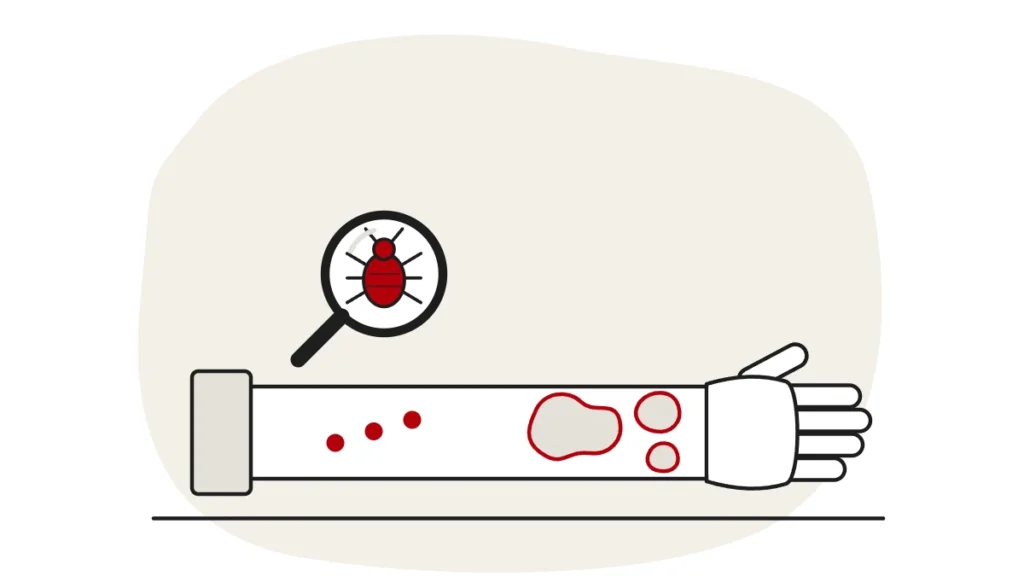
Bed bugs feed on blood while you sleep. Their bites are usually small, raised and itchy, and often sit in a line or a tight group because one bug feeds a few times as it moves along the skin. They tend to appear on skin left uncovered in bed: the face, neck, arms, hands and legs. For a closer look at bite patterns, see our guide to what bed bug bites look like.
- Small, raised, itchy bumps, sometimes with a darker centre.
- Often in a line or small cluster.
- On skin exposed while sleeping.
- Can take a day or more to show, and stay in the same place until they fade.
- Some people don’t react to bites at all, so one person in a bed can be bitten and the other not.
What Hives Look Like
Hives (urticaria) are a skin reaction that causes raised bumps or patches, called welts or wheals. They can be small spots or large joined-up patches, and they can sting or burn as well as itch. The NHS lists many possible triggers, including certain foods, medicines, heat, cold, sweating, stress, pressure on the skin, infections and insect bites or stings. Often no trigger is found.
- Raised welts that vary in size and shape.
- Can appear anywhere on the body, including skin that was covered.
- Individual welts often fade within hours while new ones appear elsewhere.
- Usually clear up within a few days.
Key Differences Between Bed Bug Bites and Hives
Use the table to compare what you’re seeing. One sign on its own doesn’t settle it; look at the overall picture.
| Sign | Bed bug bites | Hives |
|---|---|---|
| Pattern | Lines or small clusters | Random; welts can join into larger patches |
| Where | Skin uncovered in bed: face, neck, arms, legs | Anywhere, including under clothes |
| When they appear | Noticed in the morning, sometimes a day or two later | Any time of day, often soon after a trigger |
| Do they move? | No, each bite stays where it is | Yes, welts fade and new ones appear elsewhere within hours |
| How long | Usually settle within about a week | Usually clear within a few days |
| Other clues | Blood spots or small dark marks on sheets and mattress seams | A new food, medicine, soap or other possible trigger |
1. Pattern and Appearance
A neat row or tight group of bumps points towards bed bugs. Hives are less tidy: welts of different sizes, sometimes merging, with no obvious line.
2. Do the marks move?
One simple check: draw a light pen circle around a few marks and check again in a few hours. Bites stay inside the circle. Hives often fade from one spot and appear somewhere new.
3. Timing and New Bites
Bed bug bites keep appearing after nights in the same bed, and often stop when you sleep somewhere else. Hives don’t follow your bed; they follow whatever triggered them.
Can bed bugs cause hives?
Yes, it’s possible. The NHS lists insect bites among the triggers for hives, and some people have a strong reaction to bed bug bites, with large swollen welts rather than small bumps. That’s why the bites alone can’t confirm bed bugs. The bedroom has to be checked too.
Stress Hives vs Bed Bug Bites
Stress is a known hives trigger, and finding bites or worrying about bed bugs is stressful, so people sometimes get both. Like other hives, stress hives aren’t limited to skin left uncovered in bed and tend to come and go. If new marks keep appearing on uncovered skin overnight, check the bed rather than putting it all down to stress.
Rash From Bed Sheets or Washing Powder
A new washing powder, fabric conditioner or bedding can cause an itchy rash where the skin touches the fabric. That rash usually covers wider areas of skin in contact with the sheets, rather than a line of separate bumps, and fades once you switch back.
Bed Bug Bites vs Other Insect Bites and Rashes
Bed bug bites are also easy to confuse with other bites and rashes. A few pointers:
- Mosquito bites: usually single, puffier bumps scattered randomly on exposed skin, often after time outdoors or with a window open.
- Flea bites: small, very itchy bumps that cluster around the ankles and lower legs, often in homes with pets.
- Heat rash: tiny spots or a prickly rash where you sweat, such as under clothes or skin folds, that eases once you cool down.
- Allergic reaction: a reaction to a food, medicine or product tends to be spread out, can include hives or swelling, and doesn’t depend on where you slept.
If you’re being bitten but can’t find any bugs, our guide to getting bitten at night with no bed bugs in sight covers the other causes to rule out.
How to Check Your Bed for Bed Bugs
The marks on your skin are only half the evidence. Bed bugs leave signs where they hide, close to where you sleep. With a torch, check:
- mattress seams, piping and labels, and the underside of the mattress;
- the bed frame joints, slats and headboard;
- bedside furniture, skirting boards and the edges of carpet near the bed.
Look for live bugs (flat, reddish-brown, about the size of an apple seed as adults), pale shed skins, small dark spots of droppings, and tiny blood spots on sheets. Bed bugs aren’t put off by light, so sleeping with the lights on won’t stop them, and stories of bugs crawling into ears are mostly myth, as we explain in can bed bugs go in your ear?
Bed bugs are small and good at hiding, so it’s easy to miss a light infestation. If you can’t find anything but the bites keep coming, a professional bed bug inspection will confirm what you’re dealing with.
Soothing the Itch, and When to Get Medical Advice
This section is general information, not medical advice. Bed bugs aren’t known to spread disease. The NHS says bites usually settle on their own within about a week, and hives usually clear within a few days.
- A cool, clean, damp cloth can ease itching and swelling.
- Try not to scratch, and keep the skin clean to lower the chance of infection.
- A pharmacist can recommend something for itching, such as an antihistamine or a mild steroid cream, and check it’s suitable for you or your child.
The NHS advises you to speak to a GP or contact NHS 111 if hives haven’t improved after 2 days, keep coming back or are spreading; if you have a high temperature and feel unwell, or swelling under the skin; if bites stay very painful or swollen despite treatment; or if redness, pain or swelling around a bite is spreading, which can be a sign of infection. If you’re worried about a child’s rash, get advice.
Call 999 if your lips, mouth, throat or tongue suddenly swell, you’re struggling to breathe or your throat feels tight. These can be signs of a serious allergic reaction; the NHS page lists the full set of warning signs.
See the NHS pages on hives and bedbugs for full guidance.
If It Is Bed Bugs
Treating the bites won’t stop new ones while the bugs are still in the bedroom. Shop-bought sprays and foggers tend to scatter bed bugs into new hiding places rather than clear them. Professional treatment is the reliable route: at ThermoPest our approach is heat-led, with targeted spray where it’s needed, and it reaches the cracks and seams where bugs and eggs hide. Read how bed bug heat treatment works.
FAQs
How can I tell if it’s hives or bed bug bites?
Look at the pattern and whether the marks move. Bed bug bites sit in lines or clusters on skin uncovered in bed and stay in place for days. Hives are welts that can appear anywhere, change shape and move within hours. Checking your mattress seams and bed frame for bugs, shed skins and dark spots helps confirm it.
Can bed bug bites look like hives?
Yes. Some people react strongly to bites, giving larger, swollen welts that look like hives. The NHS lists insect bites as one possible trigger for hives. If the marks appear overnight on uncovered skin and keep coming back, check the bed for bed bugs.
Do bed bug bites move around like hives?
No. Each bed bug bite stays where it is until it fades, usually within about a week. New bites can appear after another night in the same bed, but individual bites don’t move. Welts that fade and reappear somewhere else within hours are more typical of hives.
Can stress cause hives that look like bed bug bites?
Stress is a known trigger for hives, and stress hives can be mistaken for bites. Stress hives tend to come and go during the day and aren’t limited to skin left uncovered in bed. A pharmacist or GP can advise on the rash; a bedroom inspection can rule bed bugs in or out.
Should I see a doctor for bed bug bites or hives?
Most bites and hives settle on their own. Speak to a GP or NHS 111 if hives haven’t improved after 2 days or keep returning, if bites look infected or keep getting worse, or if you feel unwell. Call 999 if your lips, mouth or throat swell or you have trouble breathing.
Not sure if it’s bed bugs?
If you’ve found bites in a line and signs on the mattress, an inspection will confirm what you’re dealing with and where the bugs are hiding. ThermoPest is a member of the BPCA and NPTA, and our technicians arrive in unmarked vans.