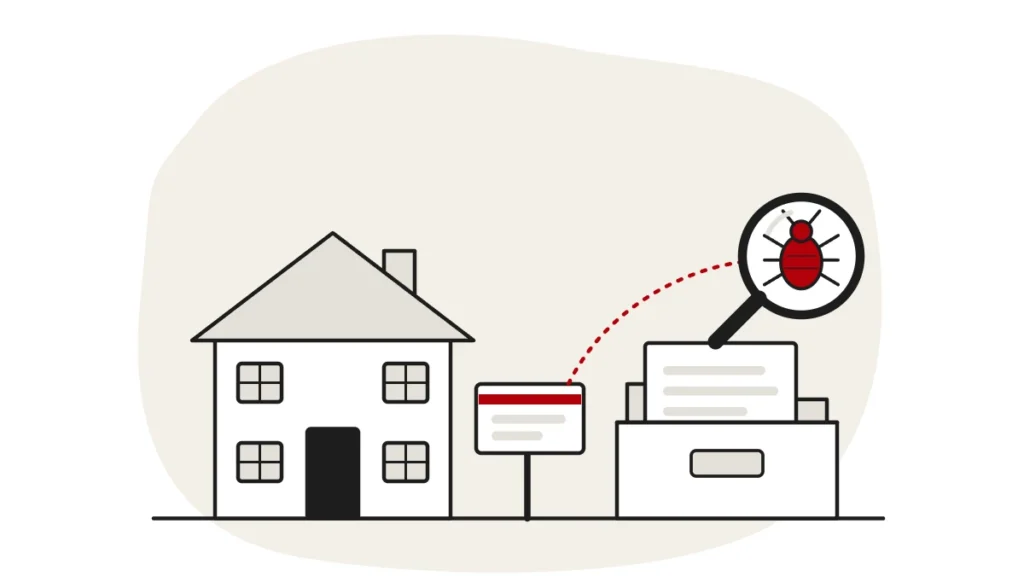
We’ve found no UK law that bans selling a house with bed bugs, and the Law Society’s notes on the seller’s form for England and Wales don’t mention them. But your answers must be truthful and complete, and the Law Society warns that a buyer given wrong information may claim compensation. Treat it and keep the paperwork before you sell.
Reviewed by James Rhoades, Owner, ThermoPest · Last reviewed 15 October 2026
If you’ve found bed bugs just as you’re about to put your home on the market, or halfway through a sale, it’s natural to worry about what you have to tell people. This guide explains what the property forms actually ask, where the legal risks are, what estate agents have to tell buyers, and the practical steps that protect both you and the buyer. It covers England and Wales, with pointers for Scotland and Northern Ireland.
Is it illegal to sell a house with bed bugs?
We haven’t found any UK law that stops you selling a home because it has, or has had, bed bugs. The legal risk isn’t the sale itself. It’s what you say, or leave out, along the way.
In England and Wales, two things matter most:
- Your answers on the property information form (TA6) and any extra questions the buyer’s solicitor sends. These must be truthful.
- What your estate agent tells buyers. Agents are traders, and consumer protection law bans them from misleading buyers, including by leaving out information buyers need.
Bed bugs aren’t a sign of a dirty home. The NHS notes they’re found in both clean and dirty places, so there’s no reason to feel ashamed about dealing with them openly.
Do you have to disclose bed bugs when selling a house?
In England and Wales, sellers usually fill in the Law Society’s Property Information Form (TA6). The Law Society’s explanatory notes for the TA6 (5th edition, 2024) say conveyancers can currently use either that edition or the 4th edition (2020, second revision). The 5th edition notes don’t mention bed bugs or pests, and we found no question that names them. The Law Society has also said it will replace the 5th edition with two new forms, so ask your conveyancer which form they’re using.
What the TA6 Form Does Ask
Even without a bed bug question, several parts of the form and its instructions can be relevant. The Law Society’s notes say:
- Answer truthfully: “It is very important that your answers are truthful.” Answer as accurately as you can from your own knowledge.
- Say when you don’t know: “If you do not know the answer to any question, you must say so.”
- Disputes and complaints (section 16): you’re asked about existing or past disputes, and “anything that could lead to a dispute in the future”. A disagreement with a neighbour or a managing agent about bed bugs spreading between flats could fall here.
- Guarantees and warranties (section 19): provide copies of guarantees and supporting paperwork. If you’ve had professional treatment with a guarantee, this is where it may come up. The notes point out that some guarantees only protect the person who had the work done.
- Additional information (section 25): “Take the opportunity to provide further information about any of your answers given on the form.”
- Keep it up to date: if anything changes before completion, “you must inform your solicitor immediately”. The notes say this is as important as giving the right answers in the first place.
The buyer’s solicitor can also send extra enquiries, which may ask about pests. Answer those just as carefully.
What happens if you get it wrong?
The Law Society’s TA6 notes are clear: if your information is incorrect or incomplete, “a prospective buyer may make a claim for compensation from you or refuse to complete the purchase.”
In England and Wales, section 2(1) of the Misrepresentation Act 1967 allows a buyer who entered a contract because of a misrepresentation, and lost out, to claim damages, unless the person who made it proves they “had reasonable ground to believe and did believe” it was true. Whether any particular answer is a misrepresentation depends on the facts and the wording of the question, so talk it through with your conveyancer before you answer, not after.
What must estate agents tell buyers?
For many years, agents’ duties came from the Consumer Protection from Unfair Trading Regulations 2008. Those regulations were revoked on 6 April 2025, with some transitional savings, and replaced by Part 4, Chapter 1 of the Digital Markets, Competition and Consumers Act 2024 (see the revocation note on legislation.gov.uk). Section 338 says the Act extends to England and Wales, Scotland and Northern Ireland.
- Unfair practices are banned: section 225 says “Unfair commercial practices are prohibited.” It applies to traders, meaning people acting for their business, such as estate agents.
- Misleading omissions: under section 227, leaving out “material information” can be a misleading omission. Material information means “information that the average consumer needs to take an informed transactional decision”.
The National Trading Standards Estate and Letting Agency Team (NTSELAT) had published guidance on material information in property listings. According to the Law Society, NTSELAT withdrew that guidance on 8 May 2025. The duty in the Act remains, but no official guidance we’ve found says whether a past or current bed bug problem counts as material information. In practice, your agent may ask you about it. If you tell your agent and they decide it needs to be shared, that’s their professional call to make.
Selling a Property With Bed Bugs: What to Do First
The cleanest position, for you and the buyer, is to deal with the problem before you market the property, and keep a paper trail.
| Stage | What to do | Records to keep |
|---|---|---|
| You find signs | Arrange a professional inspection to confirm what it is and how far it has spread | Dated photos of what you found; the inspection report |
| Treatment | Have the property treated, including any follow-up visits the technician recommends | Treatment report, invoices, any guarantee paperwork |
| Before marketing | Tell your conveyancer and agent, and agree how to answer the forms | A copy of the written report to share if asked |
| During the sale | Report anything new to your solicitor straight away | Emails or letters showing what you told them and when |
Shop-bought sprays, foggers and bug bombs tend to scatter bed bugs into new hiding places rather than clear them, which can make the problem harder to treat during a sale. Professional treatment is the more reliable route. At ThermoPest our approach is heat-led, with targeted spray where it’s needed, and return visits may be needed. Our technicians give you a written report with photos, which can be useful to show your conveyancer. If you’re a landlord selling a let property, see our pest control for private landlords.
If You’re Selling a Flat
Bed bugs can move between flats, so a problem in your flat may not stop at your front door, and one next door can reach you. When we treat a flat, we ask to inspect neighbouring flats too. If the building has a managing agent or freeholder, let them know and keep a copy of what you sent.
If the Property Is Let
If tenants are living there, they’ll need to be involved in treatment and access. Our guides on what tenants can do when a landlord won’t treat bed bugs and bed bugs and the Renters’ Rights Act explain how responsibilities are usually split.
Buying a House: How to Check for Bed Bugs
The seller can only tell you what they know. The Law Society’s TA6 notes advise buyers to make their own enquiries, and point out that “the inspection carried out on behalf of your lender is not a survey”. They suggest instructing a surveyor to check the property’s condition. A standard survey isn’t a pest inspection, though, so if bed bugs worry you:
- Ask directly. Your solicitor can send an extra enquiry asking whether the property has had bed bugs or any pest treatment, and for copies of reports.
- Look when you view. The NHS lists signs including spots of blood on bedding and small brown spots on bedding or furniture. Adults are around 5mm long, according to the NHS.
- Read any reports. A recent treatment report and follow-up notes tell you far more than a “no” on a form.
- Consider an inspection before exchange if you have real concerns, particularly in a block of flats.
Found bed bugs in your new house?
Take dated photos of any bugs or marks you find, and arrange a bed bug inspection so you have a written record. Then speak to your conveyancer about what the seller said on the forms. For the wider legal picture, see our overview of bed bugs and UK law.
Scotland and Northern Ireland
Scotland: according to mygov.scot, a seller or selling agent must give you a Home Report within nine days of your request. It’s split into a single survey and valuation, a property questionnaire and an energy report. The questionnaire covers 16 categories, including details of any specialist works or guarantees. Ask a Scottish solicitor how a bed bug history should be handled.
Northern Ireland: nidirect lists a solicitor and an independent surveyor among the costs of buying a home. Ask a Northern Ireland solicitor what forms and enquiries apply.
The consumer protection rules for estate agents described above apply across the UK.
This is general information, not legal advice. Checked: October 2026.
FAQs
Do you have to disclose bed bugs when selling a house?
In England and Wales, the Law Society’s TA6 notes don’t include a bed bug question, but you must answer every question truthfully, including questions on disputes, guarantees and any extra enquiries from the buyer’s solicitor. The Law Society warns that wrong or incomplete answers can lead to a compensation claim. Ask your conveyancer how to answer.
Is it illegal to sell a house with bed bugs?
We haven’t found any UK law that bans selling a home with bed bugs. The risk is in misleading the buyer, through the forms or the way the property is marketed. Having the property treated and keeping the written report puts you in a much clearer position.
Do you have to declare bed bugs on the seller’s property information form?
The Law Society’s TA6 notes don’t include a bed bug question. If a question or an enquiry from the buyer’s solicitor covers pests, treatment, disputes or guarantees, answer it honestly. If you don’t know, the Law Society’s notes say you must say so. If things change before completion, tell your solicitor immediately.
What should I do if I find bed bugs after buying a house?
Take dated photos, arrange an inspection and treatment, and keep every report and invoice. Then speak to your conveyancer or a solicitor about what the seller said during the sale. Whether you have a claim depends on what was asked, what was answered and what the seller knew.
Selling a property with bed bugs?
An inspection will confirm what you’re dealing with, and a written report with photos gives you a clear record for your conveyancer. ThermoPest is a member of the BPCA and NPTA, and our technicians arrive in unmarked vans, so the visit stays discreet.