Yes, removal men can bring bed bugs. The bugs hide in furniture, boxes and shared moving blankets, and one van carries many households’ belongings. But you often can’t be sure that’s where yours came from. Act straight away: leave items where they are, wash bedding hot, take dated photos, tell the removal firm in writing and get an inspection.
Reviewed by James Rhoades, Owner, ThermoPest · Last reviewed 16 October 2026
Finding bites or bugs days after a move is miserable, and it’s natural to blame the van. This guide explains how bed bugs travel during a move, how far you can tell where they came from, what to do tonight, and how to raise it with the removal company fairly. We’re pest specialists, not lawyers, so we link to official guidance for the complaint side.
Can you get bed bugs from a removal van?
You can. Bed bugs travel by hiding in things that get carried from one place to another, and a house move picks up and carries almost everything you own.
The British Pest Control Association (BPCA) says bed bugs can be introduced on luggage, bags and clothing, and “through second-hand beds, furniture and possessions”. Bed bugs are efficient hitchhikers, and in our experience anything carried from home to home, including items moved in removal or delivery vans, can bring them in.
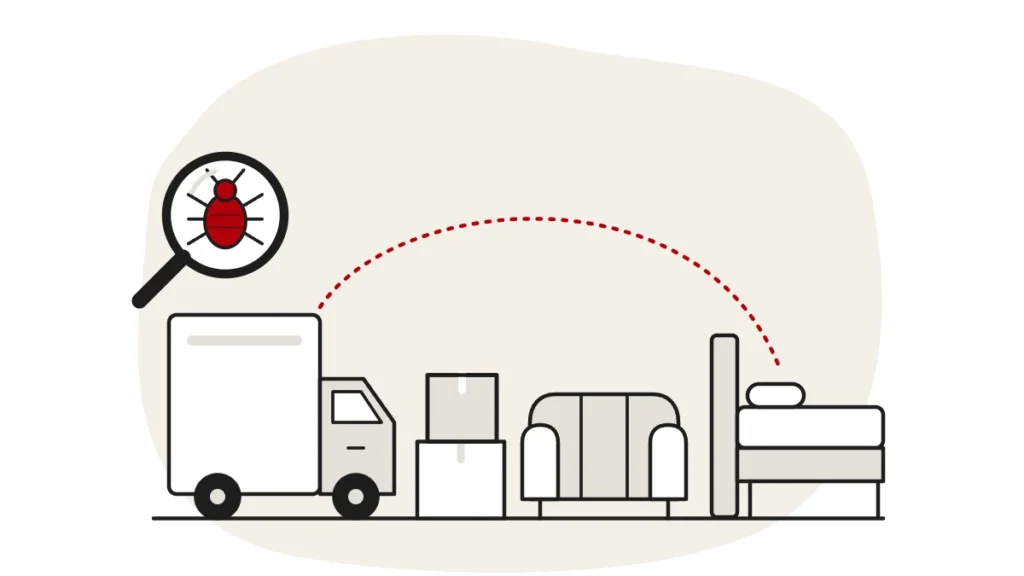
How Bed Bugs Travel in Removal Vans, Blankets and Boxes
- Furniture: beds, sofas, upholstered chairs and headboards have the seams, folds and joints bed bugs like. The BPCA says they hide in crevices in the bed and surrounding furniture.
- Moving blankets and pads: these wrap furniture from one job after another. If a blanket picked up bugs at an earlier job and wasn’t cleaned, it could carry them to the next.
- Boxes: cardboard boxes can carry bed bugs in their folds and seams. Re-used boxes have usually been in other people’s homes.
- The van itself: bed bugs can live in almost any crevice or protected location, and their flattened bodies fit into gaps no wider than a toothpick.
Could bugs survive in an empty van between jobs? Adult bed bugs and nymphs can go months without feeding, so a quiet spell doesn’t mean bugs have died off.
Could the bugs have come from you?
It’s worth being fair here. A removal van can also pick up bugs from your old home and carry them on. If you’d had bites, blood spots or unexplained marks on bedding before the move, the bugs may well have travelled with your own belongings rather than the van.
Did the bed bugs come with the move, or were they already there?
Often you can’t be sure, and anyone who tells you otherwise is guessing. There are usually three possible sources: your old home, the van and its equipment, or the new home itself. Because bed bugs can go months without feeding, a property that has stood empty can still have bugs left by the previous occupants. Our guide to bed bugs after a house move explains why new properties aren’t always clean.
The table below shows clues that point one way or another. None of them is proof on its own.
| Clue | Points towards the move | Points towards the property or your old home |
|---|---|---|
| Your old home | No bites, blood spots or dark marks before you moved | You’d noticed bites or marks on bedding before the move |
| Where you find them | On or in items the removal firm wrapped, boxed or carried | In skirting boards, fitted furniture or rooms you haven’t unpacked into |
| The van and kit | Blankets or boxes supplied by the firm, or a shared or part load | Your own wrapping and boxes only, in a van used just for you |
| The new property | A new build, or recently checked and empty for a long time | Recently occupied, or a flat with neighbours who’ve had bed bugs |
A professional inspection can tell you where the bugs are and how established they seem, which helps build the picture. It can’t prove for certain which van, box or home they came from.
What to Do Straight Away
First, don’t panic. Bed bugs aren’t known to spread disease, and the NHS says they don’t usually cause other health problems beyond itchy bites. If bites are very swollen or you feel unwell, speak to a pharmacist, your GP or NHS 111.
Keep Things Where They Are
- Leave unopened boxes sealed and in one room if you can.
- Don’t move furniture between rooms, and keep sleeping where you are. Moving around can spread bugs to new rooms.
- Don’t throw anything out yet. You may need it photographed or inspected, and carrying it through the building can spread bugs.
- Don’t use foggers, bug bombs or smoke bombs. They tend to scatter bed bugs into new hiding places.
Bedding and Clothes
The NHS says to wash affected bedding and clothing on a hot wash (60°C) and tumble dry on a hot setting for at least 30 minutes. For items you can’t wash, it suggests sealing them in a plastic bag and putting them in the freezer for 2 to 3 weeks. Bag things up before you carry them to the washing machine. Only throw away items that can’t be washed or treated.
Check, Don’t Strip the Room
Look along mattress seams, the bed frame, sofa joints and the folds of boxes. The NHS says adults are around 5mm long and dark yellow, red or brown, and lists signs including spots of blood on bedding and small brown spots on bedding or furniture. The BPCA says “self-treatment of a Bed bug infestation is unlikely to be successful”, so the aim tonight is to contain and record, not to solve it alone.
How to Document It
Good records help whichever way things go, so start them now.
- Dated photos and video: live bugs, shed skins, dark spots, the items they were on and the wrapping or boxes they came in. Keep the original files, which hold the date.
- A sample: a bug stuck under clear tape or sealed in a small bag.
- Bites: dated photos, if you’re comfortable taking them.
- Your move paperwork: the quote, contract, terms and conditions, inventory and receipts.
- A timeline: the move date, when you unpacked each item, when you first noticed bites or bugs, and when you contacted the firm.
- Every message: put everything in emails or letters, and make dated notes of any phone calls.
- A written inspection report: a professional bed bug inspection from ThermoPest comes with a written report and photos of what was found and where. We don’t give legal advice or act as expert witnesses.
How to Raise It With the Removal Company
Contact the firm as soon as you can, in writing. Stay calm and factual: say what you found, when and where, attach your photos and timeline, and say what you’d like them to do. They may want to check their van and blankets, and it’s fair to ask whether they’ve had similar reports.
Your Rights When a Service Goes Wrong
A house move is a service. Under section 49 of the Consumer Rights Act 2015, which applies across the UK, every contract to supply a service includes a term that the trader must perform it “with reasonable care and skill”. Whether a removal firm met that standard depends on the facts, and proving the bugs came from them is often the hard part.
Citizens Advice’s guide to complaining about a service explains how to tell the trader you think they didn’t use reasonable care and skill, and what to ask for. That page covers England; Citizens Advice has separate versions for Wales, Scotland and Northern Ireland, and it notes the time limits differ in Scotland. Its consumer service can also help you work out next steps.
If the Firm Is a British Association of Removers Member
Ask whether the firm belongs to the British Association of Removers (BAR). The BAR Code of Practice is approved under the Chartered Trading Standards Institute’s Approved Code scheme. According to the CTSI page on the BAR code:
- members must acknowledge a complaint within 3 working days and aim to resolve it within 8 weeks;
- if it isn’t settled, the member must offer Alternative Dispute Resolution (ADR), which the page says is provided through The Furniture & Home Improvement Ombudsman;
- the ADR body’s decisions are binding on the business, and you’re still free to go to court afterwards;
- use of the scheme “is subject to certain limits”, which BAR can explain.
If You Can’t Settle It
If a complaint and any ADR don’t resolve things, a small claim may be an option. Our guide to bed bug compensation claims and the small claims process covers the letter before claim, the evidence you’ll need and the court routes in each UK nation. Nobody can promise an outcome, so keep every receipt for pest control, laundry and replaced items.
If you’ve just sold your old home and are worried bed bugs started there, our guide to what you must disclose when selling a house with bed bugs explains the rules on the seller’s side.
Getting Rid of Bed Bugs After a Move
Whoever turns out to be responsible, the bugs need dealing with quickly, before they spread to more rooms. Our bed bug heat treatment is heat-led, with targeted spray where it’s needed, and a return visit may be needed. If you’ve moved into a flat, we’ll ask to inspect neighbouring flats too, since bed bugs can move between homes. You can check typical costs on our pricing page.
How to Avoid Bed Bugs on Your Next Move
- Ask the removal firm questions: how often they clean their vans and blankets, and what they do after a job at a property with pests. A good firm should have a clear answer.
- Use your own wrapping: new boxes and stretch wrap for mattresses, sofas and upholstered furniture reduce contact with shared kit.
- Check second-hand items: the NHS says not to bring second-hand furniture indoors without carefully checking it first.
- Check as you unpack: look over furniture seams and box folds as items come in, rather than weeks later.
- Tell the firm if you have bed bugs: if you know your current home has bed bugs, get it treated before you move and let the firm know, so they don’t carry them to the next customer.
This is general information, not legal advice. Checked: October 2026.
FAQs
Can you get bed bugs from movers?
Yes, it’s possible. Bed bugs hide in furniture, boxes and moving blankets, and a removal van carries many households’ belongings. They can also come from your old home or the new property, so the move isn’t always the cause.
Can bed bugs live in cardboard boxes?
They can hide in them. Boxes are one of the items that can carry bed bugs, and bed bugs can live in almost any crevice or protected location. Check box folds as you unpack and keep unopened boxes sealed.
How can you prove where bed bugs came from?
Usually you can’t prove it for certain. Dated photos, a clear timeline, your move paperwork and a written inspection report all help show what was found, where and when. The same applies whether you’re a tenant, a landlord or a removal firm.
Is the removal company responsible for bed bugs?
It depends on the facts. Under the Consumer Rights Act 2015 a service must be performed with reasonable care and skill, but you’d need to show the bugs came from their van or equipment. Complain in writing first, and use the firm’s complaints procedure and any ADR scheme.
Found bed bugs after your move?
If you’ve found signs, an inspection will confirm what you’re dealing with, and you’ll get a written report with photos for your records. ThermoPest is a member of the BPCA and NPTA, and our technicians arrive in unmarked vans.