Not reliably. Indorex Defence is a household flea spray, and Virbac, the manufacturer, labels it for fleas and house dust mites, not bed bugs. Its permethrin may kill some bed bugs it lands on directly, but it can’t reach the bugs and eggs hidden in seams and cracks, so it won’t clear an infestation.
Reviewed by James Rhoades, Owner, ThermoPest · Last reviewed 15 October 2026
If you’ve found bed bugs and there’s a can of Indorex in the cupboard from a flea problem, it’s natural to wonder whether it will do the job. Below is what the product is, what Virbac says it’s for, what a spray like this can and can’t do against bed bugs, how to use it safely, and what to do instead.
What is Indorex and how does it work?
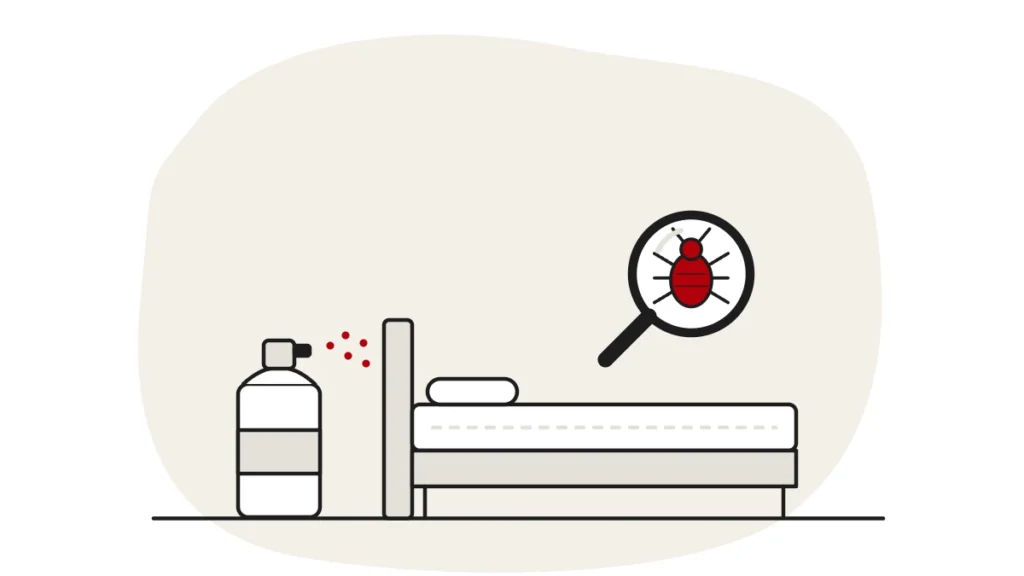
Indorex Defence is an aerosol spray made by Virbac, a veterinary company. It’s sold as a household flea spray for carpets, floors and soft furnishings, and Virbac says it should never be applied directly to animals.
According to Virbac’s UK product page, it contains four active ingredients:
- Permethrin, a synthetic insecticide from the pyrethroid group.
- Piperonyl butoxide, which is added to make insecticides like permethrin work harder.
- Pyriproxyfen, which Virbac says stops flea eggs and larvae from developing.
- Chrysanthemum extract (natural pyrethrins).
Virbac says the permethrin and piperonyl butoxide kill adult fleas and dust mites on contact, with effects lasting up to two months, and that the pyriproxyfen stops flea eggs and larvae developing for up to 12 months. That long-lasting part is the “residual” effect: once dry, the spray stays on the treated surfaces.
What does Indorex kill?
Going by Virbac’s own product information, Indorex is labelled for two things:
- adult fleas and house dust mites, killed on contact;
- flea eggs and larvae, which it stops from developing.
The product page doesn’t mention bed bugs, ants, spiders, moths, carpet beetles or flies. That doesn’t mean an insect sprayed directly will always survive, since permethrin is a general insecticide. It means Virbac hasn’t made claims for those pests, and the directions on the can are written for fleas. If fleas are your actual problem, our guide to fleas in the home explains how to confirm it.
Will Indorex kill bed bugs?
It might kill some of the bed bugs it hits directly, but that’s a long way from dealing with an infestation. There are four reasons to be cautious:
- It isn’t labelled for bed bugs. There are no directions for where or how to use it against them, so you’d be using it outside what the manufacturer intended.
- Bed bugs may be resistant. The NHS notes that bed bugs may be resistant to some insecticides. So even a bed bug that is sprayed directly may survive.
- Most bugs are hidden. Bed bugs spend most of their time tucked into mattress seams, bed frame joints, headboards and skirting boards. A surface spray doesn’t get deep into those places.
- The egg claim is about fleas. Virbac’s claim about stopping eggs developing is for flea eggs and larvae. It says nothing about bed bug eggs, which are glued into cracks and seams where a spray is unlikely to reach.
Our guide on whether permethrin kills bed bugs looks at the main ingredient in more detail.
| Question | For fleas | For bed bugs |
|---|---|---|
| Labelled for it? | Yes, adult fleas and dust mites | No, not mentioned by Virbac |
| Eggs and young | Virbac says it stops flea eggs and larvae developing | No claim for bed bug eggs |
| Where you spray | Carpets, floors and soft furnishings | Bugs hide deep in beds, frames and cracks |
| Resistance | Not covered here | The NHS says bed bugs may be resistant to some insecticides |
What can a residual household spray do against bed bugs?
What It Can Do
A residual spray leaves a thin layer of insecticide on the surfaces it lands on. A bug that is sprayed directly, or walks across a treated surface, may pick up a dose. If those bugs aren’t resistant, some may die. That can reduce the number you see for a while.
What It Can’t Do
- Reach hidden bugs. Bed bugs live in seams, joints, screw holes and gaps behind skirting boards and headboards. Spray on a surface doesn’t follow them in.
- Deal with every egg. Eggs left behind hatch, and the cycle starts again.
- Get round resistance. If the bugs in your home tolerate the insecticide, more spray won’t change that.
- Find out how far it’s spread. Spraying around the bed doesn’t tell you whether bugs are also in the sofa, another room or a neighbouring flat.
The same applies to most shop-bought insect sprays, not just Indorex. Foggers and bug bombs aren’t the answer either: they tend to scatter bugs into other rooms and neighbouring flats rather than clear them.
Can you use Indorex on a mattress or bed?
We wouldn’t advise it. Virbac’s directions are for carpets, floors and soft furnishings, and its own FAQ says there’s no need to spray human bedding for fleas. It recommends hot washing bedding and mattress protectors and vacuuming the mattress instead.
Spraying a mattress you sleep on, outside what the label covers, means sleeping on insecticide without knowing it will help. For bedding and clothes, the NHS advises a hot wash (60°C) and tumble drying on a hot setting for at least 30 minutes. For items you can’t wash, it suggests sealing them in a plastic bag in the freezer for 2 to 3 weeks.
Is Indorex safe to use at home?
Virbac says it’s approved for amateur domestic use, but it’s still an insecticide and needs care. If you’ve already used it, or plan to, follow the label and warnings on your can. These points are from Virbac’s UK product page, plus general care for any aerosol:
- Ventilation. Virbac says to let the spray settle for 30 minutes, then ventilate the room for at least another hour before going back in.
- Pets. Never spray it on animals. Virbac says Indorex is for the home only.
- Fish. Virbac says to switch off any tank pump, cover the tank completely and point the nozzle down and away from it while spraying.
- Asthma. Virbac advises people with asthma to speak to a doctor first, ask someone else to spray, and ventilate well before going back in.
- Eyes. Keep the spray away from your face. If you get any in your eyes, rinse them with water and follow the first-aid advice on the can.
- Pressurised can. As with any aerosol, keep it away from flames, heaters and cigarettes, and don’t pierce or burn the can, even when it’s empty.
- Children. Keep children out of the room while it settles and until it’s ventilated and dry. Virbac says that once dry, the spray binds to surfaces so it won’t come off on skin.
- Pregnancy. Virbac says sensible precautions apply: avoid breathing the fumes and wash your hands after use.
If someone feels unwell after using it, or swallows any, speak to a pharmacist, your GP or NHS 111, and keep the can to hand so you can say what’s in it.
Why won’t Indorex clear a bed bug infestation?
An infestation is a population living in places you can’t see, at every stage from egg to adult. To clear it, a treatment has to reach those hiding places, deal with eggs as well as bugs, and be checked afterwards. A flea spray used around the bed does none of that.
The NHS says there are some things you can try yourself, but these are unlikely to get rid of bed bugs completely, and recommends contacting your local council or a pest control service. Killing the few bugs you can see often makes it look as if the problem has gone, while the rest keep breeding out of sight.
The same is true of other household products people reach for. Our guides on whether Dettol kills bed bugs and whether UV light kills bed bugs cover two of the most common.
What should you do instead?
- Confirm what you’ve found. Look for live bugs, small dark spots and pale shed skins in mattress seams, the bed frame and headboard. Adult bed bugs are around 5mm long, according to the NHS. Keep a bug in a sealed bag or take a clear photo.
- Wash and dry on hot. Follow the NHS advice above for bedding and clothes.
- Don’t move to another room or the sofa. Bugs follow people, and moving spreads them.
- Tell your landlord or managing agent if you rent or live in a flat, so neighbouring homes can be checked.
- Get an inspection so you know how far it’s spread before anything is treated.
ThermoPest’s bed bug heat treatment is heat-led, with targeted spray where it’s needed. Heat reaches into the seams, joints and cracks where bugs and eggs hide and where sprays struggle. Return visits may be needed, and in flats we ask to inspect neighbouring flats too. For a wider look at your options, see our guide on how to get rid of bed bugs.
FAQs
How long after using Indorex can I go back in the room?
Virbac’s UK product page says to let the spray settle for 30 minutes, then ventilate the room for at least another hour. If you have asthma, ventilate well before going back in. Always check the directions on your own can.
Does flea spray kill bed bugs?
Flea sprays are made and labelled for fleas. One may kill some bed bugs it hits directly, but it won’t reach those hidden in the bed and furniture, and the NHS notes bed bugs may be resistant to some insecticides. It won’t clear an infestation.
Does Indorex kill bed bug eggs?
Don’t count on it. Virbac’s claim about eggs is for flea eggs and larvae. It makes no claim for bed bug eggs, which are hidden in seams and cracks where a surface spray is unlikely to reach.
Is Indorex harmful to humans?
It’s approved for amateur domestic use when you follow the label. Virbac advises avoiding the fumes, ventilating after use and taking extra care if you have asthma. Keep it out of your eyes and away from flames, as with any aerosol insecticide. If you feel unwell after using it, contact a pharmacist, your GP or NHS 111.
Does Indorex kill ants or spiders?
Virbac only makes claims for fleas and house dust mites. It doesn’t list ants, spiders or other insects on its UK product page, so there are no directions for using it against them.
Sprayed and still seeing bed bugs?
That’s very common, and it isn’t your fault. An inspection will confirm what you’re dealing with and how far it’s spread. ThermoPest is a member of the BPCA and NPTA, and our technicians arrive in unmarked vans.