Carpet moths aren’t dangerous to people. They don’t bite or sting, and the British Pest Control Association says moths aren’t known to spread disease. The harm is to your home: the larvae eat wool, silk, cashmere and other natural fibres in carpets, rugs and clothes. In some people, moths may make allergy symptoms worse.
Reviewed by James Rhoades, Owner, ThermoPest · Last reviewed 15 October 2026
Finding moths in the bedroom or a hole in a favourite jumper can be unsettling, especially if you have children or pets. The good news is that the risk to your health is very low. The bad news is that the damage to fabrics can build up quietly for months. This guide covers both, and what to do next.
Are carpet moths dangerous to humans?
No. The British Pest Control Association (BPCA) says moths aren’t known to spread disease and don’t bite humans, and notes that many adult moths don’t even have mouths. In the UK, “carpet moth” is usually an everyday name for clothes moths, mainly the common clothes moth and the case-bearing clothes moth. Neither feeds on people.
Do carpet moths bite?
No. The Natural History Museum explains that adult clothes moths have atrophied mouthparts and don’t feed at all. The larvae chew fibres, not skin. If you’re waking up with itchy bites, something else is likely to be responsible, such as bed bugs or fleas.
If you have a bite or rash you’re worried about, speak to a pharmacist. The BPCA suggests a cool, clean, damp cloth may help with itching and swelling. See a GP or call NHS 111 if a rash spreads, gets worse or you feel unwell.
Can carpet moths cause allergies?
Possibly, in some people. The BPCA says it is thought that moths can make allergy symptoms worse or cause allergic reactions in some people. Moth droppings and shed cases build up in dusty, undisturbed places, along with ordinary household dust. The NHS lists house dust mites among the most common allergens and advises seeing a GP if you think you or your child may have an allergy.
Regular vacuuming of carpet edges, under furniture and inside wardrobes reduces dust and moth debris at the same time, so it helps on both fronts.
Do moths carry diseases?
Moths aren’t known to spread disease, according to the BPCA. They’re a nuisance and a threat to fabrics rather than a health hazard.
Are moth larvae dangerous to touch?
Clothes moth larvae are small, soft, white grubs with a brown head. They don’t bite or sting. If you pick some up while cleaning, simply wash your hands. Wearing gloves when you clear out a badly affected wardrobe or lift an old rug keeps dust and debris off your skin.

Are moths dangerous in the UK?
Most moths you see indoors are harmless to people. The exception is outdoors: the caterpillars of the oak processionary moth (mainly in London and the South East) and the brown-tail moth have hairs that can cause itchy rashes and eye or throat irritation, so don’t touch them or their nests, and see a pharmacist or call NHS 111 if you react. Neither lives in carpets or clothes. The BPCA says most moths don’t sting, and that this is certainly the case for any species found in the UK. The moths that cause problems in homes do so by eating things: clothes moths damage fabrics, and pantry moths such as the Indian meal moth, which the BPCA says infests grains, cereals, dried fruit and nuts, spoil stored food.
A large moth that flies in through an open window on a summer evening is most likely an outdoor moth that’s found its way in. The ones to watch for are small, golden or grey-brown moths that run across fabric or hide in dark corners rather than flying towards a light.
The Real Danger: Damage to Carpets, Rugs and Clothes
If carpet moths are a problem, it’s because of what their larvae eat. The Natural History Museum says clothes moth larvae are adapted to feed on keratin, a protein found in natural fibres, and that they can cause serious damage to tapestries, carpets and clothing. Adults cause no damage to fabrics.
Do carpet moths eat clothes?
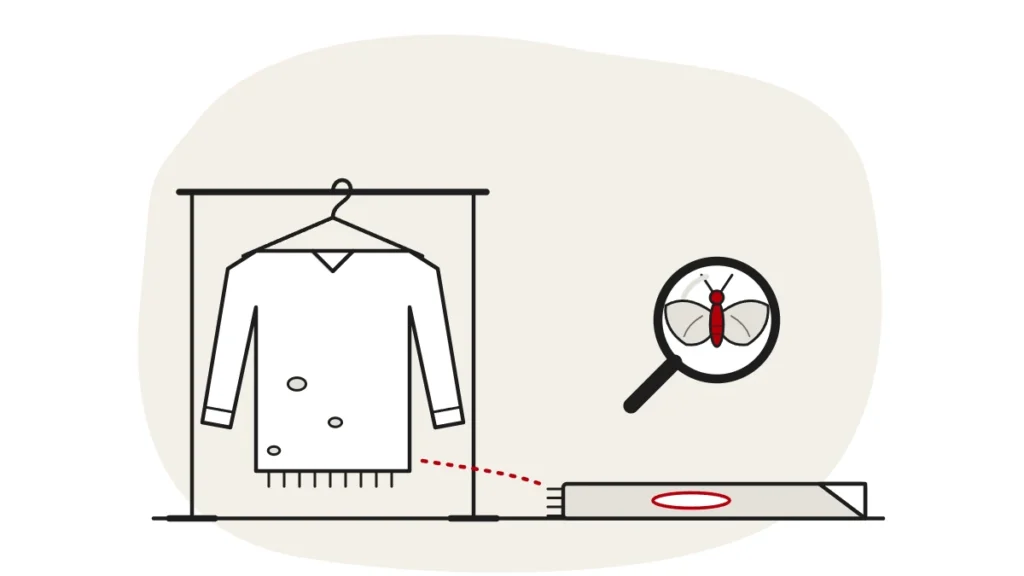
Yes. Carpet moths and clothes moths are the same insects, so the larvae will move between a wool rug and a drawer of jumpers. The BPCA lists holes in clothes, particularly wool, cashmere and silk, among the signs of an infestation. Damage often shows first on items that stay folded and unworn for a long time, under collars and cuffs, and along seams.
The BPCA also says clothes moths are attracted to perspiration and food stains, so clothes put away unwashed are more at risk.
Do carpet moths eat cotton?
Cotton is less of a target than wool, but it isn’t safe. The BPCA includes cotton in the fabrics clothes moth larvae feed on, alongside hair, wool, cashmere and silk. The Natural History Museum notes the larvae prefer dirty fabrics, which hold nutrients and moisture they need to grow. Cotton blended with wool, and cotton that’s been stored with sweat or food marks on it, is the most likely to be damaged.
What else can carpet moths damage?
- wool and wool-blend carpets, especially under furniture and along skirting boards;
- rugs, including the underside and fringes;
- upholstery, wool throws and feather cushions;
- fur, which the Natural History Museum says larvae can strip at the base of the hairs;
- stored blankets, tapestries and textiles kept in lofts, boxes and suitcases.
Our guide to the signs of carpet moths and clothes moths shows what the damage, larvae and cases look like.
| Question | To you and your family | To your home |
|---|---|---|
| Do they bite or sting? | No | Not applicable |
| Do they spread disease? | Not known to, says the BPCA | Not applicable |
| Allergies | May worsen symptoms in some people (BPCA) | Debris adds to household dust |
| Damage | None | Larvae eat natural fibres in carpets, rugs, clothes and upholstery |
Why Carpet Moth Damage Builds Up Quietly
The BPCA gives the common clothes moth’s life cycle as about 3 to 10 months. Eggs take 1 to 5 weeks to hatch, larvae feed for 2 to 7 months, and pupae take 2 weeks to 2 months. Adults live only days. Almost all of that time is spent as a hidden larva, eating.
That’s why the first moth you notice is rarely the start of the problem, and why moths can keep appearing after a clean-up. Eggs and larvae that were missed carry on developing. If you’re seeing lots of adults, our guide on why there are so many moths in your house explains the likely causes.
What to Do If You’ve Found Carpet Moths
Moth damage is frustrating, but it’s common and it can be dealt with. Start with the things that protect your belongings straight away:
- Bag up affected items. Seal damaged clothes in plastic bags so larvae don’t move on to other fabrics, and avoid carrying infested rugs through the house.
- Freeze what you can. The BPCA suggests putting items in a plastic bag in the freezer at -18°C for at least two weeks to kill larvae, and longer for larger amounts.
- Check washing labels. The BPCA doesn’t recommend hot washing for moths, because most natural-fibre clothing says not to wash above 30°C.
- Vacuum thoroughly. The BPCA advises vacuuming carpets and rugs often, particularly in corners and crevices. Empty the vacuum outside afterwards.
- Store clothes clean and sealed. Wash garments before putting them away and store them in airtight containers or plastic garment bags, as the BPCA recommends. Keep wardrobes dry and well ventilated.
Our step-by-step guide on how to get rid of carpet and clothes moths covers cleaning, freezing and storage in more detail. If you’ve read about home remedies, see does vinegar kill carpet moths? before relying on them.
When should you call a professional?
The BPCA says a small moth infestation in the home may be manageable depending on the species, but that a persistent one is a job for a professional pest management company. It also notes that moth infestations can require several visits, because of the hidden eggs and larvae.
It’s worth getting help if damage keeps spreading after you’ve cleaned, if you’re finding larvae in several rooms, or if valuable rugs, carpets or stored textiles are at risk. ThermoPest’s moth control is heat-led, with targeted spray where it’s needed. It starts with an inspection to confirm the species and find where the larvae are feeding, and a return visit may be needed. Our moth treatments come with a 12-week guarantee.
FAQs
Can carpet moths bite humans?
No. Adult clothes moths don’t feed, and the larvae eat natural fibres, not people. The BPCA says moths don’t bite humans. If you have bites, look for other causes such as bed bugs or fleas, and speak to a pharmacist if they’re bothering you.
Are moth sprays harmful to humans?
Any insecticide can be harmful if it’s used wrongly. Read and follow the label every time, ventilate the room, and keep children and pets away until the product says it’s safe. Don’t spray bedding or clothes unless the label says you can. If you’re unsure, a professional can treat the affected areas for you.
Is carpet moth damage covered by home insurance?
It depends on your policy, so check the exclusions section of your policy wording or ask your insurer. Before you throw anything away, take clear photos of the damage and keep any receipts in case you need them.
Do all moths eat clothes?
No. Only a few species eat fabric, mainly the common clothes moth and the case-bearing clothes moth, and only their larvae do the damage. Pantry moths eat stored food rather than fabric.
How long do carpet moths live?
Adults live only days, according to the BPCA, but the full life cycle of the common clothes moth takes about 3 to 10 months. Most of that is spent as larvae feeding out of sight, which is why damage can appear long before you see any moths.
Worried about moth damage?
Carpet moths won’t harm you, but they can ruin carpets, rugs and clothes. An inspection will confirm the species and show where the larvae are. ThermoPest is a member of the BPCA and NPTA, and our technicians arrive in unmarked vans.