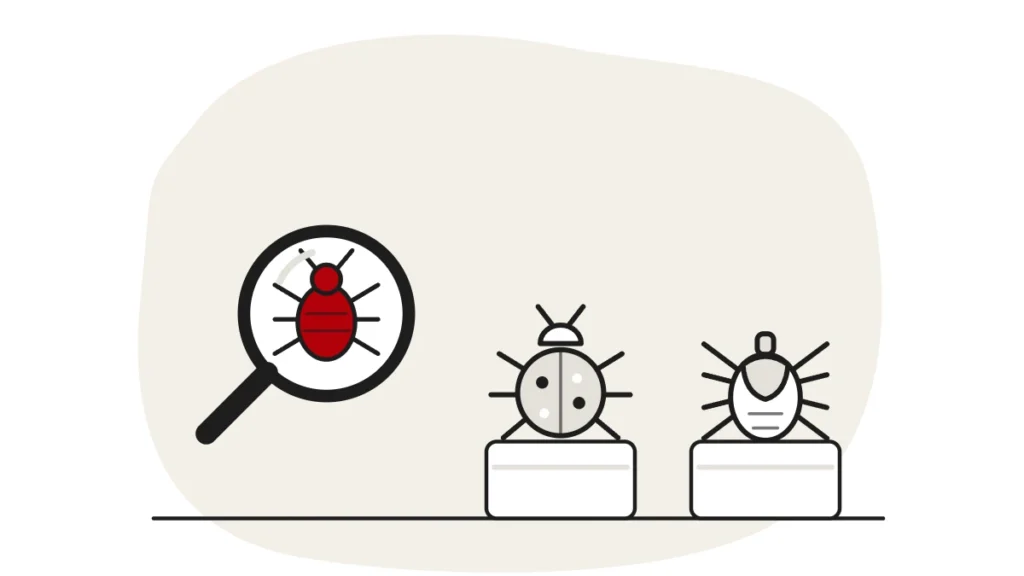
The bugs most often mistaken for bed bugs are carpet beetles and their hairy larvae, booklice, spider beetles, fleas, ticks, cockroach nymphs, and bat and swallow bugs. Bed bugs are flat, oval and reddish-brown, crawl rather than jump or fly, and hide close to where you sleep. Where you found it, and how it moves, usually tell you most.
Reviewed by James Rhoades, Owner, ThermoPest · Last reviewed 15 October 2026
Finding a small brown bug in your bedroom is unsettling, but plenty of unrelated insects get mistaken for bed bugs. Below is what a real bed bug looks like, then each lookalike side by side, with sizes and signs to check, drawing on the NHS, the BPCA and the Natural History Museum.
What does a bed bug actually look like?
It helps to know the real thing before comparing. The NHS says adult bed bugs are around 5mm long and can be dark yellow, red or brown. Adults are about the size of an apple seed, with a flat, oval body that turns balloon-like, reddish-brown and longer after a recent feed.
- Young bed bugs (nymphs): smaller, and translucent or whitish-yellow, from around 1.5mm when they first hatch. Our guide to bed bug nymph identification has more detail.
- Eggs: pinhead-sized and pearl-white. See how to spot bed bug eggs.
- Movement: bed bugs don’t fly or jump like fleas, but can crawl quickly over floors, walls and ceilings.
- Signs nearby: the NHS lists spots of blood on bedding and small brown spots of droppings on bedding or furniture. You may also see pale yellow skins that nymphs shed as they grow.
Bugs That Look Like Bed Bugs: Comparison Table
Use this as a quick check. Sources are named in the sections below; where a source gives no size, we’ve left it out.
| Bug | Size | Colour | Shape | Where found | Bites people? |
|---|---|---|---|---|---|
| Bed bug (adult) | About 5mm (NHS) | Dark yellow, red or brown | Flat oval; swollen after feeding | Mattress seams, bed frames, furniture near the bed | Yes, usually at night |
| Carpet beetle (adult) | 2–4mm (BPCA, variegated carpet beetle) | Mottled brown, grey and cream | Small, round or oval | Seen indoors in spring and early summer; lays eggs in fluff, felt and old birds’ nests | No |
| Carpet beetle larva (“woolly bear”) | About 4mm (BPCA) | Covered in brown hairs | Hairy, maggot-like | Dark, undisturbed spots with wool, fur or feathers | No, but larval hairs can cause an itchy rash in some people |
| Booklouse | About 1–2mm | Varies; hard to see | Tiny, soft, louse-like | Damp, humid places with mould: old books, boxes, near leaking pipes | No |
| Spider beetle | 3–4.5mm (Natural History Museum, golden spider beetle) | Golden yellow hairs | Round, globular body, long thin legs | Stored food, cupboards, lofts, cellars | Not harmful to health |
| Flea | No larger than about 3mm | Reddish-brown | Flattened side to side; jumps | Pets, pet bedding, carpets, soft furnishings | Yes, often around the ankles |
| Tick | Tiny | Varies | Small oval body, 8 legs, spider-like | Woods, long grass, some parks and gardens; carried in on people or pets | Yes, attaches to the skin |
| Cockroach nymph | Smaller than adults (German cockroach adults about 13mm) | German cockroach nymphs: dark with a tan stripe down the back | Like a small adult, without wings | Kitchens and bathrooms, near food and water | Scavenger: feeds on food scraps and refuse (BPCA) |
| Bat bug / swallow bug | Similar to bed bugs | Red- or grey-brown | Almost identical to a bed bug | Near bat roosts in lofts and walls, or swallows’ nests | Occasionally, when their usual hosts leave |
Carpet Beetles vs Bed Bugs
Carpet beetles are easily mistaken for bed bugs, but the adults and larvae look quite different once you know what to check.
Adult Carpet Beetles
The BPCA describes the variegated carpet beetle as 2–4mm long, oval and mottled brown, grey and cream, a little like a tiny ladybird. Adults feed on pollen and nectar, and the BPCA says they’re often seen in April, May and June looking for places to lay eggs. Bed bugs are flatter, plain reddish-brown and don’t fly.
Carpet Beetle Larvae (“Woolly Bears”)
The larvae are what do the damage. The BPCA says they’re about 4mm long, covered in brown hairs and tend to roll up when disturbed. They eat wool, fur, feathers and hair, and leave round holes along the seams of fabric. When they moult, they leave brown, shell-like, bristly cast skins. Bed bug shed skins, by contrast, are pale yellow.
Are these carpet beetles or bed bugs in my mattress?
Look at the skins and the bugs together. Hairy, bristly brown skins and fuzzy larvae point to carpet beetles, especially near wool blankets, feather pillows or fluff under the bed. Flat, reddish-brown bugs with pale skins, dark droppings and blood spots in the mattress seams point to bed bugs.
Carpet beetles don’t feed on blood, but itchy marks don’t rule them out. Some people report “bites” and an intensely itchy rash that turns out to be a reaction to the hairs of carpet beetle larvae. If you think you have them, our carpet beetles page explains what to look for and how we deal with them.
Bed bugs vs fleas: how to tell, and which is worse?
Fleas and bed bugs both bite, so they’re easy to mix up. Movement settles it quickly: bed bugs don’t jump, while fleas do.
- Size and shape: adult fleas are no larger than about 3mm, reddish-brown, wingless and flattened from side to side, so they look as if they’re walking on edge. Bed bugs are flattened top to bottom, like a seed.
- Where they are: the BPCA says fleas are often found on pets and soft furnishings, and their eggs drop onto the floor and nearby furniture. Bed bugs stay close to where people sleep.
- Bites: the NHS says flea bites are usually found in groups below the knees, and the BPCA says they’re often around the ankles. The NHS says bed bug bites are often on skin exposed while sleeping, like the face, neck and arms, and often in a line or grouped together. See what bed bug bites look like.
Do fleas leave blood spots on sheets?
Flea droppings, or flea dirt, look like black specks. The BPCA suggests combing your pet and adding water to any black specks: if they turn red, it points to fleas. The NHS says bed bugs leave spots of blood and small brown spots of droppings on bedding. So dark specks alone don’t settle it; where they are, and whether you have pets, matter more.
Fleas vs bed bugs: which is worse?
Neither is pleasant, and the honest answer is that they cause different problems. The NHS says bed bug bites don’t usually cause other health problems, but bed bugs hide in cracks and seams around the bed and are hard to clear without professional help. Fleas usually show up on pets first, and the BPCA says they need clearing from the home as soon as possible for the health of both people and animals. If fleas are the problem, see our fleas page.
Bed Bugs vs Ticks
Bed bugs are sometimes mistaken for ticks. The NHS describes ticks as tiny, spider-like creatures with a small oval body and 8 legs that live in woods, areas with long grass and sometimes urban parks and gardens. Bed bugs, like all insects, have six legs.
- Where you find it: a tick is usually found attached to your skin or a pet’s coat after time outdoors. Bed bugs live indoors, near the bed.
- Other signs: bed bugs leave droppings and blood spots on bedding (NHS) and pale shed skins around the bed. A tick doesn’t leave those signs in your bedroom.
If a tick is attached, the NHS advises removing it with fine-tipped tweezers or a tick-removal tool, gripping it as close to the skin as possible and pulling upwards slowly without squeezing or crushing it, then cleaning the bite. Ask for an urgent GP appointment or contact NHS 111 if, within 3 months of a tick bite, you feel flu-like or unwell or have a round or oval rash.
Booklice, Spider Beetles and Cockroach Nymphs
Booklice
Booklice are about 1–2mm long, which is why they’re often confused with bed bug nymphs, but unlike bed bugs they don’t bite. They prefer warm, humid or damp places and feed on mould, so you’ll find them near damp books, cardboard boxes, leaking pipes or condensation rather than in mattress seams.
Spider Beetles
The Natural History Museum describes the golden spider beetle as 3–4.5mm long, with a large, round body, long thin legs and golden yellow hairs. It scavenges stored food such as grain, dried fruit and dog biscuits, and lives in lofts, cellars and old birds’ nests. The Museum says it isn’t harmful to health.
Cockroach Nymphs
Cockroach nymphs look like smaller adults without wings, and German cockroach nymphs are darker with a tan stripe down the middle of the back. Adults are about 13mm long. German cockroaches are most common in kitchens and bathrooms, though they can spread to bedrooms when numbers are large.
Bat Bugs and Swallow Bugs in the UK
A bat bug, Cimex pipistrelli, is recorded in the UK feeding on bats including pipistrelles and noctules, according to the BioImages database of British wildlife. Bat bugs and bed bugs are nearly identical to the naked eye. The main difference: the fringe hairs behind the head are longer than the width of the eyes in bat bugs and shorter in bed bugs.
- Bat bugs live with roosting bats in lofts or wall cavities. They’re typically found one at a time on upper floors near the roost, while bed bugs gather in groups near beds and sofas. Bat bugs can bite people but can’t reproduce on human blood, and when bats are excluded from a building or die, bat bugs will move into living areas.
- Swallow bugs live in swallows’ nests. They’re more likely to bite people in spring before the swallows return, or in autumn after the birds have left the nest.
The problem starts at the roost or nest, so treatment is different. Bats are protected by law: GOV.UK guidance for England says it is an offence to intentionally or recklessly disturb a bat while it’s in its roost, or to damage or destroy a bat’s breeding or resting place. Don’t block access or remove a roost yourself; get specialist advice first. This is general information for England, not legal advice; checked October 2026.
How to Check What You’ve Found
A few simple steps make identification much easier:
- Catch the bug on clear sticky tape or in a sealed bag, and photograph it next to a coin for scale.
- Note where you found it: mattress seam, windowsill, kitchen, pet bed or skin.
- With a torch, check mattress seams, the bed frame and the headboard for dark droppings, pale shed skins and blood spots.
If you’ve already had a treatment and you’re finding bugs that look flat and lifeless, our guide to what dead bed bugs look like explains what that can mean.
If you’re still not sure, a professional bed bug inspection will confirm what you’re dealing with. If it does turn out to be bed bugs, our treatment is heat-led, with targeted spray where it’s needed, and we’ll explain whether a return visit is likely. In flats, we ask to inspect neighbouring flats too, because bed bugs can move between them. Avoid foggers and bug bombs in the meantime, as they tend to scatter bed bugs into new hiding places.
FAQs
Are there beetles that look like bed bugs?
Yes. Carpet beetles and spider beetles are both small, round and brownish, and get mistaken for bed bugs. The BPCA describes adult variegated carpet beetles as 2–4mm and mottled brown, grey and cream. Beetles have hard wing cases and a rounder, domed shape, while bed bugs are flat and plain reddish-brown.
Do carpet beetles live in beds?
Carpet beetle larvae can turn up in bedrooms if there’s wool, feathers or fluff to feed on, such as wool blankets, feather pillows or dust under the bed. They prefer dark, undisturbed spots. They don’t feed on blood, but their hairs can cause an itchy rash in some people.
Are there bat bugs in the UK?
Yes. A bat bug, Cimex pipistrelli, is recorded in the UK on bats such as pipistrelles. It looks almost identical to a bed bug, and bat bugs are usually found one at a time on upper floors near the roost. Bats and their roosts are legally protected, so get specialist advice rather than disturbing a roost yourself.
Not sure what you’ve found?
If you’ve found a bug you can’t identify, or signs on the mattress, an inspection will confirm what you’re dealing with before you spend money on the wrong fix. ThermoPest is a member of the BPCA and NPTA, and our technicians arrive in unmarked vans.