Most people get small, itchy bumps from bed bug bites, but some react more strongly, with larger, painful swellings and intense itching. The NHS says a severe allergic reaction (anaphylaxis) is possible but rare. A pharmacist can help with milder reactions. Call 999 if your lips, mouth or throat suddenly swell or you struggle to breathe.
Reviewed by James Rhoades, Owner, ThermoPest · Last reviewed 15 October 2026
This guide explains what a stronger reaction to bed bug bites can look like, why bites sometimes appear days later, what a pharmacist can help with, and the signs that mean you should speak to a GP, contact NHS 111 or call 999. We’re pest specialists, not doctors, so we describe the signs and point you to NHS advice rather than diagnose.
Can you be allergic to bed bug bites?
Yes, people react to bed bug bites in very different ways. In our experience, some people show no marks at all, many get itchy bumps, and some have a stronger, inflammatory or allergic reaction.
When a bed bug feeds, it injects fluids, including an anaesthetic and an anticoagulant, which is why you don’t usually feel the bite at the time. The marks you see afterwards are your skin’s reaction to that bite, so two people sleeping in the same bed can wake up looking very different.
Bed Bug Bite Allergic Reaction: Signs to Look For
A Typical Reaction
The NHS describes bed bug bites as raised and itchy, often in a line or grouped together, and often on skin left uncovered while you sleep, such as the face, neck and arms. On white skin they usually look red or pink. On black or brown skin they may look brown, red or purple, and can be harder to see. For a closer look at bite patterns, see our guide to bed bug bites.
A Stronger, Allergic-Type Reaction
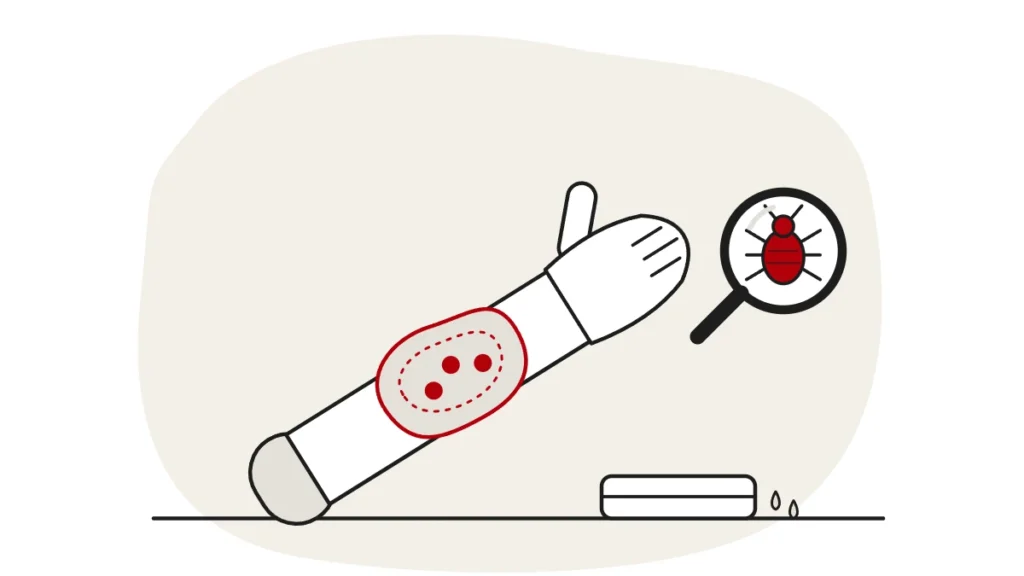
The NHS says some people have a stronger reaction, with intense itching and possibly painful swelling. Enlarged bite marks and painful swellings at the bite site can be signs of an allergic reaction. You might notice:
- bites that swell into larger, raised welts rather than small bumps;
- a wider area of swelling or redness around a group of bites;
- itching intense enough to keep you awake;
- bites that feel sore or painful rather than just itchy.
Large, swollen welts can look a lot like hives, and the two are easy to confuse. Our guide to bed bug bites vs hives walks through how to tell them apart.
A Severe Allergic Reaction (Anaphylaxis)
The NHS says anaphylaxis from bed bug bites is possible but rare. It’s an emergency, and the warning signs are covered below under when to call 999.
Delayed Reaction to Bed Bug Bites: Why Bites Appear Days Later
This is one of the most common reasons people are confused about what’s biting them. Many people don’t notice bite marks until one to several days after the bite, and in some people the marks can take up to about two weeks to develop.
A delayed reaction can make it hard to work out where you were bitten. A few things to keep in mind:
- Bites after a trip: marks that appear a few days after a hotel stay or a night away could come from that bed, or from bugs that travelled home with you in your luggage.
- Bites that keep coming: if new marks keep appearing after nights in your own bed, the bugs are likely to be close to where you sleep.
- Different reactions in the same home: one person may react quickly, another slowly, and another not at all.
If you’re getting new bites but can’t find any bugs, our guide to getting bitten at night with no bed bugs in sight covers the other causes worth ruling out.
Bed Bug Reactions at a Glance
A rough guide to what you’re seeing and where to get help. If you’re unsure, ask a pharmacist or contact NHS 111.
| Type of reaction | What you might notice | Where to get help |
|---|---|---|
| Typical bites | Small, raised, itchy bumps, often in a line or group on uncovered skin | Usually settle on their own; a pharmacist can advise on itching |
| Stronger reaction | Larger swollen welts, painful swelling, itching that stops you sleeping | Pharmacist first; GP if it isn’t improving after pharmacy treatment |
| Possible infection | Skin around the bite hot, red, painful or swollen, or pus or fluid coming out | Pharmacist or GP |
| Severe allergic reaction | Swelling of the lips, mouth, throat or tongue, difficulty breathing, feeling faint | Call 999 straight away |
How to Treat an Allergic Reaction to Bed Bug Bites
This section is general information, not medical advice. The NHS says bed bug bites usually clear up on their own within about a week.
Things You Can Do at Home
- Put something cool, such as a clean, damp cloth, on the bites to ease itching and swelling.
- Keep the area clean.
- Try not to scratch, as this raises the chance of infection.
Creams and Antihistamines From a Pharmacist
A pharmacist is a good first stop. The NHS says they can recommend:
- a mild steroid cream, such as hydrocortisone, to ease the symptoms. Children under 10 and pregnant women should get advice from a doctor before using it;
- antihistamines, which may help if the bites are very itchy and stopping you sleeping.
Tell the pharmacist about any other medicines you take, any health conditions, and whether the treatment is for a child, so they can check what’s suitable. We don’t recommend specific products or doses; follow the pharmacist’s advice and the leaflet that comes with the medicine.
When to See a GP About Bed Bug Bites
The NHS advises seeing a GP if:
- the bites are still very painful, swollen or itchy after trying pharmacy treatment;
- pain or swelling around the bites is spreading.
The NHS also says an infected bite may need treatment with antibiotics. On its insect bites and stings page, it advises seeing a pharmacist if a bite looks infected: the skin around it feels hot or looks red, the bite is painful or swollen, or pus or fluid is coming from it. The same page says to see a GP for any bite on a baby under 1, to get an urgent GP appointment or contact NHS 111 if symptoms get worse or don’t improve, or if you’ve had a serious allergic reaction to a bite or sting before, and to call NHS 111 for advice about a child under 5.
Severe Reaction to Bed Bug Bites: When to Call 999
The NHS anaphylaxis page says to call 999 straight away if you think you or someone else is having an anaphylactic reaction, including if:
- the lips, mouth, throat or tongue suddenly become swollen;
- breathing becomes very fast or difficult, there’s wheezing, or the throat feels tight;
- it becomes hard to swallow;
- the skin, tongue or lips turn blue, grey or pale (on black or brown skin, this may be easier to see on the palms or soles of the feet);
- there’s sudden confusion, drowsiness or dizziness, or someone faints and can’t be woken;
- a child is limp, floppy or not responding as they normally would.
The NHS says a swollen, raised or itchy rash can also be part of a serious allergic reaction. If you have an adrenaline auto-injector, the NHS says to use it first (instructions are on the side of the injector), then call 999. The NHS advises lying down with your legs raised, or sitting up slowly if breathing is hard, and not standing or walking even if you start to feel better. See the NHS anaphylaxis page for the full guidance.
Are bed bug bites dangerous?
For most people, no. Bed bugs are not known to spread disease to people, and the NHS says bites usually don’t cause other health problems. The main problems are itching, lost sleep, the chance of infection from scratching and, for a small number of people, a strong allergic reaction. Some scary stories don’t hold up either: read whether bed bugs can really go in your ear.
Stopping the Bites at the Source
Creams and antihistamines can ease the reaction, but new bites will keep coming while bed bugs are still in the bedroom. With a torch, check mattress seams and labels, the bed frame joints and headboard, and furniture beside the bed. Look for live bugs (the NHS says adults are around 5mm long), pale shed skins, small dark spots and tiny blood marks on the sheets.
Avoid shop-bought foggers, bug bombs and smoke bombs: they tend to scatter bed bugs into new hiding places rather than clear them. If you can’t find the source, or you’re reacting badly and want certainty quickly, a professional bed bug inspection will confirm whether bed bugs are the cause and where they’re hiding. If they are, ThermoPest’s treatment is heat-led, with targeted spray where it’s needed; read how bed bug heat treatment works. More than one visit may be needed, and after heat treatment you can usually go back into your home after 2 hours, unless your technician advises otherwise.
FAQs
Can you have a delayed reaction to bed bug bites?
Yes. Many people don’t notice bite marks until one to several days after being bitten, and in some people they can take up to about two weeks to appear. That delay can make it hard to tell where or when you were bitten.
What does an allergic reaction to bed bug bites look like?
Instead of small itchy bumps, you may see larger, swollen welts, painful swelling around the bites or itching intense enough to stop you sleeping. The NHS says a severe reaction (anaphylaxis) is possible but rare. Swelling of the lips, mouth or throat, or difficulty breathing, means call 999.
Can I take an antihistamine like cetirizine for bed bug bites?
The NHS says antihistamines may help if bites are very itchy and stop you sleeping. Ask a pharmacist which one is suitable for you, especially if you take other medicines, are pregnant or it’s for a child, and follow their advice and the medicine leaflet.
What cream is good for bed bug bites?
The NHS says a pharmacist can recommend a mild steroid cream such as hydrocortisone to ease symptoms. Children under 10 and pregnant women should get advice from a doctor before using it. A cool, damp cloth can also ease itching.
Do you need antibiotics for bed bug bites?
Not usually. The NHS says antibiotics may be needed if a bite becomes infected, for example if the skin feels hot, the bite is painful or swollen, or pus is coming out. Speak to a pharmacist or GP if you think a bite is infected.
Reacting to bites and not sure why?
If you keep waking up with new bites, an inspection will confirm whether bed bugs are the cause and where they’re hiding. ThermoPest is a member of the BPCA and NPTA, and our technicians arrive in unmarked vans.