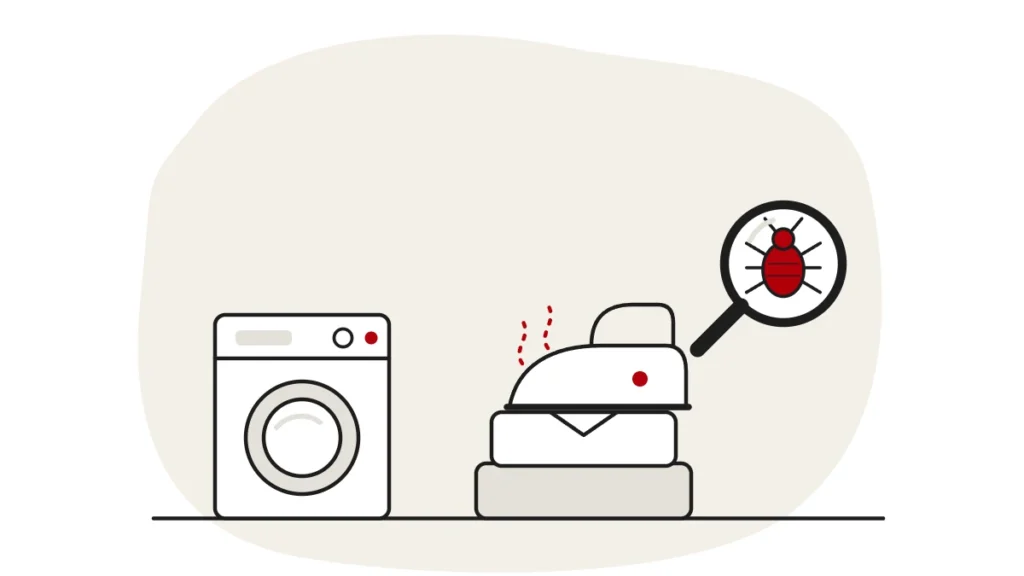
Yes, ironing can kill bed bugs and eggs on the fabric directly under a hot iron, but it only treats what the plate touches and can miss seams, pockets and thick layers. For clothes, washing and drying works better: the NHS advises a hot wash at 60°C, then tumble drying on a hot setting for at least 30 minutes.
Reviewed by James Rhoades, Owner, ThermoPest · Last reviewed 15 October 2026
If you’ve found bed bugs, or think you’ve brought some home, your clothes and bedding are one of the first things to sort out. This guide explains what ironing, steam, washing, drying, dry cleaning and freezing can and can’t do, how to handle clothes without spreading bugs around your home, and whether shared laundry rooms are a risk.
Does ironing kill bed bugs on clothes?
Heat kills bed bugs, and a hot iron is hot. Pressed slowly over a garment, it can kill bugs and eggs sitting on the surface it touches. The problem is reach. Bed bugs and their eggs tuck themselves into seams, collars, cuffs, pockets, folds and hems, and an iron passing over the top of thick fabric may not heat those spots all the way through.
Ironing also has practical limits:
- It’s slow. Ironing a whole wardrobe properly, both sides, every seam, takes hours.
- It can’t reach inside padded or thick items such as coats, duvets and cushions.
- Heat and movement can make bugs crawl away from the iron before it reaches them, onto the ironing board or the floor.
So ironing is a useful extra step for delicate items you can’t put in a dryer, or a final pass over seams and collars. It isn’t a replacement for washing and drying.
How to Iron Clothes If You Think They Have Bed Bugs
- Bag the clothes in the room they came from and iron them in a room with no signs of bed bugs.
- Use the hottest setting the care label allows.
- Go slowly, press both sides, and pay extra attention to seams, pockets, collars and hems.
- Put each finished item straight into a clean bag or lidded plastic box.
Does a steam iron kill bed bugs?
Steam helps heat move into fabric, so a steam iron is a little better than a dry one on fabrics that allow it. It still only treats the patch under the plate, though. To be effective against bed bugs, steam needs to be at least about 54°C and shouldn’t have a forceful airflow, because a strong blast can scatter the bugs. A burst of steam from an iron is exactly that kind of blast, so move slowly and don’t blow bugs off the garment and onto the floor.
Can you iron your mattress or bed to kill bed bugs?
We don’t recommend it. A mattress is far too thick for an iron to heat through, so bugs and eggs deeper in the seams, piping and frame are left untouched. Bugs on the surface are likely to move away from the heat into the bed frame, headboard or nearby furniture, which spreads the problem rather than solving it. There’s also a real risk of scorching the mattress or starting a fire, especially with foam.
Does the iron trick work for checking for bed bugs?
Some people run a hot iron over a mattress to try to drive bed bugs out of hiding. It isn’t a reliable way to check. Bugs may stay deep in seams and cracks, or move further away from the heat where you can’t see them. A careful look with a torch along mattress seams, the bed frame, headboard and skirting boards will tell you more. Look for small dark spots, tiny blood marks on sheets, pale shed skins and the bugs themselves. The NHS says adults are around 5mm long.
Does washing clothes kill bed bugs?
It can, if the water is hot enough. The NHS advises washing affected bedding and clothing on a hot wash (60°C) and then tumble drying on a hot setting for at least 30 minutes. The washing machine and dryer work as a pair, and the drying step matters: a dryer on high heat can kill bed bugs.
Can bed bugs survive a washing machine?
Some can survive a cool or short wash, especially eggs. A low-temperature cycle may wet or dislodge bugs without killing them all. If a care label won’t allow a hot wash, don’t rely on the wash at all. Put the item through a hot tumble dry instead, if the label allows.
How long should you tumble dry clothes to kill bed bugs?
The NHS says to tumble dry on a hot setting for at least 30 minutes. Don’t overfill the drum: a packed dryer heats unevenly, and thick items take longer to heat through.
Washing, Drying, Ironing and Other Methods Compared
| Method | What it can do | Limits |
|---|---|---|
| Hot wash | The NHS advises 60°C for bedding and clothing that may have been in contact with bed bugs | Many fabrics can’t take it; follow with a hot tumble dry |
| Hot tumble dry | The NHS advises a hot setting for at least 30 minutes | Overloaded drums heat unevenly; check care labels |
| Ironing | Kills bugs and eggs on the fabric directly under the plate | Slow, misses deep seams and thick layers, can scatter bugs |
| Steam | Helps heat get into fabric surfaces | Forceful airflow can scatter bed bugs |
| Dry cleaning | An option for clothes that can’t be washed and dried | Bag items and tell the cleaner first |
| Freezing | The NHS suggests 2 to 3 weeks in a plastic bag in the freezer for items you can’t wash | Needs freezer space; bulky items won’t fit |
Does dry cleaning kill bed bugs?
Dry cleaning is a sensible option for clothes that can’t be washed or tumble dried, such as suits, wool coats and delicate fabrics. It’s the usual option for coats and jackets that can’t be laundered and dried. Take the items in a sealed bag and tell the dry cleaner why, so the bag isn’t opened on their counter and nothing spreads to other customers’ clothes.
What about clothes you can’t wash or dry?
- Freeze them. The NHS suggests putting items that can’t be washed in a plastic bag and into the freezer for 2 to 3 weeks. Let them come back to room temperature inside the bag.
- Dry clean them, bagged, as above.
- Bag and set aside. If an item can’t be treated, seal it in a bag away from the bedroom. Our guide on how long bed bugs can live in a sealed plastic bag explains how long to keep it sealed.
- Don’t rush to throw clothes away. It’s rarely necessary, and carrying them through the house can spread bugs. If you do need to get rid of something, follow our guide on how to dispose of bed bug infested items.
How to Handle Clothes Without Spreading Bed Bugs
- Bag at the source. Put clothes into sealable bags in the room where they’re kept, and seal them before carrying them anywhere. Don’t hold armfuls against your body.
- Go straight to the machine. Empty the bag directly into the drum and put the empty bag in an outside bin.
- Wash and dry following the NHS advice above, using the hottest settings each care label allows.
- Store clean items sealed in fresh bags or lidded plastic boxes, away from the bed and sofa, until your home has been treated.
- Don’t move to another room to sleep. Bed bugs can follow you and start a second problem.
Wondering whether bugs are living in your wardrobe? Read can bed bugs live in clothing?
Can you get bed bugs from shared laundry facilities?
It’s possible but not a common way to pick them up. Bed bugs spread by being carried, mainly in luggage, second-hand furniture, bags and clothing, or from a neighbouring flat. A washing machine is wet, moving and far from anywhere people sleep, so it’s a poor place for bed bugs to stay, and a hot wash followed by a hot dry is hostile to them.
The small risk in a communal laundry room or launderette is around the machines rather than inside them: folding tables, benches, shared baskets and the moments when clothes are being sorted or left waiting. A few simple habits keep that risk low:
- Carry laundry in a sealed bag and use your own basket, not a shared one.
- Don’t put clean clothes down on shared tables or benches.
- Move items promptly from washer to dryer, and use a hot dry where the label allows.
- Bag clean clothes straight away before carrying them home.
If you already have bed bugs at home, keep everything bagged on the way to a shared laundry and back, so you don’t leave bugs behind for neighbours.
Why Clean Clothes Don’t Mean a Clear Home
Washing and drying stops you carrying bed bugs around in your clothes, but most of an infestation lives in and around the bed: mattress seams, bed frames, headboards, skirting boards and furniture joints. Laundry doesn’t touch those hiding places. The NHS says that if you think you have bed bugs, you should contact your local council or a pest control service.
Professional bed bug heat treatment heats the rooms themselves, so bugs and eggs are treated where they actually live. ThermoPest’s treatment is heat-led, with targeted spray where it’s needed, and a return visit is sometimes needed. Before we arrive, our heat treatment preparation guide tells you which clothes to wash and bag and which can stay in the rooms being treated, so you don’t do more laundry than you need to.
FAQs
Does ironing kill bed bug eggs?
It can kill eggs on fabric directly under a hot iron. Eggs are tiny and usually tucked into seams and folds, so an iron can easily miss them. A hot wash and hot tumble dry, following the NHS advice, is more reliable for clothes.
Will ironing my bed kill bed bugs?
No. An iron can’t heat through a mattress or reach the frame and headboard, and bugs on the surface are likely to move away from the heat. It’s also a fire risk. A bed needs inspecting and treating properly.
Can bed bugs spread through washing machines?
It’s unlikely. Bed bugs don’t live in washing machines, and a hot wash followed by a hot tumble dry is hostile to them. The small risk in shared laundries is from shared surfaces and baskets, so keep your laundry bagged.
Can bed bugs survive in water?
A short soak or cool wash may not kill all of them, which is why temperature matters more than water. See our guide on whether bed bugs can survive in water.
Washed everything and still getting bitten?
Clean clothes help, but the bugs are usually living in and around the bed. An inspection will confirm what you’re dealing with. ThermoPest is a member of the BPCA and NPTA, and our technicians arrive in unmarked vans.