Bed bugs can often survive a dunking in water, so drowning isn’t a reliable way to get rid of them. They don’t swim, but they can float, cling to surfaces and hold on through a dunking. What kills them in the wash is heat, not water, and water can’t reach bugs hiding around your bed.
Reviewed by James Rhoades, Owner, ThermoPest · Last reviewed 15 October 2026
It’s a natural thought when you’ve found bed bugs: soak them, rinse them or wash them away. This guide explains why water on its own lets you down, what actually works for bedding and clothes, and what to do about the bugs you can’t put in a washing machine.
Can bed bugs drown in water?
They can drown eventually, but not quickly or reliably. Bed bugs, like other insects, don’t breathe through a mouth or nose. They take in air through small openings along the sides of the body, and they can cope with short periods without fresh air. A bug that’s been dropped into water, flicked down a sink or caught in a rinse can often recover once it’s out.
There’s no single, well-established figure for how long a bed bug lasts underwater, and it varies with water temperature, the bug’s age and whether it has recently fed. That’s why we don’t put a number on it. The practical point is simpler: if a method depends on bugs staying underwater long enough to drown, it will miss some of them.
Can bed bugs swim?
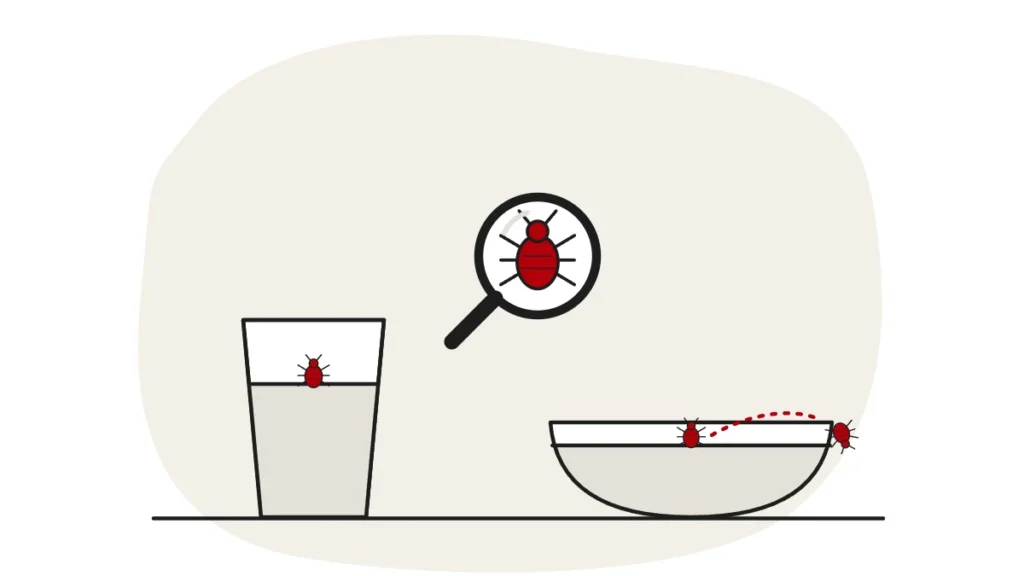
No. Bed bugs don’t swim and don’t live in water. A bug that ends up in water will usually float on the surface or cling to whatever it can grip, such as fabric, the side of a bowl or a floating hair. That’s part of what makes them hard to drown: they rarely sink on their own in plain water.
Do bed bugs float?
Usually, yes. They’re small, light and flat, and plain water has enough surface tension to hold them up. Floating bugs can drift to the edge and climb out, or simply walk away once the water drains.
Can bed bug eggs survive in water?
Eggs are a bigger problem than adults. Female bed bugs glue their eggs into seams, joints and crevices, so a soak or rinse often doesn’t even dislodge them. Water alone shouldn’t be relied on to kill eggs. Heat is what matters, which is why hot washing and hot tumble drying work where plain soaking doesn’t. If you’re not sure what you’re looking at, our guide to how to check for bed bugs shows what eggs, shed skins and droppings look like.
Does water kill bed bugs?
Water on its own is a poor way to kill bed bugs. Hot water at the right temperature does help with washable items, and it’s the heat that does the work. The table shows how the common water-based ideas compare.
| Method | Does it help? | Why |
|---|---|---|
| Cold or lukewarm soak | Not reliably | Bugs float or cling on, and eggs stay glued in place |
| Cool washing machine cycle | Not reliably | Some bugs and eggs can come through a cool cycle |
| Hot wash plus hot tumble dry | Yes, for washable items | The NHS advises a 60°C wash and at least 30 minutes on a hot tumble dry |
| Soapy water | Only for a bug you’ve caught | Doesn’t reach bugs and eggs hidden in the bed and room |
| Pouring boiling water | No, and it’s unsafe | Risk of scalds, damage and damp; misses hidden bugs |
| Soaking a mattress or sofa | No | Doesn’t reach every void, and can lead to damp and mould |
Does cold water kill bed bugs?
Not reliably. Cold water doesn’t stress bed bugs in the way heat does, and they can survive a cold rinse or soak. Freezing is a different thing: the NHS suggests putting items that can’t be washed in a plastic bag in the freezer for 2 to 3 weeks. A splash of cold water is not the same as a long spell in a freezer.
Does hot water kill bed bugs?
Hot water helps, as long as it’s hot enough and is followed by drying on heat. For bedding and clothes, the NHS advises a hot wash at 60°C and tumble drying on a hot setting for at least 30 minutes. Check care labels first; for delicate items, a hot tumble dry or the freezer may be better options. Our guide to whether ironing, washing or drying kills bed bugs on clothes covers this in more detail.
Can boiling water kill bed bugs?
Please don’t pour boiling water around your bedroom. It can scald you, warp or stain furniture and floors, and leave damp behind. It also can’t reach the bugs tucked deep inside joints, behind skirting boards or under carpet edges, so even if it kills the ones it touches, the infestation carries on.
Can bed bugs survive in water with detergent?
Detergent and soap reduce the surface tension of water, so a bug that falls into soapy water is less able to float and more likely to stay submerged than one in plain water. Some people use a cup of soapy water to deal with a single bug they’ve caught. That’s fine as far as it goes, but it only deals with that one bug.
In the washing machine, detergent on its own doesn’t replace heat. The reliable part of laundering is a hot wash followed by a hot tumble dry, as the NHS advises. Spraying soapy water around the bed isn’t a treatment: it doesn’t reach eggs or hidden bugs, and it leaves fabrics and mattresses damp.
Do bed bugs drown in the washing machine?
Some may, but the washing machine works mainly because of heat, not drowning. A cool or quick cycle can leave live bugs and eggs in the drum. To get the most out of laundry:
- Bag bedding and clothes in the bedroom, seal the bags, and carry them straight to the machine so you don’t drop bugs on the way.
- Wash at 60°C where the fabric allows, then tumble dry on a hot setting for at least 30 minutes, as the NHS recommends.
- Put clean items into fresh bags, not the bags you carried them in.
- Don’t leave clean laundry on or near an untreated bed.
Laundry is a useful step, but it only covers what fits in the machine. For more on what bed bugs do in your wardrobe, see can bed bugs live in clothes?
Can bed bugs survive a shower or a bath?
Bed bugs don’t live on people the way lice do. They feed, then go back to hiding near the bed, so it’s unusual to carry one into the shower. Showering doesn’t affect the bugs in your bedroom, which is where the problem is.
Do bed bugs need water, and do they avoid it?
Bed bugs don’t need to drink. They get the moisture they need from the blood they feed on, which is why they live close to people rather than near sinks, baths or damp areas. Our guide to bed bug feeding habits and patterns explains how often they feed and why they stay close to where you sleep.
They aren’t attracted to water, and they don’t seek it out. Some people stand bed legs in dishes of water to stop bugs climbing up. It can catch a few, but bed bugs can reach a bed in other ways, such as from the wall, the headboard or bedding touching the floor. Read more in can bed bugs climb or fly?
Can bed bugs survive outside in the rain?
Bed bugs are indoor insects. They don’t set up home in gardens or survive well outdoors for long, and rain isn’t something they’re adapted to. Furniture left outside can still carry bugs indoors, though. We look at this in can bed bugs live outside?
Why Water Can’t Clear a Bed Bug Infestation
Even if you could drown every bug you touched, most of them aren’t where water can reach. Bed bugs hide in mattress seams, bed frame joints, headboards, behind skirting boards, under carpet edges and inside furniture, often within a short distance of the bed. Eggs are glued into those same places.
Trying to soak these areas brings its own problems: damp mattresses and sofas, mould, and damage to floors and furniture.
Shop-bought foggers, bug bombs and smoke bombs aren’t the answer either. They tend to scatter bed bugs deeper into walls and into other rooms rather than clearing them.
What Actually Works
While you’re arranging help, these steps are worthwhile:
- Hot wash and hot tumble dry bedding and clothes, following the NHS advice above.
- Bag and freeze small items that can’t be washed, for the 2 to 3 weeks the NHS suggests.
- Pull the bed slightly away from the wall and keep bedding off the floor.
- Reduce clutter around the bed, which the NHS also recommends, so there are fewer places to hide.
- Don’t move furniture or belongings to other rooms or homes, which can spread the problem.
See the NHS page on bedbugs for its full guidance.
To clear an infestation from the room itself, professional treatment is the reliable route. At ThermoPest our approach is heat-led, with targeted spray where it’s needed, so it reaches the cracks, seams and furniture where bugs and eggs hide, places water never gets to. Find out how bed bug heat treatment works. Heat treatment doesn’t leave your home wet, and for homes you can usually go back in 2 hours after treatment unless your technician advises otherwise. Some infestations need a return visit, and your technician will tell you if that’s likely.
FAQs
How long can bed bugs survive underwater?
There isn’t a reliable published figure we can point you to, and it varies with water temperature and the bug’s condition. What matters is that bed bugs can often survive a soak or rinse and recover afterwards, so drowning isn’t a dependable way to kill them.
Can you drown bed bugs?
It’s possible to drown an individual bug eventually, but it’s not a practical way to deal with an infestation. Bugs float, cling on and climb out, and most of them, along with their eggs, are hidden in places water can’t reach.
Can bed bugs breathe underwater?
No. Bed bugs breathe air through small openings along their bodies. They can cope with short periods without fresh air, which is why a quick dunking often doesn’t kill them, but they can’t breathe underwater.
Does hot water kill bed bug eggs?
Heat is what kills eggs on washable items. The NHS advises a 60°C wash followed by a hot tumble dry for at least 30 minutes. Eggs glued into the mattress, bed frame or room won’t be touched by washing, so those need a different approach.
Do bed bugs like water?
No. Bed bugs aren’t attracted to water and don’t need to drink it; they get moisture from blood. They live close to where people sleep, not near sinks, baths or damp areas.
Water not working?
If you’re still finding bites or signs on the mattress after washing everything, an inspection will confirm what you’re dealing with and where the bugs are hiding. ThermoPest is a member of the BPCA and NPTA, and our technicians arrive in unmarked vans.