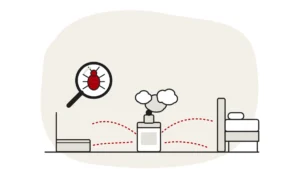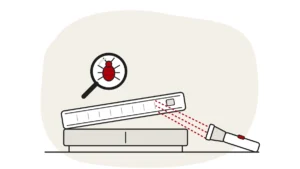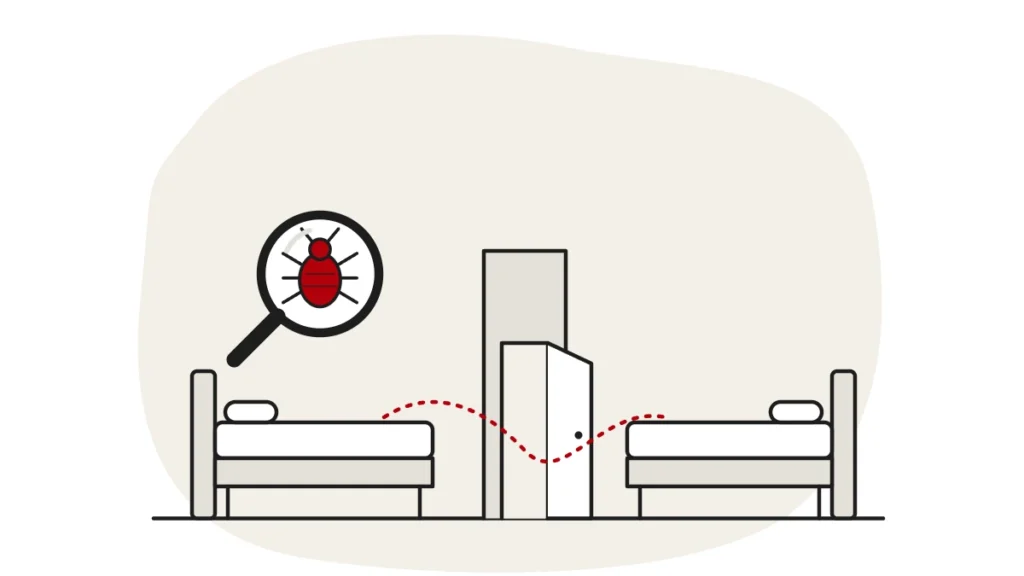
Not necessarily. Bed bugs usually stay close to where someone sleeps, so in the early stages they’re often found in just one bedroom. But they can spread to other rooms, especially as numbers grow or when people and belongings move around the home. So treat the rest of the home as at risk and check it.
Reviewed by James Rhoades, Owner, ThermoPest · Last reviewed 15 October 2026
Finding bed bugs in one room is upsetting, and the obvious next worry is whether the whole house or flat is affected. This guide explains why bed bugs often stay in one room, what makes them spread, how to check the other rooms, and the simple things you can do tonight to avoid spreading them yourself.
Can bed bugs stay in one room?
Yes, and they often do, at least at first. Bed bugs feed on blood, mostly human, and they hide in seams, cracks and joints close to where a person sleeps or sits for long periods. If one person is being bitten in one bed, the bugs have no reason to travel far. That’s why a newer infestation is usually found in and around a single bed: the mattress seams, the bed frame, the headboard and the furniture right next to it.
So it’s possible to have bed bugs in only one room. What you can’t safely assume is that they’ll stay there. “Only one room” is often a description of where the signs are easiest to see, not proof that nothing has moved.
Why are bed bugs only in one room?
When bed bugs are found in just one room, it’s usually for one of these reasons:
- They arrived there. A suitcase, bag, second-hand bed or piece of furniture brought them into that room, and they settled near the nearest sleeper.
- The infestation is young. There are still few enough bugs that they can all hide and feed close by.
- Only one person is reacting. Not everyone reacts to bites, so other rooms may have bugs without anyone noticing marks on their skin.
If you find one bed bug, are there more?
Usually, yes. A single bed bug can be a one-off that came in on a bag or coat, but bed bugs breed and hide well, so where you see one there are often others you haven’t found yet, including eggs and young bed bugs (nymphs), which are smaller and paler than adults.
Don’t panic, and don’t start spraying. Instead, look properly at the bed and the furniture near it (see the checklist below). If you find more bugs, shed skins, dark spots or blood marks, you’re dealing with an infestation rather than a stray. If you find nothing but keep being bitten, a professional bed bug inspection will confirm what’s going on.
Will bed bugs spread to other rooms?
They can. Bed bugs can’t fly or jump, but they crawl, and they’re very good at travelling in and on things people carry. Bed bugs tend to move from one room to another in two ways.
They’re Carried by People
This is the most common way bed bugs end up in a second room. A bug tucked into a dressing gown, a laundry basket, a bag, a pillow or a book gets moved, and a new hiding place starts. It happens most when people take bedding or clothes out of an affected bedroom without bagging them first.
They Crawl to Find a Host
Bed bugs can also crawl along skirting boards, under doors, along carpet edges and through gaps around pipes and cables. They’re more likely to do this when the bugs in a room can’t easily feed, for example when the person they’ve been feeding on stops sleeping there, or when a growing population runs short of hiding places.
Do bed bugs infest the whole house?
Left alone for long enough, they can reach several rooms, starting with other bedrooms and the places people sit for long periods, such as the sofa. Kitchens and bathrooms are less likely spots, because people don’t rest there for long.
If one bed has bed bugs, do they all?
Not always. In a home with several bedrooms, it’s common to find bugs in one bed and none, or only a few, in another. But because people move between rooms, sit on each other’s beds and share laundry, every bed in the home should be checked, not just the one where bites were noticed.
Two people can also share the same bed and only one gets bites. That doesn’t mean the bugs are only on one side of the bed. Some people simply don’t react to bites, so the person with no marks may be bitten too.
Flats, Shared Houses and Neighbours
If one flat in a building has bed bugs, the flats next to it, above and below are at higher risk. Bed bugs can travel between homes through gaps around pipes, cables, sockets and shared walls, particularly when an infestation is large or has been disturbed by sprays. This works both ways: your bugs may have come from next door, or may move there.
That’s why, when we treat a flat, we ask to inspect neighbouring flats too. Our guide to whether bed bugs can come from neighbours explains how bed bugs move between homes and what to look for.
How to Contain Bed Bugs to One Room
You can’t clear an infestation by containing it, but you can avoid making it bigger. A lot of spread inside homes comes from understandable reactions to finding bed bugs. Until the problem has been dealt with:
Keep Sleeping in Your Own Bed
It’s tempting to move to the sofa or the spare room. Try not to. The bugs in your bedroom will look for you, and the ones that come with you on your clothes or bedding will set up in the new spot. You can end up with two affected rooms instead of one, and a sofa is far harder to deal with than a bed.
Don’t Carry Things From Room to Room
- Bag bedding, clothes and soft items in the room they’re in, before you carry them anywhere. Tie the bags and take them straight to the washing machine.
- Don’t move furniture, bedside tables, boxes or piles of clothes out of the affected room.
- Don’t give away or throw out items without bagging them first, so you don’t spread bugs on the way out, or to someone else.
- Keep bags, coats and laptop cases off the bed in every room.
Wash and Dry What You Can
The NHS advises washing affected bedding and clothing on a hot wash (60°C) and tumble drying on a hot setting for at least 30 minutes. For items that can’t be washed, the NHS says to put them in a plastic bag in the freezer for 2 to 3 weeks. Our guide on how long bed bugs can live in a sealed plastic bag explains why bagging items isn’t a treatment on its own.
Avoid Sprays and Foggers
Shop-bought sprays, foggers, bug bombs and smoke bombs tend to scatter bed bugs into walls, sockets and other rooms rather than clear them. They’re one of the main reasons a one-room problem becomes a whole-home or whole-building one.
How to Check the Other Rooms
Use a torch and check every room where someone sleeps or sits for a while. You’re looking for live bugs (adults are around 5mm long, according to the NHS, and reddish-brown), pale shed skins, small dark spots of droppings and tiny blood marks on fabric.
| Room | Where to look | How likely |
|---|---|---|
| Bedroom where bites started | Mattress seams and labels, bed frame joints, headboard, bedside furniture, skirting near the bed | Most likely |
| Other bedrooms | Same places as above, plus any bed or sofa bed used by visitors | Possible, especially if people share rooms or laundry |
| Living room | Sofa seams and cushions, the underside of chairs, recliners, nearby skirting | Possible, especially if someone has been sleeping on the sofa |
| Hallway and landing | Coat hooks, bags left on the floor, carpet edges | Less likely |
| Kitchen and bathroom | Rarely needed unless someone sleeps or sits there for long periods | Unlikely |
Finding nothing in a room doesn’t fully rule it out, because a few bugs and eggs are easy to miss. But it does help show where the problem is centred.
Where did the bed bugs come from?
Working out how bed bugs got in helps you check the right places and avoid bringing more home. The usual routes are luggage after a trip, second-hand furniture, a neighbouring flat, or a visitor’s bag or coat. If you think they came home with you, our guide on how to avoid bringing bed bugs home from work has practical steps, and if a guest or family member has bed bugs at home, read can someone who has bed bugs bring them to your home?
Do you need to treat the whole home?
It depends on what an inspection finds. A good treatment plan starts with a full check of the home, not just the room where you saw bugs, and in flats it includes asking to inspect the neighbouring properties. Treating only one room when bugs have already reached another leaves them free to move back.
At ThermoPest our bed bug heat treatment is heat-led, with targeted spray where it’s needed, so it reaches the seams, joints and gaps where bugs and eggs hide. The technician will tell you which rooms need treating, how to prepare, and when you can go back in, which is usually 2 hours after heat treatment unless they advise otherwise. Return visits may be needed, and our 12-week guarantee covers bed bug treatments. For costs, see our pricing page.
FAQs
If bed bugs are in one room, are they in the whole house?
Not necessarily. Bed bugs often stay close to one bed in the early stages. But they can spread through people moving bedding, clothes and furniture, or by crawling under doors and along skirting boards. Check every bedroom and the sofa, and keep sleeping in your own bed so you don’t carry them elsewhere.
Can bed bugs find you in another room?
They can. If you stop sleeping in the affected room, bed bugs may crawl out looking for you, and some may travel with you on clothes, pillows or bedding. That’s why moving to the sofa or spare room often spreads an infestation rather than escaping it.
How fast do bed bugs spread from room to room?
There’s no fixed timescale. It depends on how many bugs there are, how much people and belongings move between rooms, and whether the bugs have been disturbed by sprays or by someone sleeping elsewhere. The sooner you get the home inspected, the more likely the problem is still in one place.
If one flat has bed bugs, do they all?
No, but neighbouring flats are at higher risk, because bed bugs can travel through gaps around pipes, cables and shared walls. If you live in a flat and find bed bugs, tell your landlord or managing agent, and expect a professional to ask to inspect the flats next to, above and below yours.
Can two people sleep in the same bed and only one get bed bug bites?
Yes. Some people don’t react to bed bug bites at all, so one partner can have marks while the other has none, even though both are being bitten. It doesn’t mean the bugs are only on one side of the bed.
Found bed bugs in one room?
A full inspection will show whether they’ve stayed put or spread, and which rooms need treating. ThermoPest is a member of the BPCA and NPTA. Our technicians arrive in unmarked vans, and in flats we ask to check the neighbouring homes too.