Bed bugs can hide in duvets, pillows and carpets, but they rarely live deep inside the filling. They tuck into seams, piping, zips and labels on bedding, and into the carpet edge along the skirting near the bed. Most of an infestation is usually in the mattress, bed frame and headboard, so treat the whole sleeping area.
Reviewed by James Rhoades, Owner, ThermoPest · Last reviewed 15 October 2026
If you’ve woken up with bites and you’re eyeing your duvet with suspicion, you’re not alone. This guide explains where bed bugs actually hide in bedding and carpets, how to check, how to wash what you can, and why cleaning the bedding on its own rarely ends the problem.
Do bed bugs live in duvets?
Bed bugs like tight spaces they can press their bodies into. They don’t burrow into the middle of a feather, down or synthetic duvet the way some people fear. Instead, they use the parts of a duvet that give them a narrow crease to hide in:
- the stitched seams and edges around the outside;
- quilted channels and box stitching;
- the piping, labels and care tags;
- the folds, buttons, poppers or zip of the duvet cover.
Bed bugs feed on people while they sleep, then go back to a hiding place nearby. A duvet that’s on the bed every night is close to you, so it can be used, especially in a heavier infestation. But it moves around and gets washed, so the mattress, bed frame and headboard are usually more settled homes. If you find bugs or signs on your duvet, it’s a strong hint there are more in the bed itself.
Feather and Down Duvets vs Synthetic
The type of filling doesn’t make much difference to whether bed bugs use a duvet. They hide on the outside, in the seams and cover, not in the fill. Where filling does matter is cleaning: a bulky feather or down duvet may not fit in a home washing machine, and it needs a long, thorough dry. Check the care label before you wash it.
Can bed bugs live in pillows?
Yes, they can hide on pillows, for the same reasons as duvets. Look along the seams and piping, around any zip, and inside the folded flap of the pillowcase. Pillows sit right next to your face and neck, which the NHS lists among the common places for bites on skin exposed while sleeping.
Like duvets, pillows are rarely the main hiding place. If you find signs on a pillow, check the headboard and the top end of the mattress next, as these are often where bugs gather.
Can bed bugs live in carpet?
Not usually out in the open pile. A carpet doesn’t give bed bugs the tight, protected crease they prefer, and people walking on it disturbs them. Where they do hide is at the edges:
- where the carpet meets the skirting board, especially along the wall by the bed;
- under the carpet edge and gripper strips;
- under rugs and in the binding or fringe of a rug placed beside the bed.
Bed bugs can’t fly or jump, so they crawl. A carpet edge or rug next to the bed is on their route between hiding places and you. For sofas and armchairs, see whether bed bugs prefer leather or fabric sofas.
Where Bed Bugs Hide in Your Bedroom
This table shows how likely each place is to be used, and what to look at.
| Place | How often used | Where to look |
|---|---|---|
| Mattress | Very common | Seams, piping, labels, corners, underside |
| Bed frame and headboard | Very common | Joints, screw holes, slats, the back of the headboard, divan base |
| Duvet and cover | Sometimes | Edge seams, stitching, labels, zip or poppers |
| Pillows | Sometimes | Seams, piping, zip, pillowcase flap |
| Carpet | At the edges | Along the skirting, under the edge, under rugs near the bed |
| Bedside furniture | Common | Drawer joints, the underside, cracks in the back panel |
How to Check Your Bedding and Carpet for Bed Bugs
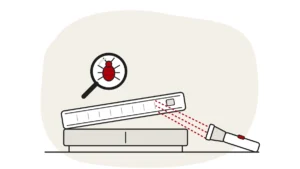
Use a bright torch and take your time. A thin card, such as an old bank card, helps you open up seams.
What You’re Looking For
- Live bugs: flat, reddish-brown and oval. The NHS says adults are around 5mm long. Young bed bugs are smaller and paler.
- Small brown spots: bed bug droppings, on bedding, the mattress or furniture.
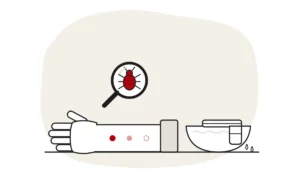
- Spots of blood on sheets or pillowcases: from bites or from a bug being squashed in the night.
- Pale shed skins and tiny white eggs: usually tucked into seams and creases.
Where to Check, in Order
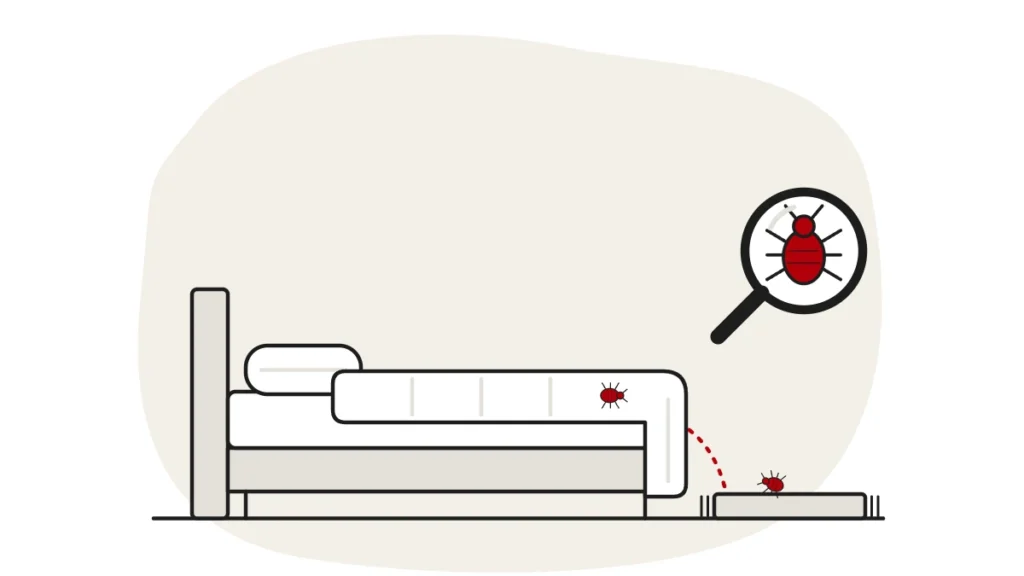
- Strip the bed carefully, folding each layer inwards so nothing drops onto the floor.
- Check the duvet, cover, pillows and pillowcases along every seam and label.
- Check the mattress seams, corners and underside. Our step-by-step guide to checking a mattress for bed bugs covers this in detail.
- Check the bed frame, slats and headboard, then bedside furniture.
- Run the torch along the carpet edge and skirting near the bed, and lift any rug.
Spots on your sheets aren’t always bed bugs, and bites can have other causes. If you’re not sure what you’re seeing, a professional bed bug inspection will confirm it.
Do bed bugs die in the washing machine?
Hot washing and drying is one of the most useful things you can do with bedding. The NHS advises washing affected bedding and clothing on a hot wash (60°C) and tumble drying on a hot setting for at least 30 minutes. A cool or quick cycle isn’t enough to rely on.
How to Wash Duvets, Pillows and Covers
- Bag it at the bed. Put bedding straight into a sealed bag before you carry it through the house, so you don’t drop bugs on the way.
- Follow the care label. Wash at 60°C where the label allows, then tumble dry on a hot setting, in line with the NHS advice above.
- Allow longer for bulky items. A thick duvet or pillow takes longer for heat to reach the middle. Don’t cut the drying short, and check it’s fully dry before it comes out.
- Use a bigger machine if needed. If your duvet doesn’t fit, a launderette with large machines may help.
- Bag the clean bedding. Keep washed items in a clean, sealed bag until the bed itself has been dealt with, or they can pick up bugs again.
For items that can’t be washed, the NHS suggests putting them in a plastic bag in the freezer for 2 to 3 weeks. A large duvet often won’t fit in a home freezer, so this suits smaller items. Keeping bedding sealed in a bag is a useful holding step; our guide on how long bed bugs live in a sealed plastic bag explains why a bag on its own isn’t a quick fix.
Vacuuming Carpet Edges
The NHS also advises cleaning and vacuuming regularly. Use the crevice tool along the carpet edge and skirting near the bed. Empty the vacuum straight away into a sealed bag and put it in an outside bin. Vacuuming lowers numbers but won’t reach every bug or egg in cracks and seams.
I washed my bedding but I’m still being bitten. Why?
This is common. Bedding is only a small part of where bed bugs live. If bites keep coming after a hot wash, it usually means:
- bugs and eggs are still in the mattress, bed frame, headboard or nearby furniture;
- clean bedding has gone back onto a bed that still has bugs in it;
- bugs are hiding at the carpet edge, behind skirting or in other rooms;
- in a flat, they may be coming through from a neighbouring property.
Avoid shop-bought foggers, bug bombs and smoke bombs. They tend to scatter bed bugs into new hiding places, including other rooms, which makes the problem harder to treat. Spraying insecticide onto bedding you sleep under isn’t a good idea either. If you’re cleaning the mattress itself, read how to clean a mattress from bed bugs for what actually helps.
Should you throw away your duvet, pillows or carpet?
Usually not. Duvets and pillows that can be washed and dried hot can normally be kept. Throwing things out has its own risks: carrying an infested item through a hallway or shared stairwell can spread bugs, and anything left on the street can be picked up by someone else. If you do get rid of something, wrap it fully in plastic first.
Replacing bedding before the bed and room have been dealt with won’t help, because the new items will be used by the bugs that are still there. Carpet rarely needs to be lifted. The edges should be included when the room is treated.
How Professional Treatment Deals With Bedding and Carpets
Because bed bugs spread across the mattress, frame, furniture and carpet edges, the whole room needs treating, not just the fabric you can wash. At ThermoPest our approach is heat-led, with targeted spray where it’s needed. The heat reaches into the seams, joints and cracks where bugs and eggs hide. Read how our bed bug heat treatment works, or see our bed bug treatment prices. Return visits may be needed, and your technician will tell you what to do with bedding before and after the treatment.
FAQs
Can bed bugs live inside a feather or down duvet?
They rarely go deep into the filling. Bed bugs prefer tight creases, so they hide along a duvet’s seams, stitching, labels and cover rather than inside the feathers. Check the edges carefully, wash and tumble dry hot where the label allows, and check the bed frame and mattress as well.
Do bed bugs live in pillows?
They can hide in pillow seams, piping and zips, and in the pillowcase flap. Pillows are seldom the main hiding place, though. If you find signs on a pillow, check the headboard and the top of the mattress, where bugs often gather.
Can bed bugs survive in the washing machine?
A cool or quick wash may not be enough. The NHS advises washing affected bedding on a hot wash (60°C) and tumble drying on a hot setting for at least 30 minutes. Bag bedding at the bed and keep clean items sealed until the bed has been dealt with.
Can bed bugs live in carpet?
Not usually in the open carpet. They hide at the edges, where the carpet meets the skirting board, under gripper strips and under rugs near the bed. Vacuum those edges with a crevice tool and empty the vacuum into a sealed bag outside.
What do bed bug marks on sheets look like?
Look for small brown spots, which are droppings, and small spots of blood from bites or squashed bugs. The NHS lists both as signs of bed bugs. You may also find pale shed skins in creases. Check the mattress seams too.
Found signs in your bedding?
If you’ve found spots, shed skins or bugs on your duvet or pillows, an inspection will confirm what you’re dealing with and where else they’re hiding. ThermoPest is a member of the BPCA and NPTA, and our technicians arrive in unmarked vans.