To clean a mattress with bed bugs, strip and hot-wash the bedding, vacuum slowly along every seam, label and piping, empty the vacuum outside in a sealed bag, steam the seams if you have a suitable steamer, then fit a zipped encasement. Cleaning cuts numbers and bites, but it rarely ends an infestation on its own.
Reviewed by James Rhoades, Owner, ThermoPest · Last reviewed 16 October 2026
If you’ve just found bed bugs in your bed, wanting to scrub the mattress tonight is completely natural. This guide explains which cleaning steps actually help, what to avoid because it’s unsafe or makes things worse, why cleaning alone rarely solves the problem, and when you can keep your mattress rather than throw it out.
Can you clean bed bugs out of a mattress?
Partly. Careful cleaning removes some bugs and eggs from the mattress surface and seams, which means fewer bites while you sort out proper treatment. What it can’t do is reach every bug. Bed bugs hide deep in seams and folds, and also in the bed frame, headboard, bedside furniture and skirting boards, so a clean mattress in an infested room soon has bugs on it again.
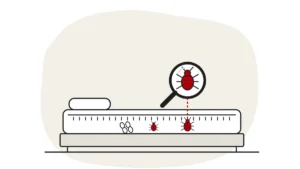
Before you start, it helps to know where to look. Our step-by-step guide on how to check a mattress for bed bugs shows which seams, labels and corners to focus on.
How to Clean a Mattress With Bed Bugs, Step by Step
1. Strip and Bag the Bedding
Peel off the sheets, duvet cover and pillowcases slowly, folding them inwards so nothing drops onto the floor. Put them straight into a bag at the bedside, tie it, and carry it to the washing machine. The NHS advises washing affected bedding and clothing on a hot wash (60°C) and tumble drying on a hot setting for at least 30 minutes. Only throw away items that can’t be washed or treated. Duvets and pillows have their own hiding spots, covered in do bed bugs live in duvets and pillows?
2. Vacuum the Seams, Piping and Labels
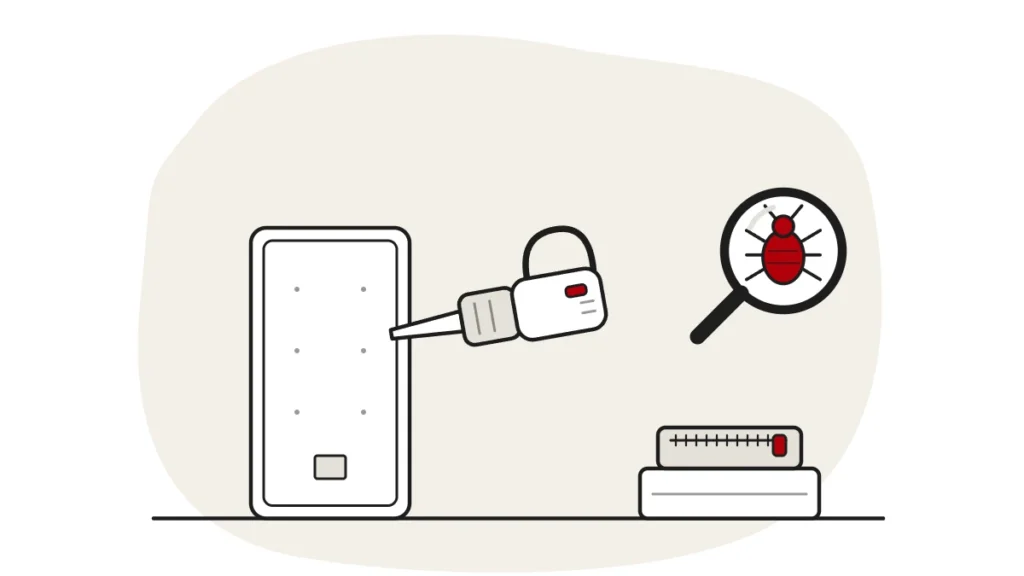
Use the crevice tool and work slowly along every seam, the piping, around buttons or tufts, under labels and handles, and along any zip. Do the top, the sides and the underside. Bed bugs, and especially eggs, can be difficult to dislodge, so scraping the nozzle firmly along the seam works better than skimming over it.
3. Empty the Vacuum Outside in a Sealed Bag
Bed bugs can survive being vacuumed up, so don’t leave them sitting in the machine. Straight after vacuuming, seal the bag or the contents of the bin in a plastic bag, tie it tightly and put it in your outside bin. Wipe the crevice tool and the outside of the vacuum before you put it away.
4. Steam the Seams, If You Have a Suitable Steamer
Steam kills bed bugs and eggs it touches directly, but only if it’s hot enough at the surface and doesn’t blow the bugs away. Our guide on whether a steamer will kill bed bugs covers the temperatures that work, which types of steamer are worth using and how to steam safely. The main thing for a mattress: move slowly, and don’t soak it. A damp mattress takes a long time to dry, and you shouldn’t cover it until it has.
5. Let It Dry, Then Fit an Encasement
Once the mattress is completely dry, zip it into a bed bug encasement (more on these below). This traps any bugs you missed inside and gives you a smooth surface that’s easy to check.
6. Clean Around the Bed
Vacuum the bed frame joints, the headboard, the base or divan, the carpet edge and skirting board next to the bed, and empty the vacuum outside again. Reduce clutter around the bed, as the NHS advises, so there are fewer places to hide and signs are easier to spot. Don’t move the mattress or furniture into another room to clean it, as that can carry bugs with it.
Does vacuuming get rid of bed bugs in a mattress?
Vacuuming helps, but it won’t get them all. It lifts some adults, young bugs (nymphs) and eggs from the surface and the outer seams. Eggs in particular are hard to dislodge: they’re sticky when laid, so they stay glued into stitching and folds. Bugs tucked deeper inside the seams, the base or the frame stay where they are.
So treat vacuuming as a way to reduce numbers and bites, not as a fix. Vacuum regularly, empty it outside in a sealed bag each time, and keep an eye on whether you’re still finding signs.
Should you put a bed bug encasement on your mattress?
A mattress encasement is one of the most useful things you can do, as long as you know what it does and doesn’t do. A bed bug encasement is a fabric cover that zips right round the mattress and seals it, not just a fitted protector over the top.
- It traps bugs inside. Once encasements are fitted and zipped shut, any bed bugs inside eventually die.
- It makes checking easier. A smooth, light-coloured cover has none of the seams and piping bugs use, so new signs stand out.
- It can save the mattress. Encasing the mattress and base is an economical alternative to throwing infested beds away.
- It doesn’t protect you from the rest of the room. Bugs living in the frame, headboard or furniture can still climb onto the bed and bite.
When choosing one, look for a cover described for bed bugs, with a zip that closes fully and a way to stop it sliding open. Encase the base or divan too if you can. Check the cover now and then for tears, and keep it zipped: opening it lets anything trapped inside out. We don’t sell or recommend particular brands.
What should you not use on a mattress with bed bugs?
When you’re desperate, it’s tempting to try anything. Some common home remedies are dangerous, and others make the infestation harder to treat.
| Don’t use | Why not |
|---|---|
| Rubbing alcohol (surgical spirit) | Rubbing alcohol, paraffin and petrol can easily catch fire from a spark or cigarette. Soaking a mattress you sleep on in a flammable liquid is a real fire risk. |
| Bleach | Bleach is one of the things that should not be used to control bed bugs. It isn’t made for use on bedding and can damage the mattress fabric. |
| Foggers, bug bombs and smoke bombs | These are ineffective against bed bugs. The spray doesn’t reach into seams and cracks, and it tends to scatter bugs into new hiding places, including other rooms and, in flats, next door. |
| Lighters or open flames | Lighters should never be used against bed bugs, as they can easily start a fire. |
| Soaking the mattress with water or steam | A wet mattress is slow to dry and can go mouldy, and you can’t fit an encasement until it’s fully dry. |
| Insect sprays not meant for bedding | Only use a product whose label says it can be used on mattresses, and follow the label exactly. Many household sprays aren’t meant for anywhere you sleep. |
Our guide on whether smoke bombs kill bed bugs explains the problem with foggers in more detail. If you’ve wondered about ironing the mattress, see does ironing, washing or drying kill bed bugs?
Why won’t cleaning alone get rid of bed bugs?
Because bed bugs rarely live only in the mattress. They spread into the bed frame, headboard, bedside tables, skirting boards, curtains and sofas, and an infestation that’s been there a while is usually in several of these. Every bug and egg you miss can restart it. The NHS says that DIY steps such as hot washing and vacuuming are unlikely to get rid of bed bugs completely, and advises contacting your local council or a pest control service. The British Pest Control Association (BPCA) says self-treatment of a bed bug infestation is unlikely to be successful.
That doesn’t make cleaning pointless. It reduces bites, helps you see how bad things are, and gets the room ready for treatment. Our guide on getting rid of bed bugs yourself covers what else you can safely do in the meantime.
Professional heat treatment works differently because it heats the whole room, including the mattress, frame and furniture, rather than one surface at a time.
Bed bugs and their eggs die when held above about 50°C for long enough. We heat rooms to 50–60°C and hold that heat until the hardest-to-reach spots stay above 50°C. Rooms don’t heat evenly, so we place temperature monitors in known cold spots and hard-to-reach areas.
At ThermoPest, our bed bug heat treatment is heat-led, with targeted spray where it’s needed, so the mattress is treated along with everything around it. In flats, we ask to inspect neighbouring flats too, and return visits may be needed. Once bed bugs have been dealt with, if the mattress itself needs a deep clean for stains or odours, we also offer professional mattress cleaning. That’s a hygiene clean, not a bed bug treatment: cleaning a mattress won’t get rid of bed bugs.
Do you need to throw away a mattress with bed bugs?
Usually not. In our experience, infested items need not be thrown away, although at times it may be advisable. Throwing a mattress out also doesn’t deal with the bugs in the frame, headboard and furniture, so a new mattress in the same room can soon be infested too. A mattress in reasonable condition can usually be encased and treated with the rest of the room.
It may be worth replacing a mattress if it’s torn, damaged or past its best anyway. If you do get rid of one, wrap it before you move it, so bugs don’t drop off on the way out, and mark or deface it so no one else takes it home. Our guide on how to dispose of bed bug-infested furniture and mattresses explains how to do this safely, including council collections. Ideally, wait until the room has been treated before bringing a new mattress in.
FAQs
How do you get rid of bed bugs in a mattress?
Hot-wash the bedding, vacuum the seams and empty the vacuum outside in a sealed bag, steam carefully if you can, and zip the mattress into an encasement. That reduces numbers, but the NHS says DIY methods are unlikely to clear bed bugs completely, so contact a pest control service to treat the whole room.
Can I spray my mattress with rubbing alcohol to kill bed bugs?
No. Rubbing alcohol is highly flammable, and alcohol should not be used to control bed bugs. It’s not worth the fire risk on a bed you sleep in.
Does vacuuming kill bed bug eggs?
Not reliably. Eggs are sticky and glued into seams, so they’re hard to dislodge, and bugs can survive being vacuumed up. Vacuum slowly along seams and always empty the vacuum outside in a sealed bag.
Do you have to throw away your mattress if you have bed bugs?
Usually not. Most infested items don’t need to be thrown away, and an encasement is a cheaper alternative. Bugs also live in the frame and furniture, so a new mattress in the same room can be infested again.
Still finding signs after cleaning?
If you’re still getting bites or finding spots on the mattress, an inspection will confirm what you’re dealing with and where it has spread. ThermoPest is a member of the BPCA and NPTA, and our technicians arrive in unmarked vans.