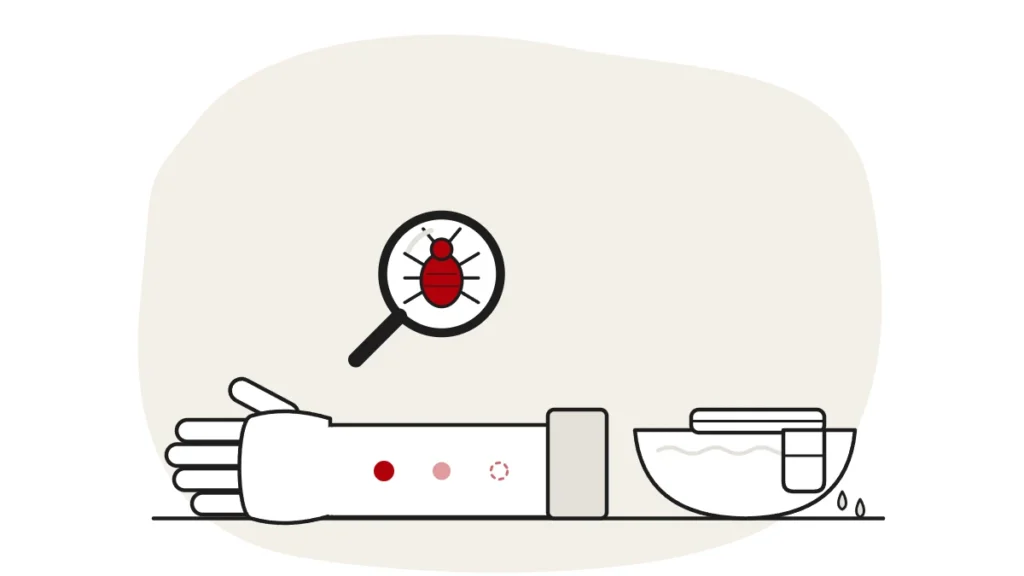
The NHS says bed bug bites usually clear up on their own in a week or so, although some people react more strongly and the itch can linger. To ease it, hold a clean, cool, damp cloth on the bites, try not to scratch, and ask a pharmacist whether an antihistamine or hydrocortisone cream is suitable for you.
Reviewed by James Rhoades, Owner, ThermoPest · Last reviewed 15 October 2026
This guide covers how long bites tend to last, what helps with the itch, what to do when the bites are on a child or baby, and when to get medical advice. We’re pest specialists, not doctors, so we describe the signs and point you to NHS guidance rather than diagnose.
How long do bed bug bites last?
For most people, not long. The NHS says bed bug bites usually clear up on their own in a week or so. Reactions vary: the NHS notes some people react more, with very itchy bites and painful swelling, and those can take longer to settle.
Two things can make bites seem to last much longer than they do:
- New bites keep appearing. If bed bugs are still in the bedroom, you may be bitten again on later nights, so fresh bites replace the old ones as they fade.
- Scratching. Breaking the skin keeps it irritated and can let an infection in, which slows healing.
Bites usually show on skin left uncovered in bed, such as the face, neck and arms, often in a line or small group. They can look red or pink on white skin, and brown, red or purple on black or brown skin, where they can be harder to see. Our guide to bed bug bites shows the typical patterns.
How long do bed bug bites take to appear?
Often not straight away. Many people don’t notice bite marks until one to several days after the bite, and in some people they can take up to two weeks to develop. That’s why it can be hard to work out where you were bitten.
Bed Bug Bite Healing Stages
There’s no fixed timetable. A raised, itchy bump appears, the itch and swelling gradually ease, and the mark fades. If a bite gets more painful, hot or swollen, or starts to weep, get advice (see below).
Why do bed bug bites itch for so long?
When a bed bug feeds, it injects fluids that stop you feeling the bite and keep your blood flowing. You don’t feel the bite at the time; the itch and redness that follow are your skin reacting to it. Because people react differently, one person can itch for days while someone sharing the bed barely notices.
How to Stop Bed Bug Bites From Itching
This section is general information, not medical advice. Most bites can be eased with simple steps at home.
- Use something cool. The NHS suggests putting something cool, like a clean, damp cloth, on the bites to help with the itching and any swelling.
- Keep the bites clean and try not to scratch. The NHS advises both to lower the risk of infection. Short nails and loose, soft clothing over the bites help.
- Skip the kitchen-cupboard fixes. The NHS page on insect bites and stings advises against home remedies such as bicarbonate of soda. If you want to try a soothing product, ask a pharmacist what’s suitable.
Creams and Antihistamines From a Pharmacist
If the itch is getting to you, a pharmacist is the best first stop. According to the NHS:
- A pharmacist can recommend a mild steroid cream, such as hydrocortisone cream, to ease bed bug bites.
- Antihistamines may help if the bites are very itchy and you can’t sleep.
- Children under 10 and pregnant women should get advice from a doctor before using hydrocortisone cream.
Tell the pharmacist about any other medicines you take, and follow the pack instructions.
Stopping the Itch at Night
Itching often feels worse at night, when there’s nothing to distract you. A cool, damp cloth before you settle down, short nails and loose sleepwear can help. If itching is stopping you sleeping, ask a pharmacist about an antihistamine.
Bed Bug Bites on Children and Babies
Bed bug bites on kids look much like bites on adults: raised, itchy bumps, often in a line or cluster, on uncovered skin. Children find it harder not to scratch, so bites can get sore or broken. Bed bugs are not known to spread disease, so watch for scratching and any sign of infection or a severe reaction.
How to Treat Bed Bug Bites on Children and Toddlers
- Use the same simple steps: a clean, cool, damp cloth, keep the skin clean and keep their nails short.
- Loose cotton pyjamas with long sleeves and legs can make it harder to scratch in their sleep.
- Speak to a pharmacist before using any cream or medicine, and tell them your child’s age. The NHS says children under 10 should get advice from a doctor before using hydrocortisone cream.
Bed Bug Bites on Babies: When to Get Advice
The NHS page on insect bites and stings gives specific advice for young children:
- Babies under 1: see a GP about any insect bite or sting.
- Children under 5: call NHS 111 for advice if bite symptoms get worse or aren’t improving.
- Children aged 1 and over: a pharmacist can help if a bite has hot or red skin, pain, swelling, or pus or fluid.
Checking Your Child’s Bed
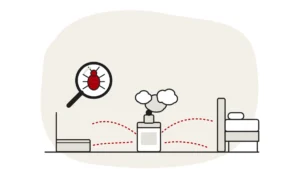
If your child keeps waking with new bites, check their bed or cot with a torch, using the checks in the section on new bites below. Don’t use shop-bought sprays, foggers or bug bombs on a child’s bedding or cot; foggers and bug bombs tend to scatter bed bugs rather than clear them.
When to See a Pharmacist, GP or Call 999
Most bites settle without treatment. If they don’t, this table, based on the NHS pages on bedbugs, insect bites and stings, and anaphylaxis, shows who to ask.
| What you notice | Who to contact |
|---|---|
| Itchy bites that are keeping you awake | A pharmacist, for advice on creams or antihistamines |
| Bites still very painful, swollen or itchy after trying pharmacy treatments | Your GP |
| Pain or swelling around the bites is spreading | Your GP, as it may be an infection |
| Any insect bite on a baby under 1 | Your GP |
| A child under 5 whose bite symptoms are getting worse | NHS 111 |
| Sudden swelling of the lips, mouth, throat or tongue, or trouble breathing | Call 999 |
Signs a Bite May Be Infected
The NHS says to see a GP if the pain or swelling around the bites is spreading, as you may have an infection that needs antibiotics.
Signs of a Severe Allergic Reaction
The NHS describes a severe allergic reaction (anaphylaxis) to bed bug bites as possible but rare. Call 999 if lips, mouth, throat or tongue suddenly swell, breathing is very fast or difficult, the throat feels tight, skin or lips turn blue, grey or pale, or someone faints and can’t be woken. Call 999, too, if a child is limp, floppy or not responding like they normally do. The NHS anaphylaxis page lists the full set of signs.
For stronger reactions short of an emergency, our guide to allergic reactions to bed bug bites explains what to look for. If the welts move around or appear on covered skin, compare them with our guide to bed bug bites vs hives. Full NHS guidance is on the bedbugs and insect bites and stings pages.
How to Stop Getting New Bites
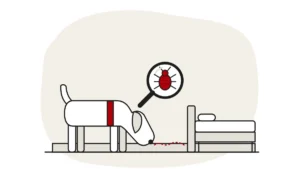
Soothing the itch only deals with the bites you already have. If bed bugs are in or around the bed, new bites will keep coming. With a torch, check mattress seams, the bed frame, the headboard and nearby furniture for live bugs, shed skins and small dark spots. Bed bugs aren’t known to spread disease (see can bed bugs transmit diseases?), but nightly bites are exhausting.
If you’re being bitten but can’t find any bugs, our guide to getting bitten at night with no bed bugs in sight covers other causes to rule out. And if you’ve read worrying stories online, can bed bugs go in your ear? separates myth from fact.
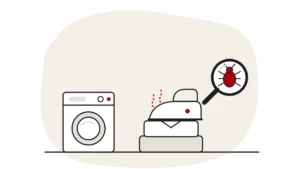
Bed bugs are small and good at hiding, so a light infestation is easy to miss. A professional bed bug inspection will confirm whether bed bugs are the cause and where they’re hiding. If they are, ThermoPest’s treatment is heat-led, with targeted spray where it’s needed, and reaches the cracks and seams where bugs and eggs hide. Depending on the infestation, a return visit may be needed. You can see costs on our pricing page.
FAQs
How long does it take for bed bug bites to go away?
The NHS says bed bug bites usually clear up on their own in a week or so. Bites can take longer to settle if you react strongly, scratch them, or keep getting bitten. If they’re still very painful, swollen or itchy after trying pharmacy treatments, see your GP.
Do bed bug bites disappear after a few hours?
Not usually. Bed bug bites tend to stay in the same place for days while they fade. Marks that come and go quickly, or move around the body, are more typical of hives than bites. Bed bug bites also often aren’t noticed until a day or more after being bitten.
How long do bed bug bites itch?
The itch usually eases as the bite settles, which the NHS says is typically within a week or so. Scratching can make it last longer. A cool, damp cloth helps, and a pharmacist can advise on a cream or antihistamine.
What can I put on bed bug bites to stop the itching?
Start with a clean, cool, damp cloth, as the NHS suggests. A pharmacist can recommend a mild steroid cream such as hydrocortisone, or an antihistamine. Children under 10 and pregnant women should get advice from a doctor before using hydrocortisone cream.
How do I treat bed bug bites on a baby?
The NHS advises seeing a GP about any insect bite on a baby under 1, and calling NHS 111 for advice about a child under 5 if symptoms get worse. Don’t use creams or medicines on a baby without advice from a pharmacist or GP. Call 999 if your baby is floppy, unresponsive or struggling to breathe.
Still getting new bites?
If the bites keep coming, an inspection will confirm whether bed bugs are the cause and where they’re hiding. ThermoPest is a member of the BPCA and NPTA, and our technicians arrive in unmarked vans.