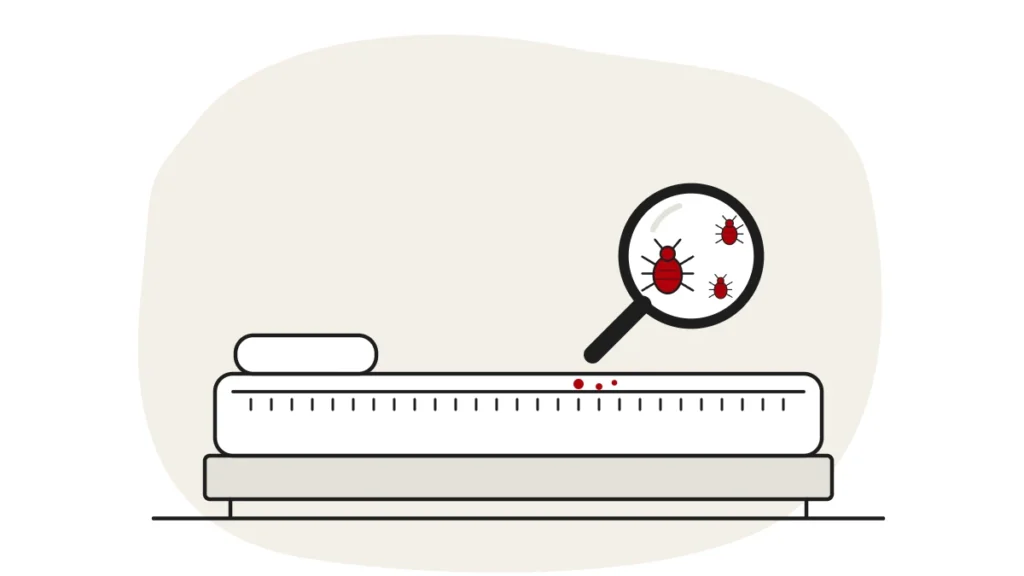
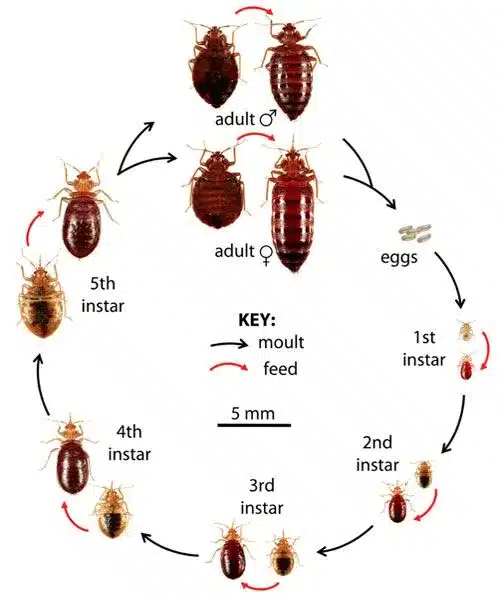
Bed bug nymphs are baby bed bugs. They look like smaller, paler versions of adults: flat, oval and wingless, with six legs. Nymphs are translucent or whitish-yellow and range from about 1.5mm when newly hatched to 4.5mm. After feeding, they turn red with blood.
Reviewed by James Rhoades, Owner, ThermoPest · Last reviewed 15 October 2026
Nymphs are easy to miss, and finding one usually means bed bugs are breeding nearby. This guide covers what nymphs look like at each stage, how big they are, where they hide, how to tell them apart from other tiny bugs in bed, and what to do next.
What is a bed bug nymph?
A nymph is a young bed bug, the stage between the egg and the adult. Bed bugs don’t have a caterpillar or grub stage. They hatch looking like tiny copies of the adults and grow by shedding their skin.
There are five nymph stages before a bed bug becomes an adult. Nymphs shed their skin five times before reaching maturity, and a blood meal is needed between each moult. That’s why nymphs bite just like adults: they can’t grow without feeding.
People search for them under lots of names: baby bed bugs, newborn bed bugs, juvenile bed bugs or young bed bugs. They all mean the same thing.
What do bed bug nymphs look like?
Nymphs share the adult body shape but are smaller and lighter in colour. Look for these features:
- Shape: flat and oval from above, like a tiny seed, with six legs and two short antennae.
- Colour before feeding: nymphs are translucent or whitish-yellow, and newly hatched nymphs are often described as straw-coloured. On a white sheet they can be very hard to see.
- Colour after feeding: a nymph that has just fed shows a bright red patch of blood through its pale body, and it looks plumper and longer. As it digests, the colour darkens and fades.
- No wings: bed bugs never have wings, at any stage.
- Movement: they crawl. They can’t fly or jump.
Newly Hatched Bed Bugs
The smallest nymphs are the hardest to spot: straw-coloured and no bigger than a pinhead. Unless one has fed, you’ll usually only notice it when it moves, or when you look closely along a seam with a torch.
Older Nymphs
With each moult, nymphs get bigger and slightly darker. The last stages look much like adults, just a little smaller and paler. Each moult leaves behind a pale, empty skin, and finding these shed skins is one of the clearest signs that nymphs are growing in the area.
How big are baby bed bugs?
Nymphs range from roughly pinhead size to almost adult size: a first-stage nymph is about 1.5mm and a fifth-stage nymph about 4.5mm. For comparison, adults are about the size of an apple seed, and the NHS says they’re around 5mm long.
| Stage | Size | Colour | What you’ll notice |
|---|---|---|---|
| Egg | About 1mm, the size of a pinhead | Pearl-white | Tiny white specks stuck in seams and crevices, often in small groups |
| Newly hatched nymph | About 1.5mm | Translucent or whitish-yellow; red after a feed | Very hard to see unless it has fed or is moving |
| Older nymph | Up to about 4.5mm | Pale yellow to light brown; red after a feed | Looks like a small, pale adult; shed skins nearby |
| Adult | About 5–7mm, apple-seed size | Reddish-brown | Flat when unfed, swollen and rounder after feeding |
Eggs are easy to mistake for dust or lint. Our guide on how to spot bed bug eggs shows where to look and what to rule out.
Can you see baby bed bugs?
Yes, but it takes a careful look. Older nymphs are visible to the naked eye. The youngest ones are tiny and pale, so they’re easier to see once they’ve fed and turned red. A bright torch held at a low angle, and a magnifying glass, make a big difference. For more on this, read can you see bed bugs with the naked eye?
What colour are bed bugs at each stage?
The NHS describes bed bugs as dark yellow, red or brown. Colour depends on age and on how recently the bug has fed:
- Unfed young nymphs: almost see-through, pale or straw-coloured.
- Freshly fed nymphs: bright red in the middle, where the blood shows through.
- Older nymphs: pale yellow to light brown.
- Adults: reddish-brown, darker and redder after a meal.
Tiny red bugs in bed: are they bed bug nymphs?
They might be. A nymph that has just fed is small and noticeably red, so tiny red bugs in your bed are worth taking seriously. But other small creatures turn up in bedrooms too. Check these points:
- Shape: bed bug nymphs are flat and oval with six legs. Mites are much smaller and rounder.
- Where you find them: nymphs stay close to where people sleep, in mattress seams, bed frames and headboards. Tiny red mites are often seen near windows and sills rather than inside the bed.
- Other signs: bed bugs leave small dark spots, shed skins and blood spots on sheets. If you see those as well, bed bugs are more likely.
- Bites: new itchy bites, often in a line or group on skin left uncovered in bed, point towards bed bugs. Compare them with our guide to what bed bug bites look like.
Bed Bug Nymphs vs Other Small Bugs
- Fleas: dark, narrow from side to side, and they jump. Nymphs crawl and are flat from top to bottom.
- Carpet beetle larvae: hairy and striped, like a tiny caterpillar. Bed bug nymphs are smooth.
- Adult carpet beetles: round and patterned, and they can fly. Bed bugs never have wings.
- Ticks: eight legs rather than six, with a rounder body, and usually picked up outdoors or from pets rather than found in mattress seams.
- Booklice: very small, pale and fast, usually around damp books, paper or food. They don’t bite.
Our guide to bugs that look like bed bugs covers the common lookalikes in more detail.
Where do bed bug nymphs hide?
Nymphs hide in the same places as adults: tight, dark gaps close to where people sleep or sit for long periods. With a torch, check:
- mattress seams, piping, labels and the underside of the mattress;
- joints, slats and screw holes in the bed frame and headboard;
- sofa and armchair seams, especially if someone sleeps on them;
- bedside furniture, skirting boards, and carpet edges near the bed.
Look for groups of bugs of different sizes together, pale shed skins, tiny white eggs, and small dark spots of droppings. The NHS also lists spots of blood on bedding and small brown spots on bedding or furniture as signs.
What does finding nymphs mean?
Finding nymphs means bed bugs are breeding, not just passing through. Eggs are hatching and young bugs are feeding. A single adult can arrive in a bag or coat, but nymphs of different sizes in one place suggest an established population.
It’s still worth acting quickly. Smaller infestations are usually easier to deal with, and in flats bed bugs can spread to neighbouring homes. Our bed bug detection and inspection service can confirm what you’ve found and how far it has spread.
What to Do If You Find Bed Bug Nymphs
- Keep a sample. Put the bug on clear sticky tape, or in a sealed bag or jar, so it can be identified. A clear photo helps too.
- Wash and dry bedding. The NHS advises washing affected bedding and clothing on a hot wash (60°C) and tumble drying on a hot setting for at least 30 minutes.
- Freeze small items that can’t be washed. The NHS suggests sealing them in a plastic bag and putting them in the freezer for 2 to 3 weeks.
- Don’t move to another room. Sleeping elsewhere can spread bed bugs to new rooms.
- Avoid foggers and bug bombs. Shop-bought sprays and foggers tend to scatter bed bugs into new hiding places rather than clear them.
- Get an inspection. Nymphs and eggs hide deep in seams and cracks, so a professional check is the surest way to know the extent.
If bed bugs are confirmed, ThermoPest’s approach is heat-led, with targeted spray where it’s needed, and it reaches the seams and cracks where nymphs and eggs hide. Read how bed bug heat treatment works, or see our pricing. Some jobs need a return visit to make sure every stage has been dealt with.
After treatment, you may still find a few bugs. Our guide on what dead bed bugs look like helps you tell the difference between dead bugs and ongoing activity.
FAQs
Do baby bed bugs bite?
Yes. Nymphs feed on blood just like adults, and they need a blood meal between each moult. Their bites look much the same as adult bites. Bed bug bites aren’t known to spread disease, and the NHS says they usually clear up on their own in a week or so. A pharmacist can help if they’re very itchy.
Are baby bed bugs white?
Young nymphs can look almost white or see-through: translucent or whitish-yellow. Bed bug eggs are pearl-white. A nymph turns red once it has fed, which is often when people first notice it.
Can baby bed bugs jump or fly?
No. Bed bugs can’t jump or fly at any stage. They have no wings and move by crawling. If a tiny bug jumps, it’s more likely to be a flea.
Is one baby bed bug a sign of an infestation?
Usually, yes. Nymphs hatch from eggs laid nearby, so finding one suggests bed bugs are breeding in the area. Check the mattress seams, bed frame and headboard for more bugs, shed skins, eggs and dark spots, and consider a professional inspection.
Found tiny bugs in your bed?
If you’ve found what look like baby bed bugs, an inspection will confirm what they are and where they’re hiding. ThermoPest is a member of the BPCA and NPTA, and our technicians arrive in unmarked vans.