Yes. Bed bugs can come from a neighbour’s flat. They can’t fly or jump, but they crawl through gaps around pipes, cables, sockets and skirting boards, along shared walls, floors and ceilings, and they’re carried on belongings through corridors. The British Pest Control Association (BPCA) notes that bed bugs can travel in from a more heavily infested neighbour.
Reviewed by James Rhoades, Owner, ThermoPest · Last reviewed 16 October 2026
If you live in a flat, a converted house or a terrace and you’ve just heard that someone next door has bed bugs, or you’ve found bites with no obvious cause, this guide explains how bed bugs travel between homes, how likely it is that they’ll reach yours, what to do tonight, and who is responsible for sorting it out in a shared building.
Can bed bugs come from next door?
They can. Bed bugs are wingless insects that hide close to wherever people sleep and come out to feed at night. Once bed bugs are introduced to a building they can crawl from room to room, or floor to floor, through cracks and openings in walls, floors and ceilings, and that neglected infestations are more likely to spread to other units. The BPCA’s technical team makes the same point: bed bugs may be travelling in from a more heavily infested neighbour.
That doesn’t mean every flat in a block will get them. Bed bugs prefer to stay within a short crawl of a sleeping host, and tend to stay close to where they feed. Spread tends to happen when a neighbouring infestation is heavy, long-standing or disturbed, or when the people next door move out and the bugs go looking for someone else to feed on.
How do bed bugs spread between flats?
There are two ways bed bugs get from one flat to another: they walk, or they’re carried. In practice both happen in the same building.
Shared Walls, Floors and Ceilings
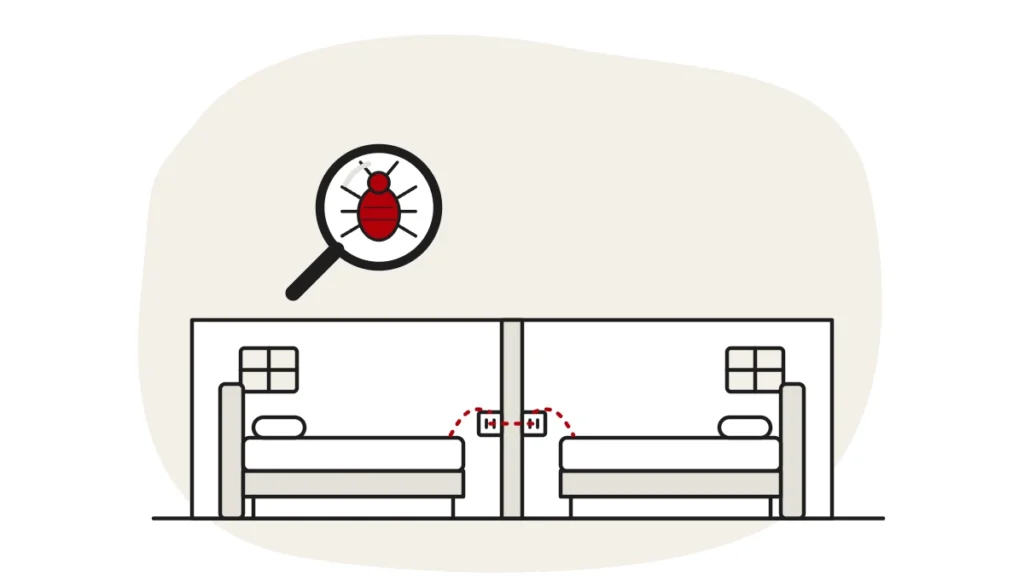
Flats are rarely sealed boxes. Behind the plaster there are voids, and where a pipe, cable or joist passes through a wall there’s usually a gap around it. Bed bugs can crawl rapidly over floors, walls and ceilings, and that they move between flats through exactly these cracks and openings. A bug that finds its way into a wall void can emerge on the other side, which is why the first signs in a “new” flat are often on the wall shared with the infested one.
Pipes, Cables and Sockets
Electrical sockets and switches sit in boxes cut into the wall, and the cable runs behind them link flats together. The BPCA lists plug sockets among the places bed bugs hide, alongside skirting boards, loose wallpaper and the backs of pictures. Pipework for heating, water and waste runs through service ducts that pass from floor to floor. None of these routes are highways; they’re just gaps, and a flat-bodied bed bug doesn’t need much of one.
Corridors, Lifts and Communal Areas
Bed bugs can also be carried. Someone next door who sits on an infested sofa and then uses the lift, the laundry room or a shared hallway can drop a bug on the way. An infested mattress or armchair left in a corridor or bin store while it waits for collection can be a source. Our guide on whether someone with bed bugs can bring them to your home covers this side of it in more detail.
When a Neighbour Moves Out or Treats
Two moments raise the risk for the flats around an infested one. The first is when it’s emptied: when an infested flat is vacant, bed bugs often disperse to nearby units or reduce their activity until it’s reoccupied. The BPCA says bed bugs can survive for months without feeding, so an empty flat doesn’t starve them out. The second is a badly done treatment. Amateur sprays, foggers and smoke bombs scatter bed bugs into new hiding places rather than clearing them, and in a flat “new hiding places” can mean the other side of the wall. The BPCA says self-treatment of a bed bug infestation is unlikely to be successful.
| Route | How bed bugs use it | What to check in your flat |
|---|---|---|
| Shared wall | Crawl through cracks and voids behind the plaster | Skirting, bed frame and mattress seams on the shared wall |
| Sockets and switches | Hide in the back box; follow cable runs | Dark spots or shed skins around socket faceplates |
| Pipes and ducts | Gaps where pipework passes between floors | Boxed-in pipes, radiator brackets, behind the toilet cistern |
| Corridors and lifts | Carried on clothes, bags and furniture | Hallway, coats and bags, anything brought in from a shared area |
| Communal laundry or bin store | Dropped from infested bedding or dumped furniture | Laundry baskets and bags after use |
If my neighbour has bed bugs, will I get them?
Not necessarily, and it’s worth saying that plainly because a lot of people lose sleep over it. In our experience, the flats most at risk tend to be the ones that share a wall, floor or ceiling with a heavy infestation, especially where a bed sits against the shared wall. Flats across the corridor or two doors down are less often affected, though they can be, which is why we advise inspecting the units on either side, above, below and across the hall from an infested one.
Things that raise your risk:
- Your bed or sofa is against the wall you share with the infested flat.
- The infestation next door has been there for months, or the flat is now empty.
- Your neighbour has used sprays, foggers or bug bombs.
- Old or converted buildings with gappy skirting, floorboards and pipework.
- Infested furniture has been left in a shared hallway or bin area.
Things that lower it: a solid modern wall, sealed gaps around pipes and sockets, and a neighbour who has reported it early and had it treated properly, with the flats around them inspected at the same time.
My neighbour has bed bugs: what should I do?
You can’t control what happens next door, but you can make sure you spot anything early and get the right people involved.
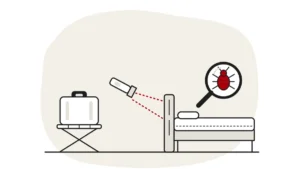
- Check your own bed tonight. With a torch, look at mattress seams and piping, the bed frame joints and slats, the headboard, and the skirting board behind the bed. The NHS says to look for spots of blood on bedding, small brown spots of bed bug droppings, and the bugs themselves, which are around 5mm long as adults. Pay most attention to the side of the room that shares a wall with the infested flat.
- Tell your landlord, managing agent or freeholder in writing. Say which flat has the infestation, that you share a wall or floor with it, and ask them to arrange an inspection of the neighbouring flats. Keep a copy, and date any photos.
- Don’t spray. Shop-bought sprays and foggers scatter bed bugs. If you don’t have them yet, there’s nothing to spray; if you do, spraying makes them harder to find and treat.
- Close the easy gaps. Fill gaps around pipes where they enter the wall, behind skirting and around socket boxes with a flexible sealant. This won’t stop a determined infestation, but it removes the easiest routes.
- Be careful with shared spaces. Don’t sit on dumped furniture, and if you use a communal laundry, take bedding there in a sealed bag and bring it straight back.
- If you find anything, get it confirmed. A single bug or a few dark spots is enough to act on. A professional bed bug inspection will tell you whether it’s bed bugs, how far they’ve spread and which wall they’re coming from.
If you’ve already found bed bugs in one room, our guide on whether bed bugs in one room means they’re in all of them explains how to keep them contained while you wait for treatment.
How to Stop Bed Bugs Coming From a Neighbour’s Flat
There’s no barrier that keeps bed bugs out of a flat completely, but a few habits make a real difference.
- Pull the bed a few centimetres off a shared wall and keep bedding off the floor. Bed bugs reach a bed by crawling up the frame or across whatever touches it.
- Keep the area behind and under the bed clear so you can check it. The NHS advises keeping clutter away from the bed and vacuuming regularly.
- Check second-hand furniture before it comes in, which the NHS also recommends. In a block, that includes anything picked up from a hallway or bin store.
- Don’t carry things between flats while a neighbour is being treated: no borrowed bags, bedding or soft furnishings.
If you commute or work somewhere with a known problem, our guide on how to avoid bringing bed bugs home from work covers the other common route in.
Who is responsible for bed bugs in a block of flats?
This is general information, not legal advice (checked: October 2026), and the rules differ between England, Wales, Scotland and Northern Ireland. In broad terms, in England:
- If you rent, Shelter England says your landlord must deal with a pest infestation if it’s caused by a repair they must fix, and should sort it out if the pests were there when you moved in. Your landlord must also make sure your home is fit to live in throughout the tenancy. You need to tell them as soon as you notice the problem.
- If the bed bugs are in a neighbour’s flat, Shelter England says your landlord doesn’t usually have to deal with pests in neighbouring properties. Its advice is to ask your neighbours to deal with the problem, and to contact the council if they ignore you.
- Communal areas such as shared hallways or stairs: Shelter England advises telling your landlord. The landlord may be responsible if they own the whole building; if not, they should report the problem to the owner.
- If you own your flat, there’s no landlord to report to, so speak to the freeholder or management company about the shared parts of the building and the neighbouring flats.
- If you rent and your landlord doesn’t act, Shelter England says you can complain to environmental health at the council. They can inspect your home, and the council could tell your landlord to fix the problem.
For the detail, including what to put in writing and what to do if you’re ignored, read what to do if your landlord won’t treat bed bugs. If you rent privately in England, the rules on housing standards are changing under the Renters’ Rights Act, and our guide to UK bed bug laws and regulations rounds up the rest. We also work directly with landlords and social housing providers on block-wide problems.
Are bed bugs contagious?
Not in the way a cold is. Bed bugs don’t live on people and you can’t catch them from someone by sitting next to them for a few minutes. They’re hitchhikers: they travel on bags, clothes, furniture and bedding, and they crawl between rooms and flats to find someone to feed on. The NHS says bed bug bites don’t usually cause other health problems, and the BPCA says bed bugs aren’t known to spread disease. So “contagious” isn’t the right word, but an untreated infestation next door is a real risk to you, and a neighbour visiting from an infested flat can bring one in on their coat.
How We Treat Bed Bugs in Flats
In our experience, treating a single flat on its own is a common reason bed bugs come back in a shared building. That’s why, when we’re asked to treat a flat, we ask to inspect the neighbouring flats too: the ones either side, above and below, and anywhere else that shares a wall, floor or ceiling. If a neighbouring flat turns out to be the source, treating both together is what stops the problem bouncing back and forth.
Our treatment is heat-led, with targeted spray where it’s needed. Heat reaches the places bed bugs hide in flats, including behind skirting boards, inside socket boxes and in the gaps around pipes, which are hard to treat any other way.
Bed bugs and their eggs die when held above about 50°C for long enough. We heat rooms to 50–60°C and hold that heat until the hardest-to-reach spots stay above 50°C. Rooms don’t heat evenly, so we place temperature monitors in known cold spots and hard-to-reach areas.
Residential rooms can usually be re-entered two hours after a heat treatment, unless the technician advises otherwise. Return visits may be needed, especially where more than one flat is involved. Read how our bed bug heat treatment works, and what we do differently in blocks of flats.
FAQs
Can bed bugs come through walls?
Yes, though not through solid plaster. They use cracks, voids and the gaps where pipes, cables and sockets pass through a wall. Bed bugs crawl from room to room and floor to floor through openings in walls, floors and ceilings, so a shared wall with an infested flat is the first place to check.
My neighbour has bed bugs. Should I be worried?
Be watchful rather than worried. Not every flat next to an infested one gets bed bugs, and the risk drops a lot when the problem is reported and treated properly. Check your bed and the shared wall with a torch, tell your landlord or managing agent in writing, and ask for the neighbouring flats to be inspected. If you find any signs, get them confirmed quickly.
Can bed bugs spread from house to house?
In terraced and semi-detached houses it’s possible but much less common than in flats, because there are fewer shared voids and no shared corridors. Loft spaces, shared pipework and party walls with gaps are the routes to look at. In a detached house, bed bugs almost always arrive on luggage, furniture or a visitor rather than from next door.
How do I stop bed bugs coming from my neighbour’s flat?
Seal gaps around pipes, sockets and skirting, pull your bed slightly away from the shared wall, keep the floor around the bed clear, and don’t bring anything in from shared hallways or bin areas. Most of all, ask the landlord or freeholder to have the neighbouring flats inspected alongside the infested one.
Can I claim against my neighbour for bed bugs?
We can’t give legal advice on this. It’s usually hard to show where an infestation started. Keep dated photos and copies of anything you’ve reported, and speak to Citizens Advice or a solicitor before considering any claim. If you rent in England, Shelter England’s advice is to ask your neighbours to deal with the problem and to contact the council if they ignore you.
Worried about bed bugs next door?
If you’ve found signs on a shared wall or bites with no other explanation, an inspection will confirm whether bed bugs have reached your flat and which way they came in. ThermoPest is a member of the BPCA and NPTA, and our technicians arrive in unmarked vans, so visits are discreet.