Bed bugs can turn up in any care home or nursing home, however clean it is. They arrive in luggage, clothing and second-hand furniture. Because some residents can’t notice or report bites, staff need to know the signs, act quickly and arrange a discreet professional inspection, with a treatment plan built around residents’ needs.
Reviewed by James Rhoades, Owner, ThermoPest · Last reviewed 16 October 2026
This guide is for care home managers, nursing staff and families. It covers why bed bugs get into care settings, how to spot them, what the CQC regulations say, and how treatment can be planned in a building where people live, sleep and receive care. It’s written for England; if your home is in Wales, Scotland or Northern Ireland, see the note on other regulators below.
Why do bed bugs get into care homes and nursing homes?
Bed bugs aren’t a sign of a dirty home. The British Pest Control Association (BPCA) says they get into properties by attaching to luggage, bags and clothing, and through second-hand beds and furniture. It also says they still occur regularly, particularly in multi-occupancy buildings with rapid resident turnover.
A care home has all of these. Residents arrive with suitcases and furniture, come back from hospital stays, and receive visitors. Staff, agency workers and contractors come and go every day. Any of them can carry a bed bug in without knowing it.
Once inside, bed bugs hide close to where people rest: bed frames, mattresses, bedside furniture and upholstered chairs. In a care home that also means armchairs where residents doze during the day, recliners in lounges, and the gaps around specialist beds.
What are the signs of bed bugs in a care home?
In a family home, people usually spot bed bugs because they notice bites. In a care home that can’t be relied on. A resident living with dementia, or someone who sleeps heavily or has limited feeling in their skin, may not mention bites at all. That makes regular checks by staff more important.
Signs to Look for in Rooms and Furniture
- small dark spots (droppings) on mattress seams, bed frames, headboards and chair seams;
- small blood spots on sheets, pillowcases or nightwear;
- pale, empty shed skins in seams, joints and folds;
- live bugs, which the NHS says can be dark yellow, red or brown (adults are around 5mm long);
- bugs or marks behind skirting boards, behind pictures and, as the BPCA notes, even in plug sockets.
Housekeeping staff changing beds are often best placed to notice these. A simple routine, such as checking mattress seams and the bed frame at each linen change and reporting anything unusual to the manager, picks up early infestations that residents can’t tell you about.
What Bites Can Look Like on Older or Frail Skin
The NHS describes bed bug bites as raised and itchy, often in a line or grouped together. They may look red or pink on white skin, and brown, red or purple on black or brown skin, where they can be harder to see. The NHS says they’re often on skin exposed while sleeping, such as the face, neck and arms. For more on bite patterns, see what bed bug bites look like.
Marks on a resident’s skin can have many causes, including other conditions, medicines and allergies. We’re pest specialists, not clinicians, so we describe the signs rather than diagnose them. If you notice new marks, ask the resident’s GP, nurse or a pharmacist to look at them, and check the bed and chair for signs at the same time.
What do the CQC regulations say about premises and cleanliness?
In England, care homes are registered with the Care Quality Commission (CQC) and must meet the Health and Social Care Act 2008 (Regulated Activities) Regulations 2014. These regulations don’t mention bed bugs or pests by name, but two of them cover the premises residents live in. We quote them here; we don’t interpret how they apply to any particular service.
Regulation 15: Premises and Equipment
Regulation 15 says all premises and equipment used by the service provider must be “clean”, “secure”, “suitable for the purpose for which they are being used”, “properly used”, “properly maintained” and “appropriately located”. Regulation 15(2) adds that the registered person must “maintain standards of hygiene appropriate for the purposes for which they are being used.”
The CQC’s guidance on Regulation 15 says premises and equipment “should be visibly clean and free from odours that are offensive or unpleasant”. It also says providers “retain legal responsibility under these regulations when they delegate responsibility” to others, such as contractors.
Regulation 12: Safe Care and Treatment
Regulation 12 says “Care and treatment must be provided in a safe way for service users.” The things it lists include “ensuring that the premises used by the service provider are safe to use for their intended purpose” and “assessing the risk of, and preventing, detecting and controlling the spread of, infections”. Bed bugs aren’t known to spread disease, but a clear, written process for spotting, reporting and dealing with them sits naturally alongside your existing premises and housekeeping checks.
Do nursing homes have to report bed bugs?
There’s no rule that names bed bugs. The CQC’s notifications page lists “events that stop a service running safely and properly” among the events providers must tell it about. Regulation 18 of the CQC (Registration) Regulations 2009, as set out on the CQC website, requires notifications to be made “without delay”. Whether a particular infestation reaches that point is a judgement for the registered manager; check the CQC’s guidance or ask the CQC if you’re unsure.
Wales, Scotland and Northern Ireland
The CQC regulates care homes in England. Care homes in Wales are regulated by Care Inspectorate Wales, in Scotland by the Care Inspectorate, and in Northern Ireland by the Regulation and Quality Improvement Authority (RQIA), each under its own rules. Check your own regulator’s guidance. For a wider overview of bed bugs and the law, see bed bugs and UK law.
What should a care home do if bed bugs are found?
Stay calm and act the same day. A prompt, organised response keeps the problem small and reassures residents, families and staff.
- Don’t move the resident or their furniture to another room unless your pest controller advises it. Moving people and belongings around is one of the easiest ways to spread bed bugs to new rooms.
- Bag bedding and clothing in the room and take it straight to the laundry. The NHS advises a hot wash at 60°C and a hot tumble dry for at least 30 minutes. Items that can’t be washed can be sealed in a plastic bag and frozen for 2 to 3 weeks, according to the NHS.
- Don’t use foggers, bug bombs or shop-bought sprays. They tend to scatter bed bugs into new hiding places, including neighbouring rooms, and the BPCA says self-treatment is unlikely to be successful.
- Write it down. Record where and when signs were found, who found them, photos, and any marks on the resident’s skin reported to their GP or nurse.
- Book a professional inspection. The BPCA recommends contacting a professional pest control company, preferably one of its members.
- Tell the resident and their family, calmly and in plain words (more on this below).
How is bed bug treatment managed in an occupied care home?
Care homes can’t close for treatment, and many residents can’t easily leave their rooms. Good treatment starts with a plan agreed between the pest controller, the manager and the care team.
A Discreet Inspection
The inspection checks the affected room and the rooms around it: either side, above and below, and any lounge or chair the resident uses during the day. Bed bugs can move between rooms through gaps around pipes, cables and skirting, just as they move between neighbouring flats. In larger homes, a bed bug detection dog can help screen many rooms quickly, with a technician confirming any finds. A careful inspection should be quiet and respectful, and timed around care routines, meals and visiting.
Residents’ Belongings
A resident’s room is their home, and their belongings often matter a great deal to them: photographs, books, cushions, clothes and keepsakes. Treat them with care and explain what’s happening to each item. Clothes and bedding can usually be laundered. Other items may be treated in the room; your technician will tell you what can stay and what needs special handling. Rooms with large amounts of stored belongings take more planning, as we explain in hoarding and bed bugs.
Mobility and Medical Equipment
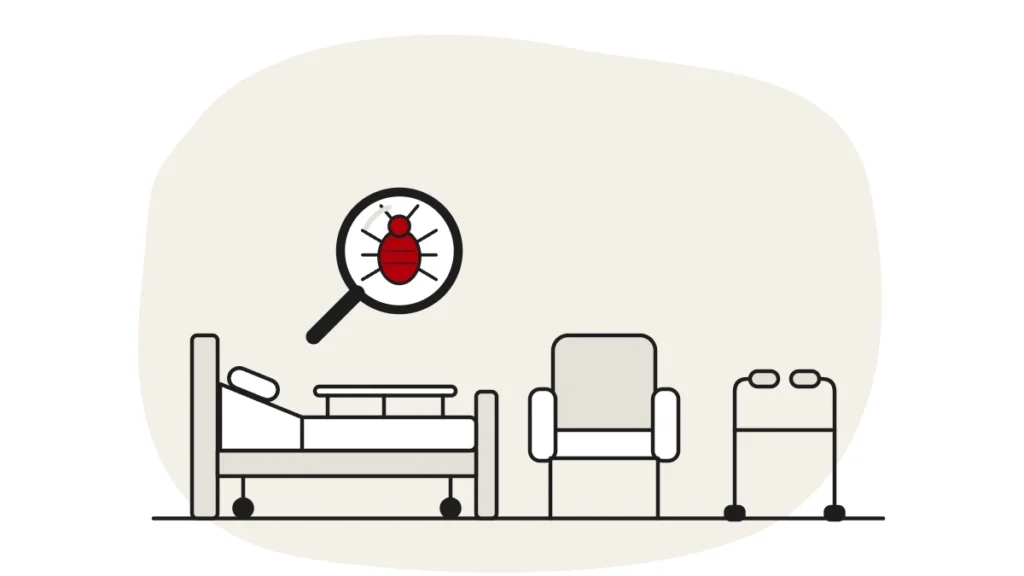
Bed bugs can hide in the joints, padding and covers of equipment that sits close to a resident. Make a list for the technician before the visit, so nothing is missed and nothing is put at risk.
| Item | Why it matters | What to plan |
|---|---|---|
| Profiling beds and side rails | Frames, rails and motor housings have many joints and gaps | Inspect and treat the frame and surrounding area; agree when the bed can’t be in use |
| Pressure-relieving mattresses and cushions | Covers, seams and zips are close to the resident | Check the manufacturer’s care instructions; agree a replacement or alternative for the resident while it’s treated |
| Armchairs and recliners | Residents may rest in them for hours each day | Inspect seams, folds and underneath; include lounge chairs the resident uses |
| Wheelchairs, walking frames and hoists | They move between rooms and can carry bugs with them | Inspect before the resident moves; keep the equipment with the resident during treatment |
| Medicines, oxygen and electrical medical devices | Some can’t be heated, moved or treated with spray | List them in advance; the care team and technician agree what is removed, protected or left in place |
Treating Rooms While the Home Stays Open
Treatment is usually done room by room, with the resident cared for elsewhere in the home while their room is treated. Plan the resident’s day around it: where they will rest, eat and take their medicines, and who will stay with them if moving is unsettling. Your technician will tell you when the room is ready to use again.
At ThermoPest, our treatment is heat-led, with targeted spray where it’s needed. Heat reaches deep into the cracks, seams and furniture where bugs and eggs hide, and we plan each room around the people who live there. Our vans are unmarked, so visits don’t draw attention from residents, visitors or neighbours. You can read how we work in care homes, or see all the sectors we work with. Follow-up visits may be needed, and a follow-up inspection confirms whether any activity remains.
How should you talk to residents and families about bed bugs?
Finding bed bugs can upset residents and worry families, often because of the old idea that they mean a home is dirty. Clear, honest communication helps.
- Explain the facts plainly. Bed bugs aren’t linked to cleanliness and aren’t known to spread disease. They’re a pest problem that can be dealt with.
- Say what’s happening and when. Tell families which rooms are affected, what the treatment involves, whether their relative will need to move room for a time, and what happens to belongings.
- Ask families for help. Ask them not to take clothes or bedding home unbagged, and to check with staff before bringing in second-hand furniture.
- Respect privacy. Don’t name residents whose rooms are affected when talking to others.
- Keep updating. Let families know when treatment and follow-up checks are complete.
How can care homes prevent bed bugs?
No building can rule bed bugs out completely, but routine checks make it far more likely you’ll catch them early.
- New admissions: check suitcases, bags and furniture on arrival, ideally before they reach the bedroom.
- Returns from hospital or family stays: check bags and launder clothing as normal on return.
- Second-hand or donated furniture: inspect it carefully, especially upholstered items and bed frames, before it comes in.
- Routine room checks: build a quick check of mattress seams, bed frames and chairs into linen changes and room cleans.
- Staff awareness: make sure care and housekeeping staff know the signs and who to report them to.
- Scheduled inspections: a regular professional inspection can pick up problems before they spread.
The same care is needed in supported and temporary accommodation, where residents may also be vulnerable. For a comparable guide to rules and providers in another sector, see hotel pest control rules.
This is general information, not legal advice. Checked: October 2026.
FAQs
Are bed bugs common in care homes?
Bed bugs can occur in any building where people sleep, including care homes, nursing homes and assisted living. The BPCA says they still occur regularly, particularly in multi-occupancy buildings with rapid resident turnover. Residents’ belongings, hospital stays, visitors and furniture all give them a way in, however clean the home is.
How long do nursing homes have to report bed bugs?
No rule names bed bugs or sets a number of days for them. In England, the CQC’s page on Regulation 18 of the CQC (Registration) Regulations 2009 says the registered person “must notify the Commission without delay” of the incidents it lists. These include “any event which prevents, or appears to the service provider to be likely to threaten to prevent,” the service carrying on safely. Whether an infestation reaches that point is the registered manager’s judgement; check with the CQC if unsure.
Are bed bugs dangerous for elderly residents?
Bed bugs aren’t known to spread disease, and the NHS says bites usually clear up on their own in a week or so. They can still cause itching, poor sleep and distress, and scratching can break the skin. A pharmacist can advise on treating itchy bites. The NHS advises seeing a GP if bites are still very painful, swollen or itchy after trying treatments from a pharmacist, or if the pain or swelling around them is spreading.
Can residents stay in the home during treatment?
Usually, yes. Treatment is normally carried out room by room, with the resident cared for elsewhere in the home while their room is treated. The plan depends on the treatment, the layout of the building and each resident’s needs, and your technician will tell you when a room is ready to use again.
What should I do if I find bites on a relative in a care home?
Tell the manager or nurse in charge straight away and ask for the bed, chair and room to be checked for signs. Mention the marks to your relative’s GP or nurse, as bites can look like other skin conditions. Avoid taking clothes or bedding home unless they’re sealed in a bag.
Worried about bed bugs in your care home?
If staff or families have found signs, a discreet inspection will confirm what you’re dealing with and which rooms are affected. ThermoPest is a member of the BPCA and NPTA. Our technicians plan each visit around residents’ care and arrive in unmarked vans.