Hoarding makes bed bugs harder to find and treat because stored belongings give them far more hiding places, block access to beds, walls and furniture, and hide the early signs. Treatment is still possible. It works best when the person agrees to a plan, belongings are reduced in stages, and the rooms are prepared before heat treatment.
Reviewed by James Rhoades, Owner, ThermoPest · Last reviewed 16 October 2026
This guide is for anyone facing bed bugs in a home with a lot of belongings: the person who lives there, a worried relative, or a housing officer or landlord. Hoarding is not a lifestyle choice or a sign that someone doesn’t care. The NHS describes hoarding disorder as a mental health condition, and the most useful thing anyone can do is approach it calmly, practically and with the person, not around them.
Why does clutter make bed bugs harder to deal with?
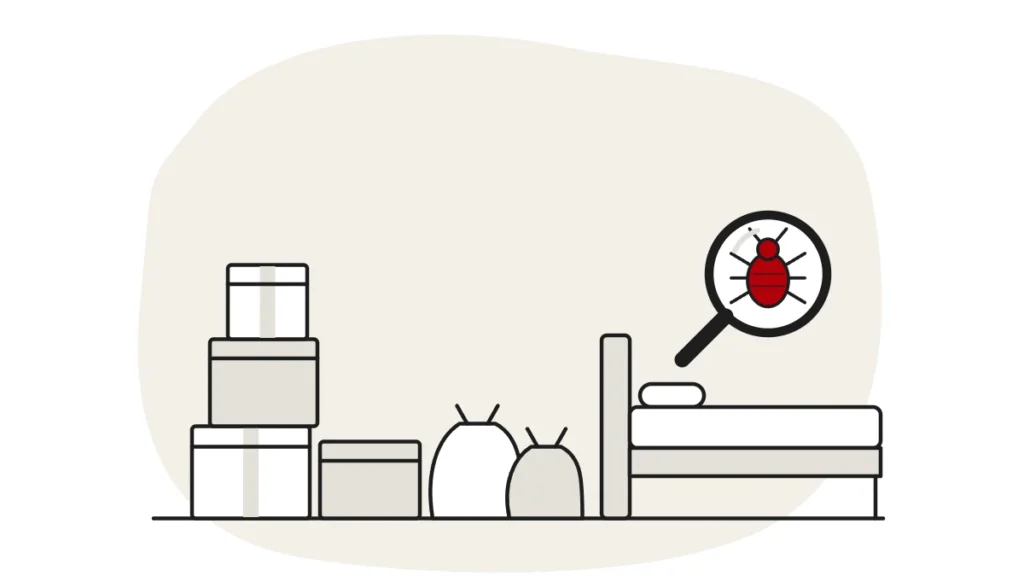
Bed bugs hide in cracks and crevices close to where people sleep or rest, and come out to feed at night. The NHS lists bed frames, mattresses, clothing and furniture among their hiding places, and advises not keeping clutter around your bed. When a room holds a lot of stored items, those hiding places multiply.
More Places to Hide
Stacked boxes, bags of clothes and textiles, piles of paper and books, and furniture that is rarely moved all give bed bugs dark, undisturbed gaps to shelter in. Cardboard is a particular problem because the bugs can tuck into its folds and corrugations.
Early Signs Go Unseen
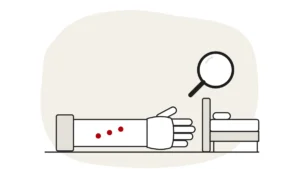
The usual signs of bed bugs (dark spots on mattress seams, pale shed skins, tiny blood spots on sheets) are easy to miss when the mattress, bed frame and skirting boards are hidden behind belongings. That means an infestation is often found later, when it has had time to grow and spread to other rooms or furniture.
Harder to Reach for Inspection and Treatment
Any treatment has to reach the places where bugs and eggs are hiding. Blocked walls, sockets, bed frames and corners make that harder, and bugs that survive in an untreated pocket can bring the problem back. This is why access and preparation matter more in a cluttered home than almost anywhere else.
What Changes When There’s a Lot of Clutter
The table sums up the main challenges and what usually helps. Every home is different, so treat it as a starting point for a conversation, not a checklist to impose.
| Challenge | Why it matters | What usually helps |
|---|---|---|
| Finding the bugs | Signs are hidden behind and inside stored items | A professional inspection, starting with the bed and where the person sits to rest |
| Reaching hiding places | Bugs in untreated pockets can survive and come back | Clearing space around the bed, walls and furniture before treatment |
| Moving belongings | Carrying items between rooms can spread bugs | Bagging items in the room they came from and sealing the bags |
| Letting go of items | Parting with belongings can be very distressing | Small, agreed stages, with the person deciding what happens to their things |
| Afterwards | New clutter can hide a returning problem | Keeping the area around the bed clear and checking it regularly |
Can bed bugs be treated in a home affected by hoarding?
Yes, but it’s honest to say that the amount of clutter affects how the treatment goes. Shop-bought sprays, powders and foggers reach only the surfaces they touch, and foggers tend to scatter bed bugs deeper into hiding. In a cluttered home that can push them further into belongings and into other rooms.
How Heat Treatment Works With Clutter
Heat can reach into places a spray can’t, which is why it’s often used in homes with a lot of belongings. Bed bugs and their eggs die when held above about 50°C for long enough. We heat rooms to 50–60°C and hold that heat until the hardest-to-reach spots stay above 50°C. Rooms don’t heat evenly, so we place temperature monitors in known cold spots and hard-to-reach areas.
That last point is the key one for a cluttered home. Heat needs room to move. Tightly packed piles, sealed boxes and items pressed against walls create cold spots where heat struggles to get in. So the more space there is for air to circulate, the more reliably every corner reaches the temperature needed. Some items also can’t stay in the room during heat treatment, and these are listed in our heat treatment preparation guide.
Why Preparation Matters, and Why It May Take More Than One Visit
In a very cluttered home, a technician may advise clearing some space first, treating in stages, or returning to check and treat again. That isn’t a failure. It’s the realistic way to make sure no pockets are missed. Our approach is heat-led, with targeted spray where it’s needed, and it’s planned around the home in front of us rather than a fixed routine.
How to Declutter Without Spreading Bed Bugs
Reducing clutter helps, but done in a rush it can move bugs around the home. A slow, planned approach works better and is kinder to the person.
- Start with the bed. Clearing the area around and under the bed gives the biggest benefit first, in line with the NHS advice not to keep clutter around the bed.
- Bag items where they are. Put items straight into strong plastic bags in the room they came from, seal them, and avoid carrying loose items into rooms without bed bugs.
- Take bags straight outside. Bags of items the person has agreed to let go should go straight to an outside bin, not sit in a hallway. Our guide to disposing of bed bug infested items explains how to do this without spreading bugs to neighbours.
- Wash what can be washed. The NHS advises washing affected bedding and clothing on a hot wash (60°C) and tumble drying on a hot setting for at least 30 minutes. Only throw away things that can’t be washed or treated.
- Swap cardboard for sealed plastic. Items being kept can go into plastic boxes with lids rather than cardboard.
- Go at a pace the person can manage. Several short sessions usually achieve more than one long, stressful clear-out.
Working With the Person: Consent and Respect
Belongings matter to the person who owns them, sometimes deeply. The NHS explains that people with hoarding disorder often find it very hard to get rid of things, and many are not aware they have a problem. Clearing a home without their agreement can cause real distress and damage trust, and it rarely solves the underlying difficulty.
- Ask, don’t take. Let the person decide what goes, what stays and what gets bagged for treatment.
- Explain the reason. “We need to clear space by the bed so the treatment can reach the bugs” is easier to agree to than “this all has to go”.
- Use neutral words. Talk about “belongings” and “the room”, not “rubbish” or “mess”.
- Keep the focus on bed bugs. The aim is a home free of bites, not a perfect home.
Where to Get Support for Hoarding
Bed bug treatment deals with the insects. It doesn’t address the reasons someone finds it hard to let go of things, and longer-term support helps stop clutter building up again.
If You’re the Person Living With It
The NHS advises seeing a GP if you think you may have hoarding disorder. A GP can refer you to a mental health specialist, and the main treatment is a talking therapy, usually cognitive behavioural therapy (CBT). The NHS notes that treatment can take time. See the NHS page on hoarding disorder for more.
HoardingUK is a UK charity for people affected by hoarding behaviour. It runs a free, confidential helpline and support groups, including a group for families.
If You’re a Relative or Friend
The NHS says hoarding is often noticed by neighbours, friends or family, and suggests encouraging the person to speak to their GP. Charities can support you as well as the person you’re worried about. If you’re in London, the London Fire Brigade says hoarding significantly increases the risk of fire at home, and encourages carers and support workers to complete its Home Fire Safety Checker on someone’s behalf, which can lead to tailored advice or a visit from the local fire station. Keeping doorways and exits clear is a good first step.
When to Involve Adult Social Care
If you’re worried that someone can’t look after themselves or their home and may be at risk, you can contact your local council’s adult social care team for advice. In England, the government’s statutory guidance under the Care Act 2014 lists hoarding as one form of self-neglect. According to the Local Government Association, self-neglect doesn’t always lead to a formal safeguarding enquiry; that’s decided case by case, and any safeguarding response should be person-led, involving the person in decisions about their own situation. Arrangements differ in Wales, Scotland and Northern Ireland, so check with your local council. This is general information, not legal advice. Checked: October 2026.
Advice for Housing Officers and Landlords
If you manage a property where bed bugs and hoarding meet, the same principles apply: plan with the tenant, agree the steps in writing, and allow time. A few practical points help:
- Arrange an inspection early, before the problem spreads to neighbouring homes. In flats, we ask to inspect the neighbouring flats too.
- Agree a realistic preparation plan with the tenant and any support workers before booking treatment.
- Keep dated notes and written reports of each visit, which help everyone see progress.
- Link in with support services where the tenant agrees, so the clutter doesn’t simply build up again.
We work with social housing providers and private landlords to plan access and keep a written record of each visit. Similar challenges come up in supported settings, covered in our guide to bed bugs in care homes. Where visual checks are limited, some providers use dogs; our article on how accurate bed bug detection dogs are explains what they can and can’t do. You can see how ThermoPest supports housing teams, landlords and other organisations on our sector services page.
FAQs
Why are bed bugs worse in a home affected by hoarding?
They aren’t a different kind of bed bug, but clutter gives them many more hiding places and hides the early signs. That means infestations are often found later, when they’re larger and may have spread. Clutter also makes it harder for any treatment to reach every hiding place.
Can you treat bed bugs without clearing the clutter?
Some space usually needs to be cleared, especially around the bed, walls and furniture, so treatment can reach where the bugs hide. A technician will look at the home and advise on what’s needed. In a very cluttered home, treatment may happen in stages or need a return visit.
Does heat treatment work in a home with a lot of clutter?
Yes. Heat is often used in homes with a lot of belongings because it reaches places sprays can’t. It still needs space for heat to circulate, and some items have to come out of the room first. Our preparation guide lists what to do, and a survey will show what’s realistic.
How do I help a family member with hoarding and bed bugs?
Stay calm and non-judgemental, and keep the focus on stopping the bites rather than on the clutter. Let them decide about their belongings. Encourage them to speak to their GP, and contact HoardingUK for support for both of you.
Who do I contact if I’m worried someone is at risk?
Your local council’s adult social care team can advise if you think someone can’t look after themselves or their home. If you’re worried about fire risk in London, the London Fire Brigade’s Home Fire Safety Checker can lead to advice or a visit. In an emergency, call 999.
Planning bed bug treatment in a cluttered home?
An inspection will show where the bugs are and what preparation is realistic, and we’ll plan the work with the person, not around them. ThermoPest is a member of the BPCA and NPTA, and our technicians arrive in unmarked vans.