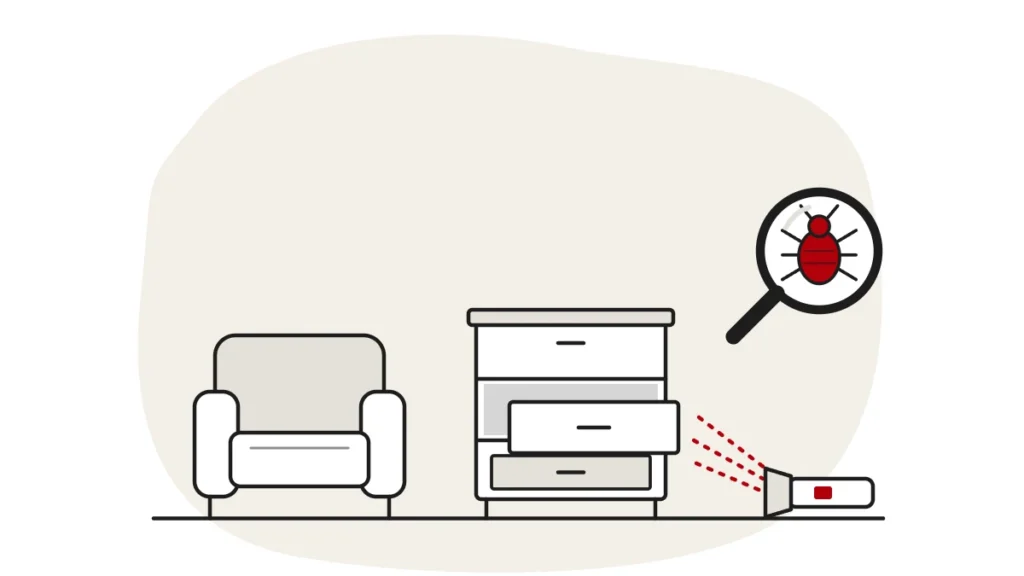
To check furniture for bed bugs, look before it comes indoors. Use a bright torch to search seams, folds, joints, drawer runners and screw holes for live bugs, pale shed skins, tiny dark spots and blood marks. Strip off cushions and covers, turn the piece over, and walk away if you find anything.
Reviewed by James Rhoades, Owner, ThermoPest · Last reviewed 16 October 2026
Second-hand furniture can be a great find, and most of it is fine. But it’s one of the known ways bed bugs get into homes, so a careful check is worth doing every time. This guide walks you through what to look for, how to check sofas, mattresses, bed frames, wooden furniture and chairs, and what to do if you find signs.
Can you get bed bugs from second-hand furniture?
Yes. The NHS advises you not to bring second-hand furniture indoors without carefully checking it first. The British Pest Control Association (BPCA) says bed bugs latch onto items such as luggage, clothing and second-hand furniture and are carried into homes that way.
Bed bugs don’t come from dirt. They travel with whatever they’re hiding in. A sofa, bed or chest of drawers from a home with bed bugs can carry adults and eggs tucked into its seams and joints, even if it looks clean. That’s why the check matters more than how the piece looks or where it came from.
Items used for sleeping or sitting carry the most risk: beds, mattresses, sofas, sofa beds and armchairs. Bedside tables and chests of drawers that stood next to a bed come next. The BPCA’s bed bug advice leaflet specifically warns against taking second-hand bedroom furniture without checking it thoroughly.
What You Need Before You Start
You don’t need special kit. Check the piece in daylight, outdoors or in a hallway or garage, before it goes anywhere near a bedroom.
- A bright torch (a phone torch works). Hold it at a low angle so small bugs and spots cast a shadow.
- A magnifying glass, if you have one, for eggs and tiny young bugs.
- A thin card, like an old store card, to slide into seams, cracks and gaps.
- A screwdriver to take off legs, backing boards or a headboard if you’re allowed to.
- A pale sheet to stand smaller pieces on, so anything that drops off is easy to see.
What are the signs of bed bugs on furniture?
You’re looking for the bugs themselves or the marks they leave. Any one of these is a reason to stop and not bring the piece in.
| Sign | What it looks like | Where to look first |
|---|---|---|
| Live bugs | Flat, oval, reddish-brown; the NHS says adults are around 5mm long. Young bugs are smaller and paler. | Seams, piping, folds, joints, under labels |
| Droppings | Small dark spots, which the BPCA describes as about 1mm wide, often in clusters | Along seams, on frame joints, on the underside of mattresses |
| Shed skins | Pale, empty, bug-shaped shells | Deep in seams, cracks and corners |
| Eggs | Whitish and tiny; hard to see without magnification | Tight cracks, screw holes, stitching |
| Blood marks | Small rusty or reddish smears | Mattress covers, seat fabric, headboards |
On dark wood or dark fabric, droppings are easy to miss. Keep the torch low and close, and dab any suspicious spot with a damp white tissue. Bed bug droppings are digested blood, so they tend to smear a reddish-brown colour rather than brush off like dust or crumbs.
How to Check a Sofa or Couch for Bed Bugs
Sofas have lots of folds and a hollow frame, so take your time.
- Take off every cushion. Check all sides, the zip and the piping around the edges.
- Look along the seams and folds where the seat meets the back and arms. Slide your card into the gap and run the torch along it.
- Tip the sofa on its back and check the underside. If there’s a fabric dust cover, look along the staples and the edges.
- Check the legs, the frame joints you can see and any recliner or sofa bed mechanism.
Leather and fabric sofas can both hide bed bugs, just in slightly different places. Our guide to whether bed bugs can live in sofas covers this in more detail.
How to Check a Second-Hand Mattress or Bed Frame
Mattresses
Stand the mattress on its side so you can see every edge. Work along each seam, the piping, the handles and any labels, then check both faces, paying attention to the corners. Look for dark spots, blood marks and shed skins. Our step-by-step guide on how to check a mattress for bed bugs goes through it in order.
Bed Frames and Headboards
Bed bugs prefer wood and fabric over metal or plastic. Remove any wooden support boards and check where their ends rest on the frame, because our technicians often find bed bugs gathered there. Look into every joint, bolt hole and corner bracket, and behind or under an upholstered headboard. A divan base needs its fabric underside checked along the staples.
How to Check Wooden Furniture for Bed Bugs
Chests of drawers, bedside tables and wardrobes don’t look like obvious hiding places, but bed bugs will use any tight, dark gap.
- Take every drawer out completely. Check the runners, the corners, the joints and the underside of each drawer.
- Shine the torch into the empty frame, especially the back corners and where the drawer runners are fixed.
- Tip the piece over to look at the base. Empty bedside tables and chests of drawers and tip them over to inspect the woodwork underneath.
- Check screw holes, cracks in the wood, loose veneer and the back panel where it’s tacked on. Screw holes and other recesses are common hiding places.
Look out for dark spots in a line along a joint or crack. That pattern is more telling than a single mark.
Upholstered Chairs, Ottomans and Other Soft Furniture
Treat these like a small sofa. Check the seams, buttons and tufting, the fabric skirt, the underside and the legs. Lift any seat pad and look into the gap between seat and back. Storage ottomans and footstools need the inside and the hinge checked too.
Cushion Covers and Removable Fabrics
If the covers come off, wash them before they come inside. The NHS advises washing at 60°C and tumble drying on a hot setting for at least 30 minutes. For items that can’t be washed, the NHS suggests putting them in a plastic bag in the freezer for 2 to 3 weeks. Washing the covers won’t deal with anything in the frame or filling, so still check the rest of the piece.
Charity Shops, Online Marketplaces and Kerbside Finds
Where the furniture comes from matters less than whether you’ve checked it. A few practical tips:
- Charity and second-hand shops: ask whether furniture is checked before sale, but still do your own check before it goes in your car or van.
- Online marketplaces: see the item in person and check it before you pay. Ask how long the seller has had it and where it’s been kept. If you’re not allowed to look properly, walk away.
- Kerbside and skip finds: be most cautious here, as you can’t ask anyone why it was thrown out. Discarded beds and sofas might be infested and are best left alone.
- Deliveries: if a piece is delivered, ask to check it on the doorstep before it’s carried in.
How to Clean Used Furniture to Prevent Bed Bugs
Cleaning helps, but it isn’t a substitute for checking. Once a piece has passed your check:
- Wash removable covers and cushions as above.
- Vacuum seams, folds, drawer runners and the underside with a crevice tool. Empty the vacuum or remove the bag straight away, seal it in a bin bag and put it in an outside bin.
- Wipe down hard surfaces and look again as you go. Cleaning is often when people spot what they missed.
- Keep an eye on the piece for the first few weeks, especially if it’s a bed or sofa someone sleeps on.
Avoid shop-bought foggers, bug bombs and smoke bombs. They don’t reach bugs deep inside furniture and tend to scatter them into new hiding places. If you’re worried about something you’ve already brought in, it’s better to get it looked at.
If you bring in second-hand furniture often, for example as a landlord furnishing lets or as a hostel or care provider, interceptor cups under the legs of beds and sofas can help show whether bugs are moving on or off them. If you’re unsure about a piece, a ThermoPest bed bug inspection checks furniture and rooms for signs, so a problem can be picked up early rather than after it has spread.
What to Do If You Find Signs of Bed Bugs
If It’s Not in Your Home Yet
Don’t bring it in. However good the bargain, it isn’t worth the risk. Let the seller or shop know what you found so they can deal with it. If it’s your own item that needs to go, our guide on how to dispose of bed bug-infested furniture and mattresses explains how to wrap, label and get rid of it without spreading bugs to anyone else.
If It’s Already Inside
- Keep it where it is, or move it the shortest route to a garage or room away from bedrooms. Don’t drag it through the house or put it in a bedroom.
- If you have to move it, wrap it in plastic sheeting first so bugs don’t drop off on the way.
- Wash any fabrics that were in contact with it at 60°C and tumble dry hot, as the NHS advises.
- Check the area around where it stood, and your beds and sofas, for the same signs. Our guide on how to check for bed bugs room by room shows you where to look.
- Get a professional bed bug inspection to confirm what you’re dealing with and whether it has spread.
The BPCA says self-treatment of a bed bug infestation is unlikely to be successful. If bugs have spread from the furniture, ThermoPest’s treatment is heat-led, with targeted spray where it’s needed, and reaches the cracks and seams where bugs and eggs hide. More than one visit can be needed, and furniture can often be treated in place rather than thrown away.
FAQs
How can you tell if furniture has bed bugs?
Look for live bugs, tiny dark spots in clusters along seams and joints, pale shed skins, whitish eggs in cracks, and small blood smears on fabric. Use a bright torch at a low angle and check undersides, drawer runners and screw holes as well as the obvious seams.
Can bed bugs live in wooden furniture?
Yes. Bed bugs prefer wood and fabric over metal or plastic. In wooden furniture they hide in joints, cracks, screw holes, drawer runners and the gaps behind back panels, so take drawers out and tip the piece over to check it properly.
How do you make sure second-hand furniture is bug free?
No check gives a cast-iron guarantee, but a careful one before the piece comes indoors lowers the risk a lot. Check every seam, joint and underside with a torch, wash removable covers at 60°C and tumble dry hot, vacuum it, and keep an eye on it for the first few weeks.
Is it safe to buy a second-hand mattress?
Mattresses are among the higher-risk items because people sleep on them. If you do buy one, check every seam, edge, handle and label with a torch before it comes in, and walk away from any with dark spots, blood marks or shed skins.
Can you see bed bugs with the naked eye?
Yes, adults are visible. The NHS says they’re around 5mm long. Young bugs are smaller and paler, and eggs are hard to see without magnification, which is why a torch and a magnifying glass help when checking furniture.
Found signs on second-hand furniture?
If something you’ve brought home shows signs of bed bugs, an inspection will confirm what you’re dealing with and whether it has spread. ThermoPest is a member of the BPCA and NPTA, and our technicians arrive in unmarked vans.