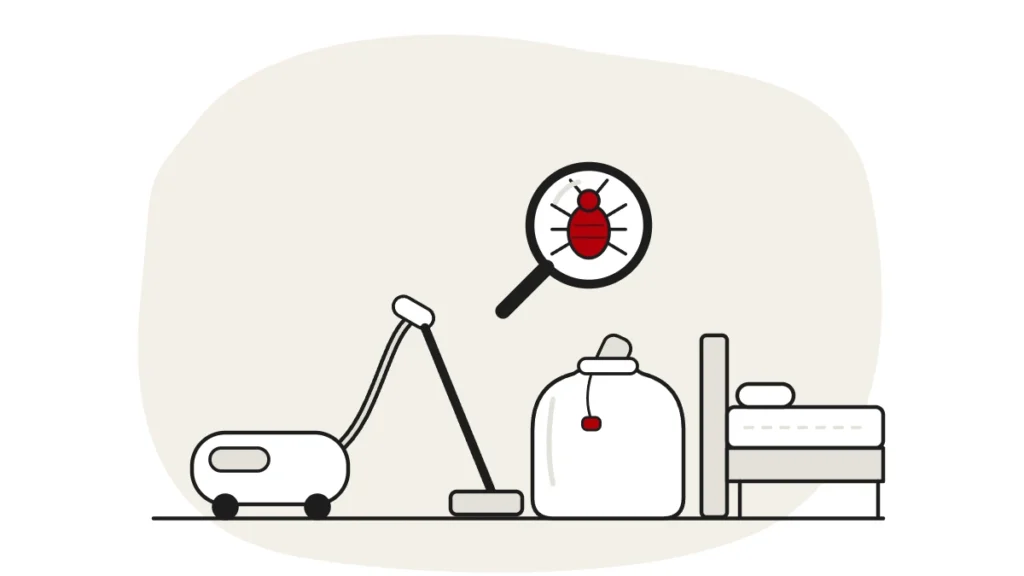
You can do a lot yourself to contain bed bugs and reduce their numbers: hot washing and drying, freezing small items, careful vacuuming, mattress encasements and traps under the bed legs. What DIY rarely does is clear an established infestation, because bugs and eggs hide deep in cracks that home methods can’t reach.
Reviewed by James Rhoades, Owner, ThermoPest · Last reviewed 15 October 2026
If you’ve just found bed bugs, it’s natural to want to do something tonight. This guide covers what genuinely helps, what doesn’t, what’s unsafe, and how to tell when it’s time to get a professional in. The NHS is clear that it’s very difficult to get rid of bed bugs yourself, so think of DIY as damage limitation while you work out your next step.
Can you get rid of bed bugs on your own?
Sometimes, if you catch them very early and only a handful of bugs are confined to one bed. In most homes, though, by the time you notice bites or spots on the mattress, bugs and eggs are already spread through seams, joints and cracks around the bed.
The NHS says bed bugs can be hard to find and may be resistant to some insecticides, and that the things you can try yourself are unlikely to get rid of them completely. It recommends contacting your local council or a pest control service. That doesn’t mean DIY is pointless. Done well, it reduces the number of bugs, protects your bed and stops you carrying them to other rooms.
How to Get Rid of Bed Bugs Yourself: What Actually Helps
Wash, Dry or Freeze What You Can
The NHS advises washing affected bedding and clothing on a hot wash (60°C) and tumble drying on a hot setting for at least 30 minutes. For items that can’t be washed, it suggests putting them in a plastic bag in the freezer for 2 to 3 weeks.
- Bag laundry in the bedroom and carry it straight to the machine, so you don’t drop bugs on the way.
- Once clean and dry, keep items in fresh sealed bags until the problem is sorted. Our guide on how long bed bugs can live in a sealed plastic bag explains how to use bags safely.
- For delicate clothes, see whether ironing kills bed bugs in clothes.
Fit Encasements on the Mattress and Base
Zipped bed bug encasements seal the mattress and divan base. Encasements trap any bugs inside, where they eventually die. They also take away hiding places in the mattress seams. They don’t stop bugs climbing onto the bed from elsewhere to bite, so they’re one layer, not the answer.
Clear Clutter Around the Bed
The NHS advises against keeping clutter around your bed, as it gives bugs more places to hide. Clear the area, but bag items rather than moving them loose into another room.
Keep Sleeping in Your Own Bed
Moving to the sofa or a spare room often spreads bed bugs, because they follow you. Staying put keeps them concentrated in one place, which makes any treatment easier.
Can you vacuum bed bugs?
Yes, and it’s one of the more useful things you can do, but it won’t solve the problem on its own. A vacuum can pull bugs, shed skins and some eggs off mattress seams, bed frame joints and carpet edges. It can’t reach bugs tucked deep in screw holes, joints and gaps behind skirting boards, and eggs are glued to surfaces so many stay put.
Bed bugs can survive being vacuumed up, so what you collect needs to leave the house:
- Use the crevice tool and work slowly along mattress seams, the bed frame, the headboard and the edges of the carpet.
- Afterwards, seal the vacuum bag tightly and put it straight into an outdoor bin.
- With a bagless vacuum, empty the canister into a plastic bag outside, tie it shut, and wash the canister.
Should you vacuum before professional treatment?
Ask the company first. Some technicians want to see the evidence undisturbed at inspection, because droppings, skins and eggs show where the bugs are living. Others will give you a preparation list that includes vacuuming. Follow their advice rather than your instinct.
Do homemade bed bug traps work?
They’re useful for monitoring, not for clearing an infestation. Interceptors are dish-shaped traps that sit under each bed or sofa leg; bugs climb in and can’t climb out. They can help reveal bed bugs early and reduce bites. Homemade versions use a smooth plastic bowl dusted with talc. Check and clean interceptors every week. Traps don’t touch bugs already living in the mattress or frame, so an empty trap doesn’t prove they’ve gone.
Can you do a DIY heat treatment for bed bugs?
Not safely for a whole room. Heat can reach bed bugs in hidden places, but professional heat treatment uses dedicated equipment, monitoring and trained technicians to raise a room’s temperature evenly and safely. Household heaters can’t do that, and they create a fire risk.
Don’t try to kill bed bugs by turning up the heating, using a space heater or using a fireplace. What you can do safely at home is the heat you already have: a hot wash and a hot tumble dryer for fabrics, as the NHS describes. Hand-held steamers can kill bugs they touch on surfaces, but they can’t heat the inside of a mattress or furniture joints.
Do home remedies and shop-bought products work?
Most give partial results at best. Here’s how the common options compare.
| Method | What it can do | Its limits |
|---|---|---|
| Hot wash and tumble dry | Treats bedding and clothes (NHS: 60°C wash, hot dry 30+ minutes) | Only works on washable fabrics |
| Freezing | Treats small items that can’t be washed (NHS: 2 to 3 weeks) | Needs freezer space and time |
| Vacuuming | Removes bugs and debris from seams and edges | Misses deep cracks and glued eggs; bugs survive inside the vacuum |
| Encasements | Traps bugs inside the mattress, removes hiding places | Doesn’t affect bugs in the frame, headboard or room |
| Interceptor traps | Shows activity, catches bugs walking to the bed | Monitoring tool, not a treatment |
| Shop-bought sprays | May kill bugs they hit directly | May be resistant (NHS); bugs often scatter |
| Foggers and bug bombs | Little against bed bugs | Scatter bugs into other rooms; fire and health risk |
Sprays
Household sprays mostly kill on direct contact, and the NHS notes bed bugs may be resistant to some insecticides. Most bed bug sprays sold to householders have limited effect once the spray has dried. If you’re wondering about specific products, our guides on whether Dettol kills bed bugs and whether Indorex kills bed bugs explain what they can and can’t do.
Diatomaceous Earth
Diatomaceous earth (DE) is a fine powder that damages the bug’s outer layer so it dries out. Desiccant dusts can take several months to work, and pool-grade or food-grade DE shouldn’t be used against bed bugs because it can harm you when you breathe it in. In our experience DE is messy to apply and rarely helps much in clearing an infestation. If you use any dust, use a product labelled for bed bugs, apply a thin layer only in cracks rather than on beds or floors, and keep it away from children and pets. There’s more in our guide to whether diatomaceous earth kills bed bugs.
For a wider look at quick-acting options, see what kills bed bugs on contact.
Why are bed bugs so hard to get rid of?
A few things work together in the bed bug’s favour:
- They hide in tiny gaps. Their flat bodies fit into crevices no wider than a toothpick: mattress piping, screw holes, bed frame joints, skirting boards and behind loose wallpaper.
- Eggs are hard to see and hard to shift. Eggs are about the size of a speck of dust and hatch in about a week at room temperature. Miss them, and the problem seems to come back.
- Resistance. The NHS says bed bugs may be resistant to some insecticides, and resistance is increasing, which is why sprays often disappoint.
- They can wait. In heated buildings, bed bugs can survive for months without feeding, so leaving a room empty for a few weeks won’t starve them out.
- They spread when disturbed. Moving furniture, sleeping elsewhere and using sprays or foggers can push bugs into new rooms or, in flats, next door.
What Not to Do
- Don’t use foggers or bug bombs. They scatter bed bugs rather than clear them, and misuse can harm your health or cause a fire or explosion.
- Don’t use flammable liquids. Rubbing alcohol, paraffin (kerosene) and petrol can harm you and ignite easily.
- Don’t throw out your mattress straight away. Carrying it through the home can spread bugs, and a new mattress can be reinfested.
- Don’t move belongings to other rooms unless they’re sealed in bags first.
When should you call a professional?
It’s worth getting help if any of these apply:
- you’re still getting new bites or finding live bugs despite careful DIY;
- you’ve found signs in more than one room, or on the sofa as well as the bed;
- you live in a flat or shared house, where bed bugs can move between homes;
- bites, worry or lost sleep are affecting your health. A pharmacist can advise on itchy bites, and you can contact a GP or NHS 111 if you’re concerned.
Professional bed bug heat treatment reaches the cracks, joints and seams that home methods miss. ThermoPest’s treatment is heat-led, with targeted spray where it’s needed, and a follow-up visit may be needed to make sure nothing has survived. In flats, we ask to inspect neighbouring flats too. You can check our prices before you call.
FAQs
How do bed bugs die naturally?
Without treatment, bed bugs don’t die off in an occupied home, because they keep feeding. Even in an empty room they can survive for months without a meal in a heated building, so waiting it out rarely works.
Can you get rid of bed bugs with home remedies?
Home remedies such as tea tree oil, vinegar or alcohol aren’t reliable, and alcohol is a fire risk. Hot washing, tumble drying, freezing, vacuuming and encasements help reduce numbers, but the NHS says DIY methods are unlikely to get rid of bed bugs completely.
Is diatomaceous earth safe to use at home?
Only with care. Avoid using pool-grade or food-grade DE for bed bugs because breathing the dust can be harmful. Use a product labelled for bed bugs, apply a thin layer in cracks only, and keep it away from beds, children and pets.
DIY not keeping up?
If you’re still seeing signs, an inspection will confirm how far the bed bugs have spread and what’s needed to clear them. ThermoPest is a member of the BPCA and NPTA, and our technicians arrive in unmarked vans.