Bed bug guides
Think you have bed bugs but can’t find them? How traps and interceptors work, how to set them up and what an empty trap really means.

4.9 / 5 on Google



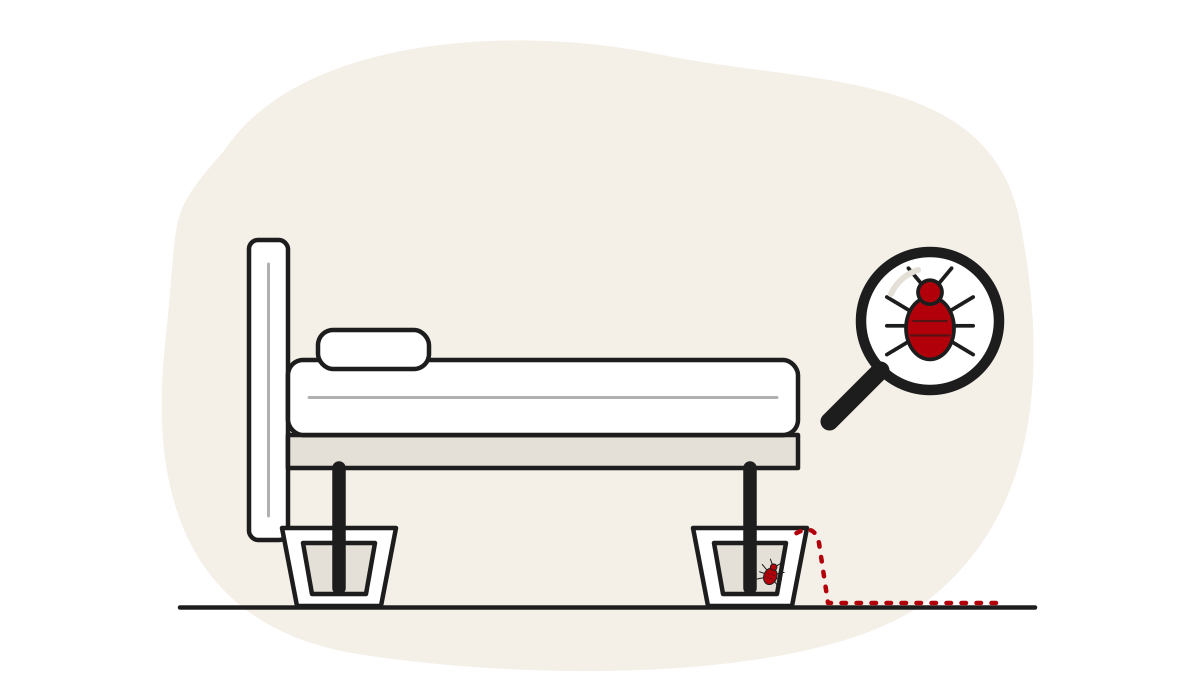
Bed bug traps can tell you whether you have bed bugs, but they won’t get rid of them. The most useful type at home is an interceptor: a cup that sits under each bed leg and catches bed bugs climbing to or from the bed. In our experience, interceptors often pick up light infestations that are easy to miss by eye.
Reviewed by James Rhoades, Owner, ThermoPest · Last reviewed 16 October 2026
If you’re waking up with bites but can’t find a single bug, or you’ve had a treatment and want to know whether it worked, a trap is a cheap way to get evidence. If a trap does catch a bed bug, the next step is treatment, not more traps. This page explains the main types of trap, how to set up interceptors properly, how long to leave them and what a catch (or an empty trap) really tells you. Health guidance on the signs of bed bugs comes from the NHS.
They work as a way of finding bed bugs, not as a way of getting rid of them. Monitors are for detecting bed bugs and tracking how well a treatment is working, and any bed bugs found should be treated promptly. A trap only catches the bugs that walk into it. Eggs, and the bugs hiding in the mattress, headboard, sofa and skirting boards, stay where they are.
Where traps earn their place is in picking up small infestations that are easy to miss. Interceptors left in place for at least a week will often catch bed bugs that a visual check misses. Many people with a light infestation have no idea it’s there until a trap or an inspection turns it up.
You’ll see three main kinds for sale. They do quite different jobs:
| Type | How it works | Best for |
|---|---|---|
| Interceptor (pitfall) cups | A double-walled cup that goes under each bed or sofa leg. Bed bugs climb the rough outside wall, fall into the moat and can’t climb back out. There’s no lure: they rely on bed bugs travelling to and from the bed. | Checking whether you have bed bugs, and whether a treatment has worked |
| Active (lure) monitors | Give off carbon dioxide, heat or a chemical lure to draw bed bugs in. Carbon dioxide is the main attractant. | Quick checks, usually by pest professionals |
| Sticky traps and glue boards | A flat sticky card. It only catches a bed bug that happens to walk across it. | Limited use; an empty one tells you very little |
For most homes, interceptors are the one to use. Pitfall-style interceptors are one of the most cost-effective ways to detect bed bugs.
Interceptors only work if bed bugs have to pass through them to reach you. Set them up like this:
If you catch something, keep it. Seal it in a bag or stick it under clear tape, or take a sharp photo next to a coin for scale. Our guides on whether you can see bed bugs and bugs that look like bed bugs will help you check what it is.
Leave interceptors in place for at least a week to pick up very low numbers. Active monitors can catch bed bugs in a single night, but it’s worth repeating them over several nights if the first one is empty, because not every bed bug comes out every night.
After a treatment, give it longer. One empty check isn’t enough: you want repeated empty checks spread over several weeks before you can be confident the bed bugs have gone. Checking after treatment is measured in weeks, not days. See how to tell if bed bugs are gone after treatment for the other signs to watch.
No. A zero catch doesn’t prove a room is free of bed bugs. A few bugs can take a while to show up, and some routes onto the bed may not go through a cup.
If your traps stay empty, check for the other signs the NHS lists: bites, spots of blood on your bedding and small brown spots on bedding or furniture. Our room-by-room guide on how to check for bed bugs and our list of common bed bug hiding spots show where to look. Bites with no other signs can have other causes, so it’s worth reading bitten at night but no sign of bed bugs too.
If you’re still getting bites and the traps show nothing, it’s time to bring in a professional. A professional bed bug inspection can confirm whether bed bugs are there before you spend money on treatment. Hotels, landlords and other businesses that need regular checks can use our bed bug monitoring and prevention service.
No. Monitors detect bed bugs; they don’t control an infestation. Interceptors can cut down on bites a little, because they stop some bed bugs reaching the bed, but they don’t touch the eggs or the bugs living in the mattress, bed frame and furniture.
The same goes for other DIY fixes. The British Pest Control Association warns that amateur treatments can prolong an infestation. Don’t use foggers or bug bombs: they tend to scatter bed bugs into new hiding places. If traps confirm bed bugs, our bed bug heat treatment is heat-led, with targeted spray where it’s needed. If you live in a flat, we’ll ask to inspect the neighbouring flats too, because bed bugs can move between them.
4.9 / 5 on Google
FAQs
Can’t see your question? Call 0808 189 2310 and speak to a specialist.
Under every leg of the bed, and under any sofa or chair where someone sits or sleeps for long periods. Pull the bed away from the wall and keep bedding off the floor so the cups are the only way up. If the bed has no legs, place interceptors against the walls and furniture near the bed instead.
Interceptors don’t. They contain no lure, so they only catch bed bugs that are already travelling to and from the bed or sofa. Active monitors use carbon dioxide or a chemical lure to draw bed bugs in, which is why professionals use them for quick checks.
A sticky trap will hold a bed bug that walks across it, but nothing steers bed bugs onto it, so it’s much less reliable than interceptors placed under the bed legs. Don’t treat an empty sticky trap as proof that you don’t have bed bugs.
Plain interceptor cups are just plastic, with no chemicals or lure, so they’re the safest choice in a family home. Don’t make your own carbon dioxide trap with dry ice: it can burn skin, and carbon dioxide can build up in a small room.
Yes, they’re a good way to see whether the treatment has worked. Follow your technician’s advice on where to put them, and keep checking for several weeks rather than a few days. If you catch a bed bug after treatment, tell your pest control company: a return visit may be needed.
Caught something in a trap?
If a trap has caught a bed bug, or you’re still getting bites with nothing to show for it, an inspection will confirm what you’re dealing with. We’re BPCA and NPTA members, and we arrive in unmarked vans.
Prefer to call? 0808 189 2310
Talk to a specialist
Speak to a bed bug expert today. Tell us what you’ve found and we’ll come back to you with the right next step.
Enter Your Details To Request A Call Back
Enter Your Details To Request A Call Back


