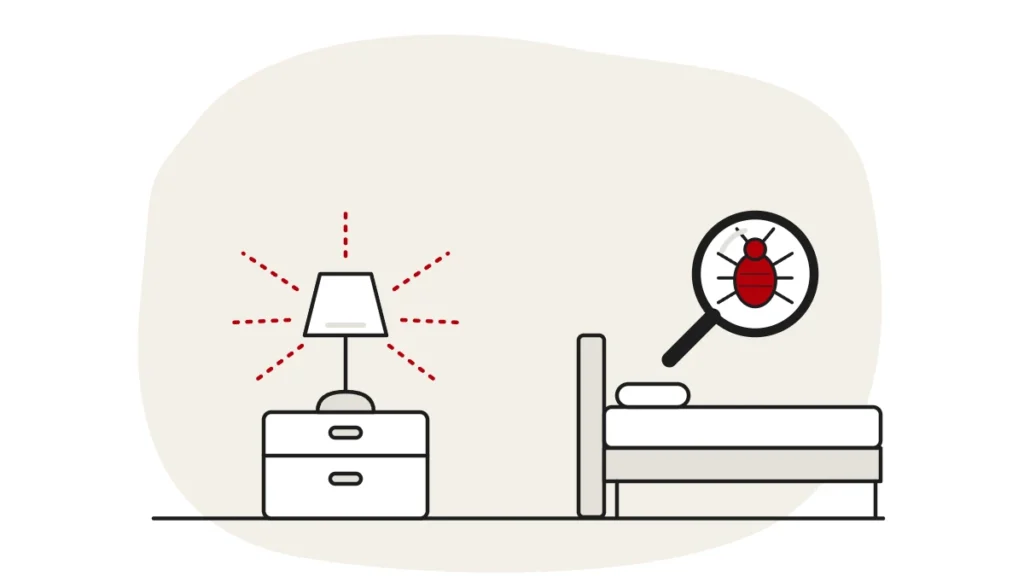
No. Leaving the light on won’t keep bed bugs away. Sleeping with the lights on is not likely to deter hungry bed bugs. They hide close to your bed and simply wait until you’re asleep and still, light or no light.
Reviewed by James Rhoades, Owner, ThermoPest · Last reviewed 16 October 2026
If you think something is biting you at night, keeping a lamp on can feel like the one thing you can control. It’s an understandable instinct, but it costs you sleep without protecting you. Below we explain why light doesn’t work, what other popular deterrents can and can’t do, and the steps that actually help.
Do bed bugs like light, or are they afraid of it?
Neither, really. Bed bugs aren’t drawn to light the way moths are, and they aren’t frightened off by it the way people imagine. They spend the day tucked away and come out mainly at night because that’s when people are lying still in bed.
Put simply, bed bugs are active mainly at night, and during the day they tend to hide close to where people sleep. The key word is people. Their timing follows you, not the light switch.
What Draws Bed Bugs to You
Bed bugs feed only on blood, so everything about their behaviour is about finding a person. Carbon dioxide, odours and heat are the main cues that attract bed bugs to a host. You breathe out carbon dioxide and give off warmth whether the lamp is on or off, so a lit room still tells a hungry bug exactly where you are.
Will bed bugs come out if the lights are on?
Yes, if they’re hungry. Hungry bed bugs may also feed during the day, especially if that’s when the person normally sleeps, and they adjust their feeding to your sleep pattern.
So the light may change when they come out, but not whether they do. If you sleep with a lamp on, they still have hours of you lying still to work with. People who work nights and sleep in the day can still be bitten in a bright bedroom for the same reason.
Will bed bugs bite if you sleep with the lights on?
They can. Nothing about the light stops a bed bug from feeding once it reaches your skin. Bites tend to appear on skin left uncovered while you sleep; the NHS mentions the face, neck and arms. Some people don’t react to bites at all, so the person next to you may be bitten without knowing.
Do bed bugs scatter or run from light?
You might see one move away if you switch on a light and disturb it, much as it would if you moved the sheets. That isn’t the same as being repelled. As soon as the room is quiet and you’re still again, a hungry bug will go back to looking for a meal.
Lights on and Other Bed Bug Myths: What the Evidence Says
Leaving a light on is one of several things people try at night. Here’s how the most common ones compare.
| What people try | Does it keep bed bugs away? | What the evidence says |
|---|---|---|
| Sleeping with the light on | No | Not likely to deter hungry bed bugs; they adjust to your sleep pattern |
| Strong smells and essential oils | No good evidence | No scent has been shown to keep bed bugs off you |
| Insect repellent | Not reliably | Repellents for ticks and mosquitoes don’t appear to be as effective against bed bugs |
| Vinegar | No | Doesn’t reach bugs and eggs hidden in seams and cracks |
| Smoke bombs and foggers | No, and can make things worse | Total release foggers are ineffective against bed bugs. They can also scatter bugs into new hiding places |
| Sleeping in another room | Not for long | Bed bugs prefer to hide near where they feed but will crawl further for a meal |
Smells, Oils and Sprays
Lavender, peppermint and tea tree are often recommended online, but there’s no scent proven to keep bed bugs off you. We look at what the research found in what smells do bed bugs hate? Vinegar is another popular one; our guide to whether vinegar kills bed bugs explains why it doesn’t deal with an infestation.
Insect Repellent
Insect repellents used to deter ticks and mosquitoes don’t appear to be as effective against bed bugs, and applying repellent at bedtime is not an effective way to deter them. If you use any product on your skin, follow the label, and ask a pharmacist before using it on children.
Smoke Bombs and Foggers
It’s tempting to reach for a smoke bomb or fogger when you feel desperate. Total release foggers (“bug bombs”) are ineffective against bed bugs. They don’t reach bugs deep in mattress seams and furniture joints, and they can scatter bed bugs into new rooms. Read more in do smoke bombs and foggers kill bed bugs?
Can sleeping somewhere else help?
Moving to the sofa or a spare room is the other common instinct. It might give you a night or two of relief, but it doesn’t solve anything. Bed bugs prefer to hide close to where they feed, but if necessary they will crawl longer distances in search of a meal. If you move, they can follow, and you risk spreading them to a second room.
The bugs left behind can also wait a long time between meals, so they’ll still be there when you come back. If you do need to sleep elsewhere for a night, check your bags and clothes first so you don’t take bugs with you.
Why do bed bugs come out at night?
Because that’s when most people are asleep. A sleeping person lies still for hours in the same spot, which gives a bed bug the best chance of feeding without being disturbed. Bed bugs are small, flat and good at hiding, so in the day they stay in mattress seams, bed frame joints, headboards and nearby furniture.
This is also why stories of bed bugs crawling into ears are mostly myth: they come to feed on exposed skin, then go straight back to hiding. We cover this in can bed bugs go in your ear?
What Actually Helps If You Think You Have Bed Bugs
Instead of keeping the light on, use it to look. A torch is one of the most useful tools you have.
1. Check Your Bed and the Area Around It
With a torch, look along mattress seams, piping and labels, the bed frame, the headboard and any furniture beside the bed. The NHS lists these signs:
- bites, often on skin exposed while sleeping, like the face, neck and arms;
- spots of blood on your bedding, from bites or from squashing a bed bug;
- small brown spots on bedding or furniture, which could be bed bug droppings;
- the bugs themselves: the NHS says adults are around 5mm long and can be dark yellow, red or brown.
If you’re being bitten but can’t find anything, read getting bitten at night with no bed bugs in sight for other causes to rule out.
2. Wash and Dry Bedding Hot
The NHS advises washing affected bedding and clothing on a hot wash (60°C) and tumble drying on a hot setting for at least 30 minutes. Items that can’t be washed can go in a sealed plastic bag in the freezer for 2 to 3 weeks. Only throw away things that can’t be washed or treated.
3. Clear Clutter and Keep Things Where They Are
The NHS advises against keeping clutter around your bed, and suggests cleaning and vacuuming regularly so you spot signs early. Try not to move furniture or bags between rooms until you know what you’re dealing with.
4. Get an Inspection
The NHS says it’s very difficult to get rid of bedbugs yourself, and advises contacting your local council or a pest control service. Bed bugs are easy to miss in the early stages, so a professional check is the quickest way to find out for certain. At ThermoPest our technicians carry out a thorough bed bug inspection of your bed, furniture and room. If bed bugs are confirmed, our treatment is heat-led, with targeted spray where it’s needed, and we’ll talk you through what to expect.
Soothing Bites While You Sort It Out
This is general information, not medical advice. Bed bugs aren’t known to spread disease, and the NHS says bites usually clear up on their own in a week or so.
- A cool, clean, damp cloth can help with itching and swelling.
- Keep the area clean and try not to scratch, to lower the chance of infection.
- A pharmacist can recommend something for the itch, such as a mild steroid cream or an antihistamine, and check it’s suitable for you or your child.
See a GP if bites are still very painful, swollen or itchy after trying treatments from a pharmacist, or if pain or swelling around the bites is spreading. If you’re unsure whether you’re looking at bites or a rash, our guide to bed bug bites vs hives may help. For full guidance, see the NHS page on bedbugs.
FAQs
If I sleep with the light on, will bed bugs stay away?
No. Sleeping with the lights on is not likely to deter hungry bed bugs, because they adjust their feeding to when you sleep. They’re drawn to you, not put off by the lamp, so a lit room won’t stop them biting.
Do bed bugs come out in the light?
They can. Bed bugs are mostly active at night because that’s when people are asleep and still, but hungry bed bugs may also feed during the day, especially if that’s when you normally sleep.
Are bed bugs attracted to light?
No. Unlike moths, bed bugs aren’t drawn to light. Carbon dioxide, odours and heat are the main cues that attract them to a person, which is why they find you in a bright room just as they do in a dark one.
Do bed bugs hate light?
They tend to stay hidden during the day, and one may move off if you disturb it with a torch. But light doesn’t repel them. Once you’re still again, a hungry bed bug will come out to feed.
What should I do instead of leaving the light on?
Use a torch to check mattress seams, the bed frame and nearby furniture for bugs, droppings and blood spots. Wash bedding at 60°C and tumble dry hot, as the NHS advises, and arrange an inspection if you find signs or keep getting bitten.
Losing sleep over bites?
A lamp won’t keep bed bugs away, but an inspection will tell you whether they’re there and where they’re hiding. ThermoPest is a member of the BPCA and NPTA, and our technicians arrive in unmarked vans.