In England, bed bugs are usually your landlord’s responsibility if they were there when you moved in, or if they make the home unfit to live in. Report them in writing with dated photos and keep paying your rent. If your landlord doesn’t act, contact your council’s private housing or environmental health team.
Reviewed by James Rhoades, Owner, ThermoPest · Last reviewed 15 October 2026
A landlord who won’t answer makes bed bugs even more stressful. This guide covers the law in England, what to do step by step, and where Wales, Scotland and Northern Ireland differ. We’re bed bug specialists, not lawyers, so we point you to official sources and free advice from Shelter and Citizens Advice.
Are bed bugs a landlord’s responsibility in the UK?
Often, yes, but it depends on the facts. In England, two sets of rules matter most.
Fitness for Human Habitation (England)
Section 9A of the Landlord and Tenant Act 1985, added by the Homes (Fitness for Human Habitation) Act 2018, says a rented home in England must be fit for human habitation when the tenancy starts and must stay fit throughout it. Section 10 lists the things that decide fitness, including “any prescribed hazard” under the Housing Health and Safety Rating System (HHSRS). The GOV.UK guide for tenants says this applies to tenants in social and privately rented homes, and that tenants can take their landlord to court if the home is unfit.
The HHSRS Pests Hazard (England)
Councils use the HHSRS under the Housing Act 2004 to assess hazards in homes. Older guidance calls the relevant hazard “domestic hygiene, pests and refuse”. From 23 June 2026, the updated HHSRS regulations group it under a hazard called “Domestic Hygiene”, which includes “exposure to pests”. A serious bed bug infestation can count.
What Shelter and Citizens Advice Say
- Pests there when you moved in: Shelter says “If pests were there when you moved in, they should sort this out”, and that your landlord shouldn’t charge you if they’re responsible.
- Your tenancy agreement: Citizens Advice says your landlord will probably be responsible if your agreement says so, or says they’ll keep the home in a “good and habitable state”.
- Report early: Citizens Advice says the duty usually starts once your landlord knows about the problem.
Can my landlord blame me for bed bugs?
Sometimes. Under section 9A(3), a landlord isn’t liable where the unfitness is “wholly or mainly attributable to” the tenant’s own breach of the tenancy agreement, and the GOV.UK guide says a landlord may not have to fix problems caused by a tenant behaving irresponsibly. Citizens Advice says you may have to deal with an infestation you caused.
Bed bugs aren’t a sign of a dirty home: the NHS says they’re found in both clean and dirty places. They come in on luggage, second-hand furniture and bags, and can move between flats, so it’s often hard to say who brought them in. If your landlord blames you, ask for their evidence and get advice before agreeing to pay.
Flats, HMOs and Bed Bugs From Next Door
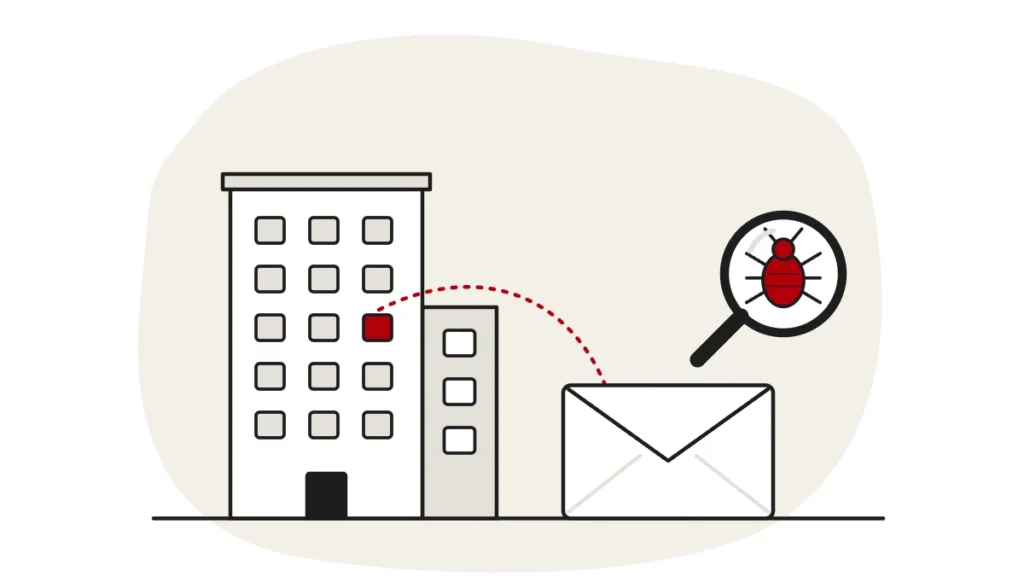
Shelter says to report pests in shared areas such as hallways and stairs, and that a landlord doesn’t usually have to deal with pests in neighbouring properties. If you think bed bugs are coming from next door, tell your landlord and the council. In a block, treating one flat alone often leads to them coming back, which is why we ask to inspect neighbouring flats. Our guide on whether bed bugs spread from one room to the rest explains how they move.
What to Do If Your Landlord Won’t Treat Bed Bugs
1. Keep Evidence
Citizens Advice’s guide to getting repairs done suggests keeping photos, messages, receipts, GP letters and your tenancy agreement. For bed bugs, that means:
- dated photos of live bugs, shed skins, and dark spots or blood marks on mattress seams and the bed frame;
- photos of bites, and any notes from a pharmacist or GP;
- a diary of when you found signs and what you’ve done;
- receipts for anything damaged or replaced.
2. Report It in Writing
Citizens Advice says “It’s best to put it in writing – send it to your landlord and keep a copy yourself.” Email is fine. Attach your photos, describe where you found the bugs, say how it’s affecting you and ask them to arrange a professional inspection and treatment. If you rent through an agent, send it to both.
3. Allow a Reasonable Time
For private renters there’s no fixed deadline. Citizens Advice says repairs should be done within a “reasonable” time that depends on the problem. Bed bugs spread, so it’s fair to ask for a prompt reply.
4. Contact the Council
If your landlord doesn’t act, contact your council’s private housing or environmental health team, in writing. Citizens Advice says an Environmental Health Officer can order your landlord to do repairs, and Shelter says the council can inspect your home. Under the Housing Act 2004, councils can take enforcement action against serious hazards, such as serving an improvement notice on the landlord.
5. Get Advice Before Going Further
Shelter and Citizens Advice give free advice. If you’re thinking about claiming for ruined belongings or disruption, our guide to bed bug compensation claims explains how the process works.
While You Wait
Keep sleeping in your own bed, as moving rooms can spread them. Wash and dry bedding on a hot setting (see how washing and drying kill bed bugs on clothes), and don’t use foggers or bug bombs, which tend to scatter bed bugs into new hiding places.
Your Options at a Glance
| Where you rent | Main rule | If your landlord won’t act |
|---|---|---|
| England, private | Fitness for human habitation; HHSRS | Council private housing or environmental health team |
| England, council or housing association | Fitness for human habitation; HHSRS; Awaab’s Law | Landlord’s complaints process, then the Housing Ombudsman |
| Wales | Renting Homes (Wales) Act 2016: fitness for human habitation | Citizens Advice, Shelter Cymru or your council |
| Scotland | Repairing standard (private renting) | First-tier Tribunal (Housing and Property Chamber) |
| Northern Ireland | Fitness standard | District council environmental health |
Council and Housing Association Tenants: Awaab’s Law
Awaab’s Law applies to social landlords in England. GOV.UK says Phase 1 has been in force since 27 October 2025. The GOV.UK guidance for tenants says it covers any emergency hazard (except overcrowding) and significant damp and mould. For an emergency hazard, your landlord must investigate and make the home safe within 24 hours. The government’s Phase 2 hazards guidance gives “serious pest infestation which poses an immediate threat to health” as an example of an emergency.
A non-emergency bed bug problem isn’t yet covered by the Awaab’s Law timescales. That changes with Phase 2: GOV.UK says it comes intoforce on 30 November 2026 and extends the significant-hazard requirements to further hazards, including domestic hygiene, which in the updated HHSRS includes exposure to pests. Our guide to Awaab’s Law and pests covers what changes.
Report through your landlord’s official channels and keep a record of every contact. If you’re unhappy with their final complaint response, the GOV.UK guidance says you can go to the Housing Ombudsman.
Private Renters: What the Renters’ Rights Act 2025 Changes
The government’s implementation roadmap sets out what’s in force in England so far:
- From 27 December 2025: stronger powers for councils to inspect properties and demand documents.
- From 1 May 2026: section 21 “no fault” evictions abolished, most tenancies moved to periodic tenancies, and stronger council enforcement and rent repayment orders. Shelter says this gives “much stronger protection from revenge eviction”.
Some changes aren’t law for private renters yet. A reformed Decent Homes Standard will apply to private rented homes from 2035, according to the government’s January 2026 response. Extending Awaab’s Law to private renting is still at the consultation stage (open 9 October to 18 December 2026), with no start date set. Read more in our guide to bed bugs and the Renters’ Rights Act.
Do I have to pay rent if I have bed bugs?
Yes. Shelter says: “You should not stop paying your rent if your landlord does not do repairs”, and warns that you can be evicted for not paying rent. Citizens Advice gives the same advice: keep paying, or you’ll fall into arrears.
Instead, Shelter suggests asking for a temporary rent reduction or compensation. If you pay for pest control yourself and want it taken off your rent, agree it with your landlord first, in writing.
Don’t assume bed bugs end your tenancy. Get advice before moving out, so you don’t end up paying rent on two homes.
Getting an Inspection Report
A professional inspection confirms whether it’s bed bugs and how far they’ve spread. A bed bug inspection from ThermoPest includes a written report with dated photos, which gives you and your landlord a clear record. We provide inspections, reports and treatment, not legal advice.
Landlords and letting agents can also book us directly. Our pest control for landlords covers inspection, neighbouring flats where needed, and treatment that’s heat-led, with targeted spray where it’s needed. Return visits may be needed.
Wales, Scotland and Northern Ireland
- Wales: under section 91 of the Renting Homes (Wales) Act 2016, your landlord must keep the home fit for human habitation. The Welsh Government’s guidance for contract-holders lists “domestic hygiene, pests and refuse” among the matters to consider. Raise it with your landlord first, then get advice from Citizens Advice, Shelter Cymru or your council.
- Scotland: mygov.scot says private tenants who’ve reported repairs to their landlord can apply to the First-tier Tribunal for Scotland (Housing and Property Chamber), with no fee. Shelter Scotland says your landlord must deal with pests caused by repair problems, and the council’s environmental health team can help.
- Northern Ireland: nidirect says all rented homes must meet the fitness standard and that you can contact your council’s environmental health officers if your landlord doesn’t fix a hazard.
For more on the wider rules, see our overview of bed bug laws and regulations in the UK.
If You’re the Landlord
Act quickly when a tenant reports bed bugs: arrange an inspection, check neighbouring flats in shared buildings and keep records. Records protect both sides if responsibility is disputed later.
This is general information, not legal advice. Checked: October 2026.
FAQs
How long does a landlord have to get rid of bed bugs?
For private renters in England there’s no fixed deadline: Citizens Advice says repairs should be done within a reasonable time. For council and housing association tenants, Awaab’s Law requires an emergency hazard to be investigated and made safe within 24 hours. From 30 November 2026, Phase 2 brings domestic hygiene into the significant-hazard requirements.
Does my landlord have to pay for bed bug treatment?
Usually, if the bed bugs were there when you moved in, your tenancy agreement makes them responsible, or the infestation makes the home unfit or unsafe. Shelter says a landlord who is responsible shouldn’t charge you. If they say you caused it, ask for their evidence and get advice.
How can a landlord prove you brought in bed bugs?
There’s no single test. Timing, where the bugs were found and whether neighbouring flats are affected all matter. A written inspection report with dated photos, plus your own records, gives both sides a clearer picture.
Can a landlord evict you for bed bugs?
In England, section 21 “no fault” notices given on or after 1 May 2026 aren’t valid, according to Citizens Advice, and landlords can only evict for specific legal reasons. Not paying rent can lead to eviction, so keep paying while you sort out the bed bugs.
Need evidence of bed bugs for your landlord?
If you’ve found signs, an inspection will confirm what you’re dealing with and give you a written report with photos. ThermoPest is a member of the BPCA and NPTA, and our technicians arrive in unmarked vans.