Yes. Bed bugs can live in sofas, whether leather or fabric. They hide in seams, folds, under cushions and inside the frame, then come out to feed on whoever sits or sleeps there. After beds, sofas and recliners are the next most likely hiding places, especially when people sleep on them.
Reviewed by James Rhoades, Owner, ThermoPest · Last reviewed 16 October 2026
If you’ve been bitten while sitting on the sofa, or you’ve found marks on a cushion, it’s natural to wonder whether the sofa itself is the problem and whether leather would have been safer. Below is where bed bugs hide in a sofa, what the evidence says about leather and fabric, how to check yours, and what to do next without throwing it out.
Can bed bugs live in sofas?
They can, and they often do. Bed bugs don’t need a bed. They need somewhere dark and sheltered to hide, close to a person who stays still for a while. A sofa gives them both, especially if someone naps on it or uses it as a bed.
After the bed, upholstered chairs, recliners and sofas are the next most likely places to find bed bugs. In our experience, a sofa that someone sleeps on can become a major hotspot, with bed bugs gathering along its seams. The NHS also lists furniture among the places bed bugs hide.
Where Bed Bugs Hide in a Sofa
- seams, piping and stitching along cushions, arms and the back;
- zips and the gaps inside cushion covers;
- the crease where the seat meets the back and arms;
- under seat cushions, on the deck of the sofa;
- the fabric lining stapled under the sofa, and the staples and folds around it;
- joints, screw holes and cracks in the wooden frame and legs;
- recliner mechanisms and sofa bed frames.
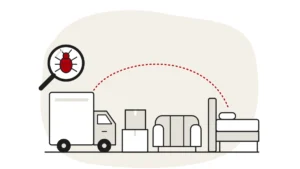
Their flat bodies let them squeeze into very narrow gaps, so a sofa can hold bugs and eggs well out of sight. Our guide to common bed bug hiding spots covers the rest of the home.
Can bed bugs live in leather sofas?
Yes. A leather or leather-look sofa is not bed bug proof. In our experience the smooth leather surface itself offers few places to hide, but bugs don’t live on the surface of any sofa. They live in the places that are the same on almost every sofa:
- stitched seams and piping, which on leather can still open up enough for bugs to tuck into;
- gaps between the cushions and the frame;
- the fabric lining underneath;
- the wooden frame inside.
Bed bugs prefer wood and fabric to metal or plastic. A leather sofa almost always has a wooden frame and fabric underneath, so it still offers the materials bed bugs favour, just out of sight.
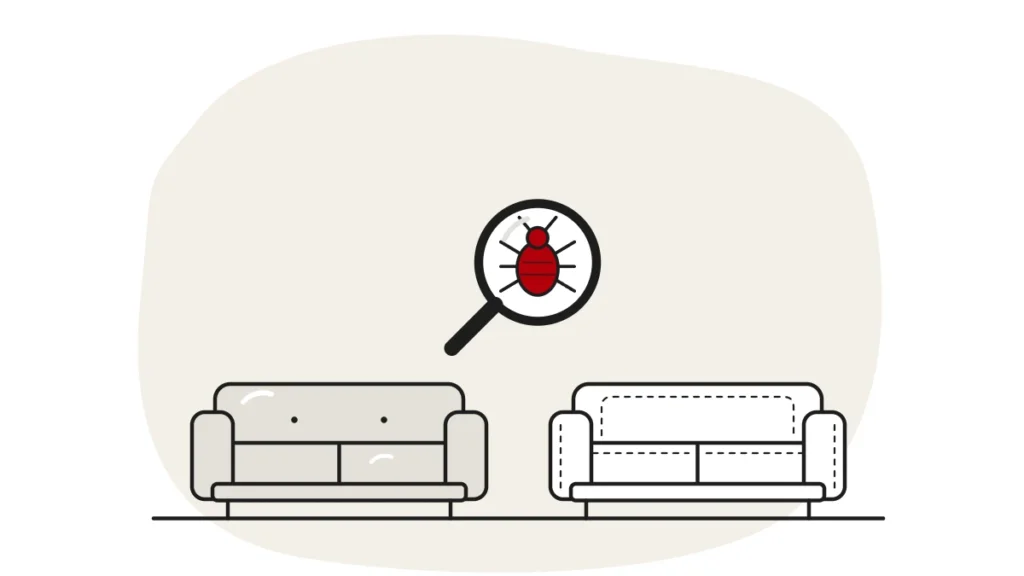
Leather vs fabric sofa: do bed bugs prefer one?
We haven’t found a UK or university source that compares infestation rates in leather and fabric sofas, so be wary of anyone quoting figures. What we can say is that both types can be infested. In our experience, shelter and closeness to people matter more than the cover material, and the differences are practical ones. The table below is based on what our technicians see on jobs, not on published data.
| Leather or leather-look | Fabric | |
|---|---|---|
| Can bed bugs live in it? | Yes, in seams, gaps, lining and frame | Yes, in seams, folds, cushion covers, lining and frame |
| Places to hide | Fewer on the outer surface | More: textured weave, folds and loose covers |
| Spotting signs | Dark spots and bugs show up more easily on a smooth surface | Marks can blend into patterned or dark fabric |
| Washable parts | Usually none | Removable covers can sometimes be washed (check the label) |
| Can it be treated rather than thrown away? | Usually, yes | Usually, yes |
So a leather sofa may make an infestation easier to see early, but it won’t stop one. If you’re choosing furniture to lower your risk, we’d suggest that how you check and look after it matters more than what it’s covered in.
Why Where You Sit Matters More Than the Material
Bed bugs find people by sensing body warmth and the carbon dioxide we breathe out. After feeding, they go back to the nearest dark crack or seam. That’s why they cluster on and around beds, and why the sofa is next in line: it’s where people sit still for hours in the evening.
A sofa is more likely to become infested when:
- someone sleeps on it regularly, or guests use it as a bed;
- someone moves to the sofa to get away from bites in the bedroom;
- bags and coats are dropped on it after travel;
- it was bought second-hand without being checked.
The same is true of other materials around the home. Bed bugs favour wood and fabric, and furniture made of those materials usually has seams, joints and cracks close to where people sit and sleep. Smooth metal and plastic offer less, but bugs will still use joints, screw holes and gaps in them. Changing your furniture doesn’t remove an infestation that’s already there.
How to Check a Sofa for Bed Bugs
The NHS describes the signs as bites (often on skin exposed while sleeping), small spots of blood on bedding and small brown marks, which are bed bug droppings, on bedding or furniture. On a sofa, look for:
- small dark spots like ink dots along seams and piping;
- tiny blood smears on cushions or throws;
- pale, empty shed skins and tiny white eggs in folds;
- live bugs, which are flat, oval and reddish-brown.
Step by Step
- Take off all the seat and back cushions and check them on a hard floor in good light.
- Use a phone torch along every seam, zip and piping line. A plastic card helps you open up seams without squashing what’s inside.
- Check the deck under the cushions and the creases where the seat meets the back and arms.
- Tip the sofa carefully, or ask someone to help, and look at the lining underneath, around the staples and the legs.
- Check any sofa bed mechanism or recliner parts.
It’s the same approach as checking a bed, and our guide on how to check a mattress for bed bugs shows what each sign looks like. If you find bugs on the sofa, check the bedroom too. A sofa infestation rarely stays on the sofa alone.
Bed bugs in your sofa: do you have to throw it away?
Usually not. Most belongings don’t need to be thrown away, although sometimes it may be advisable. Throwing out a sofa also doesn’t deal with bugs already in the carpet, skirting, bed or other furniture, and carrying it through the home can drop bugs along the way.
Professional heat treatment is designed to treat furniture where it stands. Your sofa stays in the room and is treated along with everything else. Our guide on whether heat treatment damages furniture or electronics explains what stays, what comes out and what to tell us about before the day.
If a sofa is badly damaged or you decide to get rid of it anyway, wrap it in plastic so bugs don’t fall off on the way out. Mark it clearly as having bed bugs so nobody else takes it, and arrange disposal through your council or a waste service rather than leaving it on the street.
What to Do in the Meantime
- Don’t move the sofa or its cushions into other rooms.
- Wash throws, blankets and removable covers (if the label allows) on a hot wash and tumble dry hot. The NHS advises 60°C and a hot tumble dry for at least 30 minutes. Our guide to whether bed bugs live in duvets covers bedding and soft items.
- Don’t use foggers, bug bombs or smoke bombs. They tend to scatter bugs deeper into furniture and into other rooms.
- Avoid soaking the sofa in shop-bought sprays. The NHS says it’s very difficult to get rid of bed bugs yourself, and the BPCA warns that amateur treatments can prolong an infestation.
- Try not to sleep on the sofa to escape bites. It usually spreads the problem rather than avoiding it.
If the bed is affected too, see how to clean a mattress from bed bugs for what helps and what doesn’t.
ThermoPest’s bed bug heat treatment is heat-led, with targeted spray where it’s needed. Heat works its way into cushions, seams and frame joints that sprays struggle to reach, so the sofa can be treated rather than replaced. Depending on the infestation, a return visit may be needed.
Buying a Second-Hand Sofa: How to Check It
Second-hand furniture is one of the ways bed bugs travel between homes. The BPCA says they can be carried on items such as luggage and second-hand furniture, and the NHS advises not to bring second-hand furniture indoors without checking it carefully first.
- Check it before it comes inside: outside, in a garage or in good daylight.
- Take the cushions off and go along every seam, zip and piping line with a torch.
- Look underneath at the lining, staples and frame joints.
- Ask the seller directly whether they’ve had bed bugs or other pests.
- Don’t pick up sofas left out on the street. Discarded sofas might be infested and are best left alone.
- If you can’t check it properly, it’s safer to pass.
FAQs
Can bed bugs live on leather furniture?
Yes. The smooth leather surface gives them little to hide in, but they live in the stitched seams, the gaps around cushions, the fabric lining underneath and the wooden frame. Leather chairs, recliners and sofas can all be infested.
Can bed bugs live in metal bed frames?
They can, though it’s less common. Bed bugs prefer wood and fabric to metal or plastic. On a metal frame they hide in joints, hollow tubes, screw holes and wherever the frame touches the mattress or slats.
Do bed bugs like polyester or other fabrics?
We’re not aware of any evidence that bed bugs choose one fabric fibre over another. What matters is structure: seams, folds, piping and layers give them places to hide, whether the fabric is polyester, cotton or a blend.
Can bed bugs survive in a sealed plastic bag?
A sealed bag stops bugs getting in or out, but it doesn’t kill them on its own. That’s why the NHS advises putting items you can’t wash in a plastic bag and then in the freezer for 2 to 3 weeks. Bagging also helps when moving infested items, so bugs don’t drop off on the way.
Found signs on your sofa?
An inspection will confirm whether it’s bed bugs and how far they’ve spread, and whether your sofa can be treated rather than thrown away. ThermoPest is a member of the BPCA and NPTA, and our technicians arrive in unmarked vans.