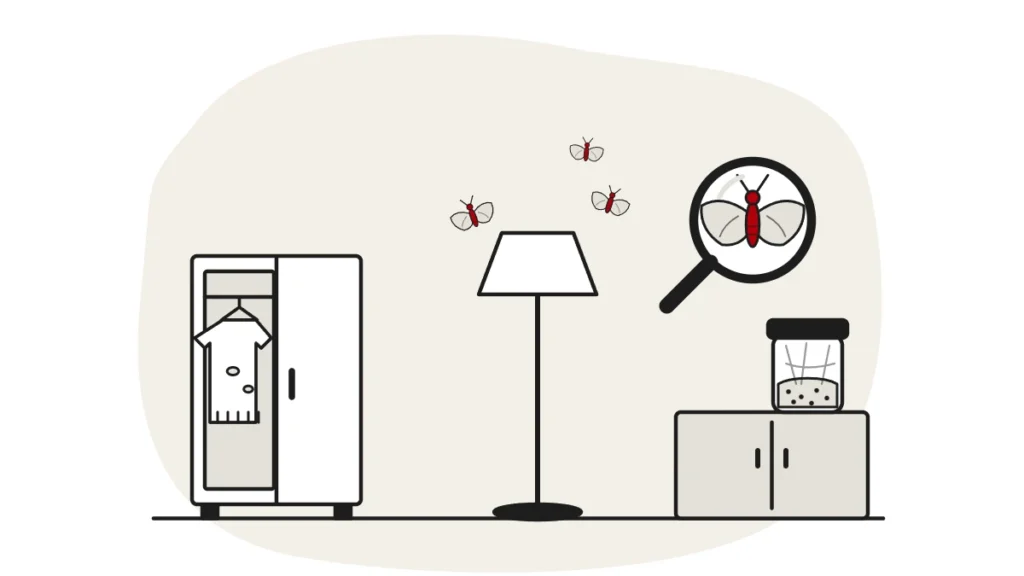
Lots of moths in your house usually means one of two things. Small moths that keep turning up near wardrobes, carpets or kitchen cupboards are probably breeding indoors, feeding on wool or stored food. Larger moths that fly in at night and head for the lights are usually garden moths, and they rarely cause any harm.
Reviewed by James Rhoades, Owner, ThermoPest · Last reviewed 16 October 2026
The first job is to work out which kind you have, because the answer changes what you do next. This guide covers the moths most often found in UK homes, why numbers can suddenly build up, why some years feel worse than others, and the simple checks that tell you whether you have an infestation or just a few visitors.
Why have I got so many moths in my house?
If you keep seeing small moths indoors, week after week, the most likely reason is that they are breeding somewhere inside. Adult moths don’t live long and don’t do the damage. The larvae do, and they need a steady food supply in a quiet, dark spot. Once they have that, each new generation adds to the numbers.
They’ve Found Food That Isn’t Disturbed
- Natural fibres: clothes moth larvae feed on wool, silk, cashmere, fur and feathers. Woollens stored for months, wool rugs under beds and the edges of wool carpets behind furniture are ideal.
- Dried food: pantry moth larvae feed on grains, cereals, flour, dried fruit, nuts and pet food, especially in packets that have been open a while at the back of a cupboard.
- Dust and debris: some house moths live on the fluff, hair and crumbs that build up behind skirting boards and under kitchen units.
They Came in With Something
Eggs and larvae are tiny and easy to miss. They can arrive in second-hand or vintage clothes, rugs and furniture, or in a bag of dried food that was already infested before you bought it.
Your Home Suits Them All Year
Warm, settled indoor conditions let household moths keep breeding through the winter, so a problem that started in summer doesn’t necessarily die down when it gets cold outside.
They’re Coming From Next Door
In flats and terraced houses, moths can move between homes through shared lofts, floor voids and gaps around pipes. If you’ve cleared your own home and they keep coming back, a neighbour’s infestation may be the source.
Which moths are in my house?
Most moths you’ll find indoors fall into one of four groups. Where you see them is often the best clue.
| Type | What you’ll notice | Where you see them | What it means |
|---|---|---|---|
| Clothes and carpet moths | Small, golden or buff moths, about 5–8mm long according to the BPCA, that scuttle or flutter low | Wardrobes, drawers, under beds, along carpet edges | Breeding indoors; larvae damage wool and other natural fibres |
| Pantry moths | Slightly bigger moths, 8–10mm long according to the BPCA; webbing in food | Kitchen, food cupboards, near pet food | Breeding in stored food; damages food, not clothes |
| House moths | Brownish or white-shouldered moths, seen on walls and windows | Anywhere, often kitchens and bathrooms | Living on dust, debris and dried food; usually a nuisance rather than a threat to clothes |
| Garden moths | Larger moths that fly in at night | Near open windows and lights | Visitors from outside; not breeding in your home |
Clothes and Carpet Moths
“Clothes moths” and “carpet moths” are usually the same insects. The Natural History Museum names two species that damage natural fibres in UK homes: the common clothes moth and the case-bearing clothes moth. It notes that the adults don’t feed and do no damage, that the larvae feed on keratin, the protein in wool and other animal fibres, and that the adults often scramble across fabric rather than fly. If the moths you’re seeing are small and reluctant to fly, and you’re finding holes in jumpers or thin patches in a wool rug, this is the likely cause. Our guide to the signs of carpet moths and clothes moths shows what to look for.
Pantry Moths
Pantry moths, also called food moths or stored product moths, are a separate problem. The most familiar is the Indian meal moth. The British Pest Control Association (BPCA) says its larvae feed on foods such as flour, biscuits, cereal, dried fruit and nuts, and that signs include webbing, droppings (frass) and discoloured food. If your moths are mostly in the kitchen, check your cupboards before you check your wardrobe. Pantry moths won’t eat your clothes, and clothes moths won’t eat your cereal.
House Moths
Some moths simply live alongside us. Butterfly Conservation describes the brown house moth as often found inside houses, flying throughout the year, with caterpillars that feed on detritus that collects behind skirting boards and in similar places. The BPCA describes the white-shouldered house moth, whose larvae feed mainly on dried seeds, grains and other organic matter. Clearing crumbs and debris from cupboards, behind kitchen units and along skirting boards usually brings their numbers down.
Why are there so many big moths in my house?
Large moths that appear on summer evenings are usually garden moths that have flown in through an open window or door, drawn by the lights. They aren’t breeding in your home and they don’t eat clothes or food. Turning lights off or closing curtains before opening windows at night, and fitting a fly screen, will cut down how many come in. If you find one indoors, you can let it out.
Why are there so many moths this year?
Some years genuinely feel worse than others, and there are a few reasons why.
- Weather affects garden moths. Some moths fly to Britain from mainland Europe and further south. Butterfly Conservation says more of these migrants are seen in hotter summers and when the winds blow from the south. A warm summer can mean more moths at your windows.
- Clothes moths have become more common. The Natural History Museum says clothes moth infestations have become more common in recent years. English Heritage, which monitors clothes moths in the historic houses it looks after, reported in April 2017 that the number caught on its traps had doubled over the previous five years, and said the warmer weather “has not helped”.
- Your own home may have changed. A new wool rug, a box of stored jumpers, a vintage coat or a sack of bird seed can be enough to start a population that takes a few months to become noticeable.
So if you’re seeing more moths than usual, it may be the season, or it may be a problem that’s been quietly building indoors. The checks below will tell you which.
Why are there so many moths in my room?
If the moths are mostly in one bedroom, look at what that room has that the others don’t. Common sources are:
- a wardrobe or chest of drawers with wool, cashmere or silk that hasn’t been worn for a while;
- a wool carpet or rug, especially the parts under the bed and behind furniture that never see the vacuum;
- bags or boxes of stored clothes, blankets or fabric under the bed;
- a window left open at night with a light on, which brings in garden moths.
Small moths fluttering low near the bed or wardrobe point to clothes moths. Larger moths near the window or ceiling light are more likely visitors from outside.
How to Check Whether Moths Are Breeding in Your Home
- Note where you see them. Keep track for a week. Moths that keep appearing in the same room point to a source nearby.
- Check natural fibres. Take out woollens, especially anything stored for months. Look for small holes, fine silk webbing, and larvae or their small cases in folds, seams and under collars.
- Check carpets and rugs. Move furniture and look along skirting boards and under beds and sofas for thin or bare patches, loose tufts and webbing.
- Check food cupboards. Open packets of flour, cereal, rice, nuts, dried fruit, spices and pet food. Look for webbing, clumped food, larvae or moths in the packets and in the corners of shelves.
- Use a trap to monitor. Pheromone traps catch adult male moths and are useful for showing where activity is highest. They don’t catch females or larvae, so they won’t clear an infestation on their own. Clothes moth and pantry moth traps use different lures, so choose the one that matches what you think you have.
What to Do About Moths in the House
Clothes and Carpet Moths
- Vacuum thoroughly, including carpet edges, under furniture and inside wardrobes, then empty the vacuum into a sealed bag and put it in the outside bin.
- Freeze woollens and delicates that might be affected. The BPCA advises putting items in a plastic bag in the freezer at -18°C for at least two weeks, and longer for larger amounts.
- Wash or clean clothes before storing them, following the care label, and keep woollens in sealed bags or airtight boxes.
- Wear, brush and air woollens regularly, as moths prefer things left undisturbed.
Home remedies such as lavender and cedar may put adults off, but they won’t kill larvae or eggs already in the fabric. Our guide on whether vinegar kills carpet moths looks at what home remedies can and can’t do, and our full guide on how to get rid of carpet and clothes moths takes you through it step by step.
Pantry Moths
- Empty the affected cupboard and throw away any food with webbing, larvae or moths in it, sealed in a bag in the outside bin.
- Check every other dried food in the kitchen, including pet food and bird seed.
- Vacuum the shelves, corners and gaps, including screw holes and shelf supports, then wipe them down.
- Store dried food in airtight containers rather than open packets.
If the problem keeps coming back after you’ve done this, the BPCA recommends contacting a professional pest management company.
Garden Moths
No treatment is needed. Keep windows closed or screened at night when lights are on, and let any moths that come in back outside.
When to Get Professional Help
Call in help if moth damage keeps spreading after a few weeks of cleaning and vacuuming, if traps keep catching moths week after week, if damage covers several rooms or valuable rugs, or if you live in a flat and think the moths are coming from next door. Professional carpet moth treatment starts with an inspection to find every hotspot. At ThermoPest our moth heat treatment is heat-led, with targeted spray only where it’s needed, so heat does most of the work and reaches larvae and eggs deep in carpet pile, furniture and fabrics. Some cases need a follow-up visit, and we give aftercare and monitoring advice afterwards. Moth treatments are covered by our 12-week guarantee.
FAQs
Why do I suddenly have moths in my house?
Moths that seem to appear suddenly have often been breeding unnoticed for a while, in stored clothes, a rug or a food cupboard, until enough adults hatch to be seen. A warm spell can also bring in more garden moths. Note where you see them and check the nearest wool items and dried food.
How common are moths in homes?
Very common. The Natural History Museum says clothes moth infestations have become more common in recent years, and pantry moths and house moths are also often found indoors. Seeing a moth doesn’t mean your home is dirty. It usually means something nearby is giving the larvae food.
Do moths live all year?
Indoors, some can. Butterfly Conservation says the brown house moth flies throughout the year, and warm homes let clothes moths keep breeding through winter. Garden moths are mostly seen in the warmer months. Our guide on how long moths live explains their life cycle.
Are moths in the house harmful?
Moths don’t bite or sting. Clothes moths damage wool and other natural fibres, and pantry moths spoil stored food, which should be thrown away. See are carpet moths dangerous? for more on damage and health questions.
Where are the moths in my house coming from?
Usually from somewhere inside: a wardrobe, a wool rug or carpet edge, stored fabric or a food cupboard. They can also arrive in second-hand items or infested food, move in from a neighbouring flat, or fly in from the garden at night.
Still finding moths?
If moths keep appearing after you’ve cleaned and checked, an inspection will find where they’re breeding and what it will take to clear them. ThermoPest is a member of the BPCA and NPTA, and our technicians arrive in unmarked vans.