No, bed bugs don’t bite through clothes. They feed on skin they can reach, which is why bites usually turn up on the face, neck, arms and hands. Clothing helps a little, but it isn’t a barrier: bed bugs can crawl under loose pyjamas, through gaps at cuffs and collars, and onto any skin left uncovered.
Reviewed by James Rhoades, Owner, ThermoPest · Last reviewed 15 October 2026
If you’re waking up with itchy marks and wondering whether wearing more to bed will stop them, this guide explains how bed bugs reach your skin, what different clothes do and don’t protect, how to look after the bites, and what actually stops them.
Can bed bugs bite through clothes?
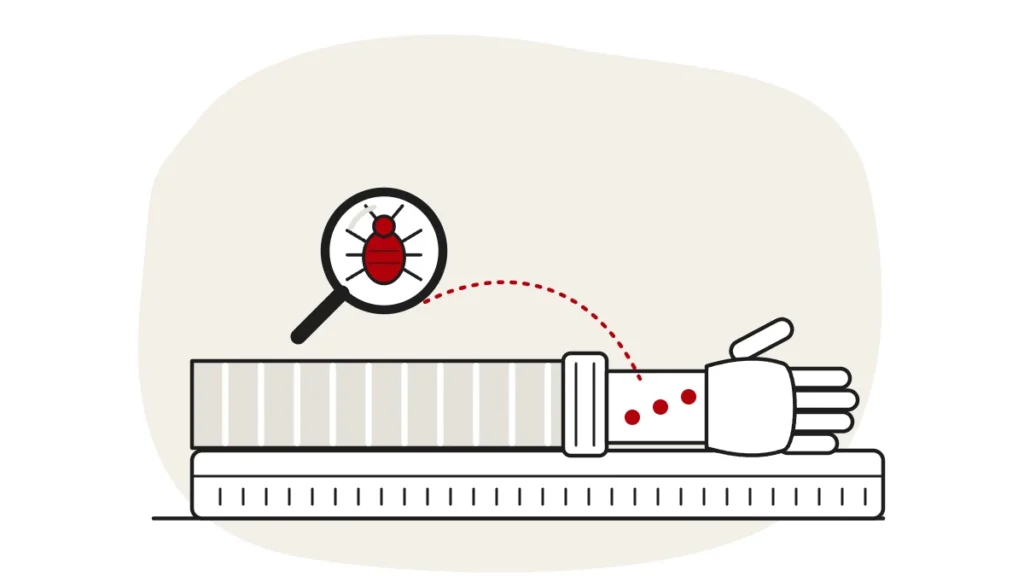
Bed bugs feed by piercing skin with thin, beak-like mouthparts and drawing blood. Those mouthparts are made for skin, not for pushing through layers of fabric, so a bed bug sitting on top of your T-shirt can’t feed through it. Bed bugs bite exposed skin, usually when people are sleeping, and the NHS says bites usually appear on skin exposed while you sleep, such as the face, neck and arms.
So the short answer is no. The longer answer is that bed bugs don’t need to bite through clothes, because they’re very good at finding a way around them.
Will bed bugs crawl under clothes to bite?
Yes, they can. Bed bugs are small and flat, and they move easily into narrow gaps. While you’re lying still in bed, a bed bug can walk under a loose waistband, up a trouser leg or inside a sleeve to reach skin. That’s why some people find bites in places that were covered, such as the stomach, back or thighs.
Why Covered Skin Still Gets Bitten
- Loose fit. Baggy pyjamas and oversized T-shirts leave plenty of space for a bug to crawl underneath.
- Gaps. Cuffs, collars, waistbands and the space between a top and bottoms all give a way in, especially as clothes ride up while you sleep.
- Contact with the mattress. Wherever your body presses on the bed, a bug can reach the edge of your clothing from below.
- Bugs already in the fabric. Bed bugs can hide in clothing left on or near the bed. If you put on clothes that have bugs in their seams, they’re already inside the barrier.
Do different clothes make a difference?
Tighter, fuller coverage makes it harder for a bed bug to reach your skin, but nothing you wear will stop an active infestation. Use this as a rough guide, not a fix.
| What you’re wearing | Can they bite through it? | Can they get underneath? |
|---|---|---|
| Loose pyjamas or T-shirt | No | Yes, easily, through hems, sleeves and waistbands |
| Leggings or close-fitting sleepwear | No | Harder, but possible at the ankles, waist and wrists |
| Socks | No | Possible at the top band; ankles above the sock are often bitten |
| Underwear only | No | Possible at the edges, and most of your skin is uncovered anyway |
| Duvet or blanket over you | No | Yes, bed bugs move freely through bedding |
Hands, face, neck and feet are usually uncovered whatever you wear, which is why they’re among the most common places to be bitten.
Can bed bugs bite through clothes during the day?
The rules are the same day or night: they still can’t bite through fabric. Bed bugs mostly feed at night while people sleep. They’re drawn to a person who stays still for a long time, so a daytime nap, a long evening on an infested sofa or a night shift worker sleeping in the day can all give them a chance to feed. Moving around and being fully dressed makes bites much less likely, but if you’re getting bites during the day, check sofas and chairs as well as the bed.
Where do bed bugs bite on the body?
The NHS describes bed bug bites as raised and itchy, often in a line or grouped together, on skin exposed while sleeping. On white skin they usually look red or pink; on black or brown skin they may look brown, red or purple and can be harder to see. Hands are another common place to find them.
Bites under clothing are less common but do happen, usually along the edge of a waistband, sleeve or sock where a bug found a way in. Our guide to bed bug bites shows the usual patterns and how to tell them apart from other insect bites.
Why You Might Not Notice the Bite
Bed bugs inject an anaesthetic and an anticoagulant as they feed, so most people don’t feel the bite at the time. Many people don’t notice bite marks until a day or more after the bite, and in some people they can take longer to appear. That delay is one reason it’s hard to work out where or when you were bitten.
Can bed bugs chew or eat through fabric?
No. Bed bugs don’t chew. They only feed on blood, so they won’t make holes in clothes, bedding or furniture. If you’re finding small holes in wool or other natural fibres, clothes moths or carpet beetle larvae are more likely to be the cause, and that needs a different approach.
How to Keep Bed Bugs From Biting You
Covering up can cut down bites a little, but it won’t stop them while the bugs are still living in your bed. These steps help in the meantime:
- Wear close-fitting sleepwear with long sleeves and legs, and tuck your top in. It narrows the gaps but won’t block them completely.
- Keep the bed away from the wall and keep bedding off the floor, so there are fewer routes onto the bed.
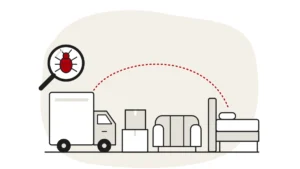
- Don’t leave clothes on or around the bed. Piles of clothes give bugs a place to hide and a ride into your wardrobe.
- Use a mattress encasement. It removes hiding places in the mattress seams and makes signs easier to spot.
- Don’t move to the sofa or another room. Bed bugs follow people, and moving around can spread them through the home.
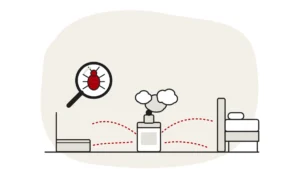
- Don’t use foggers or bug bombs. They tend to scatter bed bugs into other rooms and neighbouring flats rather than clear them.
If you’re thinking of putting any product on your skin to keep bed bugs off, especially a child’s skin, ask a pharmacist first.
Looking After Bed Bug Bites
The NHS says bed bug bites usually clear up on their own within about a week. Its advice is to:
- put something cool, such as a clean, damp cloth, on the bites to help with itching and swelling;
- keep the area clean;
- try not to scratch, as this can lead to an infection.
A pharmacist can suggest something to ease the itching. The NHS advises seeing a GP if the bites are still very painful, swollen or itchy after treatment from a pharmacist, or if the pain and swelling are spreading, as these can be signs of an infection. The NHS also notes that some people have a reaction to the bites and that a severe allergic reaction (anaphylaxis) is possible but rare. The NHS page on anaphylaxis says to call 999 if someone has sudden swelling of the lips, mouth, throat or tongue, or is struggling to breathe. If you’re unsure what you’re looking at, a pharmacist, your GP or NHS 111 can help. Bed bugs aren’t known to spread disease. For more on stronger reactions, see allergic reactions to bed bug bites.
What should you do with your clothes?
Because bed bugs can hide in clothing, your wardrobe is part of the problem as well as part of the protection. The NHS advises washing affected bedding and clothing on a hot wash (60°C) and tumble drying on a hot setting for at least 30 minutes. For items you can’t wash, it suggests sealing them in a plastic bag and putting them in the freezer for 2 to 3 weeks.
- Bag clothes up in the bedroom before carrying them to the washing machine, so bugs don’t drop off on the way.
- Keep clean clothes sealed and away from the bedroom until the infestation is dealt with.
- Don’t rely on an iron alone; our guide on whether ironing kills bed bugs explains why.
Read more about whether bed bugs can live in clothing and how long bed bugs can live in a sealed plastic bag.
Stopping the Bites at the Source
Clothes only change where you get bitten. The bites stop when the bed bugs, and their eggs, are dealt with. The NHS says bed bugs are very hard to get rid of yourself and recommends contacting your local council or a pest control service.
ThermoPest’s bed bug heat treatment is heat-led, with targeted spray where it’s needed. Heat reaches bugs and eggs in the seams, folds and cracks where they hide, including in clothing and soft furnishings, and you can usually go back in 2 hours after treatment unless your technician advises otherwise. Return visits may be needed. Before we arrive, our guide to preparing for bed bug heat treatment explains what to do with your clothes, bedding and belongings. If you live in a flat, we’ll ask to inspect neighbouring flats too, as bed bugs often move between them.
FAQs
Can bed bugs bite through leggings or socks?
No. Close-fitting clothes like leggings and socks can’t be bitten through, and they make it harder for bed bugs to reach your skin. But bugs can still get in at the waistband, ankles or the top of a sock, and any skin left uncovered can be bitten.
Do bed bugs bite under underwear or pyjamas?
They can, if they crawl underneath. Loose pyjamas are easy for bed bugs to get under, and the edges of underwear give them a way in. Bites on covered skin are less common than on the face, neck, arms and hands, but they do happen.
Can bed bugs live on your clothes while you wear them?
Bed bugs don’t live on people the way lice do. They feed and then go back to hiding places near where you sleep or sit. They can hide in clothes that are left lying around, though, and get carried to other rooms or places that way.
Will sleeping fully clothed stop bed bug bites?
It may reduce them, but it won’t stop them. Your face, neck and hands stay uncovered, and bed bugs can get under clothes at the edges. The bites carry on until the infestation itself is treated.
Still waking up with bites?
If you’ve found bites or signs of bed bugs, an inspection will confirm what you’re dealing with and where they’re hiding. ThermoPest is a member of the BPCA and NPTA. Our technicians arrive in unmarked vans and treat with heat, with targeted spray where it’s needed.