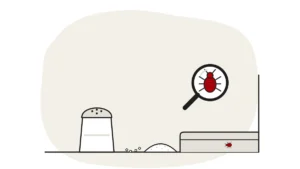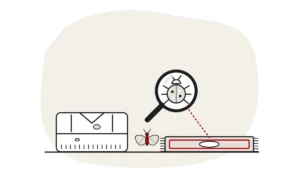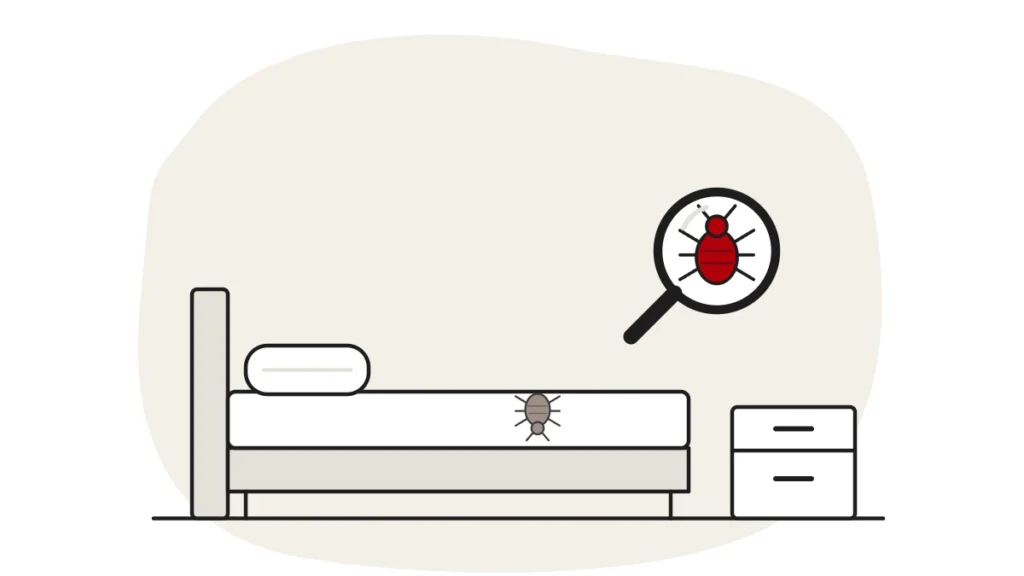
A dead bed bug usually looks flat, dried out and lifeless: often lying on its back with its legs curled in, and paler or duller than a live one. After a professional treatment, finding some for a while is normal. With no treatment, a dead bed bug still means live ones are probably nearby.
Reviewed by James Rhoades, Owner, ThermoPest · Last reviewed 16 October 2026
Finding a dead bed bug can be confusing. Is it good news, bad news, or just an old shell? This guide explains how to tell a dead bug from a live one or an empty skin, what it means in each situation, and what to do next.
What does a dead bed bug look like?
Live adult bed bugs are flat, oval and reddish-brown. The NHS says adults are around 5mm long. A dead bed bug keeps the same basic shape. There’s no fixed rule for how one looks, but these are the typical signs as it dries out:
- Flattened and dried: the body looks thin, shrunken or slightly crumpled, rather than plump.
- Curled legs: the legs are often pulled in under the body or stuck up in the air, and the bug is often lying on its back.
- Paler or duller colour: many dead bed bugs look lighter brown, greyish or faded. One that died soon after feeding can look darker, because of the dried blood inside.
- Brittle: an old, dried bug can crumble when pressed, rather than squashing.
- Not moving: it doesn’t react when nudged.
A still bug isn’t always a dead one: bed bugs spend most of the day resting in their hiding places. Gently nudge it with the edge of a card. A live bed bug usually tries to crawl away; a dead one doesn’t react. For what live adults, nymphs and eggs look like, see our guide to what bed bugs look like.
Are dead bed bugs black?
Not usually. Most dead bed bugs look brown, faded or grey rather than black. A bug that had just fed can dry to a very dark colour, and black or dark brown spots on sheets are more likely to be droppings than dead bugs. The NHS describes bed bug droppings as small brown spots on bedding or furniture.
What do dead nymphs and eggs look like?
Dead nymphs (young bed bugs) typically look like smaller, paler versions of dead adults: tiny, flat and often pale yellow or straw-coloured. They’re easy to miss without a torch. Our guide to identifying bed bug nymphs shows what live ones look like at each stage.
Eggs are much harder to judge by eye. A hatched egg is an empty, pale shell, often dented or open at one end. An unhatched egg that has been killed by treatment can look the same as a live one, so don’t rely on eggs to tell you whether treatment has worked. See how to spot bed bug eggs for where to look.
Is it a dead bed bug or a shed skin?
This is one of the most common mix-ups. Young bed bugs grow by shedding their skin. Nymphs shed their skin five times before reaching adulthood, and the shed skins are tan-coloured. Each one leaves behind an empty shell in the shape of a bed bug, legs and all.
The table below shows the typical differences. It’s a guide rather than a set of fixed rules, so if you’re not sure what you’ve found, keep it and have it checked.
| What you’ve found | Dead bed bug | Shed skin (cast skin) | Live bed bug |
|---|---|---|---|
| Look | Solid, flattened, dried body | Hollow, see-through or papery shell | Solid, oval body; plump after feeding |
| Colour | Faded brown or grey; sometimes darker | Pale yellow to tan | Reddish-brown |
| Legs | Often curled under or in the air | Empty leg casings, often in place | Folded under the body; walks |
| When nudged | No movement; may crumble | Very light; may blow away | Moves away |
| What it tells you | Bed bugs are, or were, here | Young bed bugs have been feeding and growing here | Active infestation |
Shed skins matter because nymphs need a blood meal before each moult. Finding them means bed bugs have been feeding nearby, even if you haven’t seen a live one. Some insects that are often mistaken for bed bugs, such as carpet beetle larvae, also leave shed skins, so if you’re not sure what you’ve found, compare it with our guide to bugs that look like bed bugs.
Finding dead bed bugs after treatment: is it a good sign?
Usually, yes. Seeing dead bed bugs in the days and weeks after a professional treatment is normal, and it’s what you’d expect if the treatment reached them. But dead bugs on their own don’t prove every bug has gone. What matters is whether you keep finding live ones.
Why Dead Bugs Turn Up After Treatment
- They die where they hide. Bed bugs shelter in seams, joints, gaps behind skirting and inside furniture. When they die there, they come to light later as you change the bed, move furniture or clean.
- Targeted spray keeps working on surfaces. Where a treatment includes spray, bugs that cross a treated surface later can be affected, so you may find a few slow or dying bugs for a while.
- Old remains stay put. Dead bugs and shed skins from before the treatment don’t disappear on their own, so some turn up much later.
After a ThermoPest Treatment
Our treatment is heat-led, with targeted spray where it’s needed. Bed bugs and their eggs die when held above about 50°C for long enough. We heat rooms to 50–60°C and hold that heat until the hardest-to-reach spots stay above 50°C. Rooms don’t heat evenly, so we place temperature monitors in known cold spots and hard-to-reach areas.
Your technician will give you aftercare instructions, including when you can go back in (for homes, usually two hours after a heat treatment, unless the technician advises otherwise) and when you can clean and hoover normally. Follow them, and expect to come across some dead bugs as you settle back in. Our bed bug aftercare and 12-week guarantee page sets out what’s covered: if live bed bugs are reported within 12 weeks of a qualifying treatment, a return visit is included. You’ll need to send clear evidence of live activity (a photo, a video or a bug caught in a trap), allow access for the visit and have followed the aftercare instructions. The page also explains what isn’t covered, such as partial treatments, and flats or other shared buildings where the whole property wasn’t treated. Sometimes a return visit is needed, especially with heavier infestations.
Dead Bugs vs Signs They’re Still Active
After any treatment, watch for:
- live bugs, especially ones that move normally when nudged;
- new bites appearing after nights in the same bed;
- fresh small dark spots or blood spots on clean sheets;
- new, pale shed skins in places you’ve already cleaned.
Our guide on how to tell if bed bugs are gone after treatment goes through these in more detail.
I found a dead bed bug but haven’t had treatment. What does that mean?
Bed bugs don’t usually die out in the open for no reason, so a dead one in a bed or bedroom that hasn’t been treated still points to live bed bugs nearby. Possible explanations include:
- An infestation in your home. Bed bugs die of old age or injury in their hiding places, and sometimes a dead one is the first sign people notice.
- A treatment next door. In flats and shared houses, a neighbour’s treatment can drive bugs through gaps in walls and floors, and some die on the way. Read more about bed bugs coming from neighbours.
- Something you’ve used yourself. A shop-bought spray can kill the bugs it touches while others hide deeper. Foggers and bug bombs tend to scatter bed bugs into new hiding places rather than clear them.
- Something brought in. A dead bug can arrive on second-hand furniture, luggage or bedding, so it’s worth checking those items too.
- It isn’t a bed bug. Carpet beetles, booklice and other small insects are often mistaken for bed bugs, alive or dead.
One dead bug can’t tell you how big the problem is, so it’s worth checking properly.
What to Do If You Find a Dead Bed Bug
- Keep it. Lift it onto clear sticky tape or into a small sealed bag, and take a clear, close-up photo. This helps a pest technician identify it.
- Check the bed with a torch. Look along mattress seams, piping and labels, the bed frame joints, the headboard and bedside furniture for live bugs, shed skins, eggs and small dark spots. Our room-by-room guide to checking for bed bugs explains where to look.
- Wash bedding hot. The NHS advises washing affected bedding and clothing on a hot wash (60°C) and tumble drying on a hot setting for at least 30 minutes. Only throw away items that can’t be washed or treated.
- Don’t move things around the home. Carrying bedding or furniture into other rooms can spread bugs. Bag items before moving them to the washing machine.
- If you’ve had treatment, send the photo to whoever treated you and follow their aftercare advice.
- If you haven’t, get an inspection to confirm what you’ve found and how far it has spread.
If you’d like a definite answer, a professional bed bug inspection will confirm whether bed bugs are present, where they’re hiding and whether treatment is needed. In flats, we ask to inspect the neighbouring flats too, because bed bugs move between homes through shared walls and floors.
FAQs
Is finding dead bed bugs a good sign?
After a professional treatment, usually yes: it shows the treatment reached them. It doesn’t prove every bug has gone, so keep watching for live bugs, new bites and fresh spots. Without treatment, a dead bed bug means live ones are probably nearby, so check the bed and consider an inspection.
What does a dead bed bug shell look like?
What people call a shell is usually a shed skin: a hollow, papery, pale yellow to tan casing in the shape of a bed bug, often with the empty legs still attached. A dead bed bug has a solid body inside. Both mean bed bugs are, or were, close by.
Will you find dead bed bugs after treatment?
Very often, yes. Bed bugs die in their hiding places and come to light as you change the bed, clean and move furniture. Where targeted spray was used, you may also see a few slow or dying bugs for a while. Live bugs that move normally are the thing to report.
Why am I finding dead bed bugs months after treatment?
Old remains can sit in undisturbed spots, such as inside a bed frame or behind furniture, for a long time and turn up later. A dried, brittle bug in a hidden place is likely an old one. If you’re also finding live bugs or getting new bites, contact whoever treated you.
Are dead bed bugs hard or soft?
A bed bug that has been dead for a while is usually dry and brittle, and can crumble when pressed. One that died recently, especially after feeding, may still be soft and leave a dark or reddish smear if squashed.
Found a dead bed bug?
If you’ve found dead bugs or shed skins and you’re not sure what they mean, an inspection will confirm what you’re dealing with. ThermoPest is a member of the BPCA and NPTA, and our technicians arrive in unmarked vans.