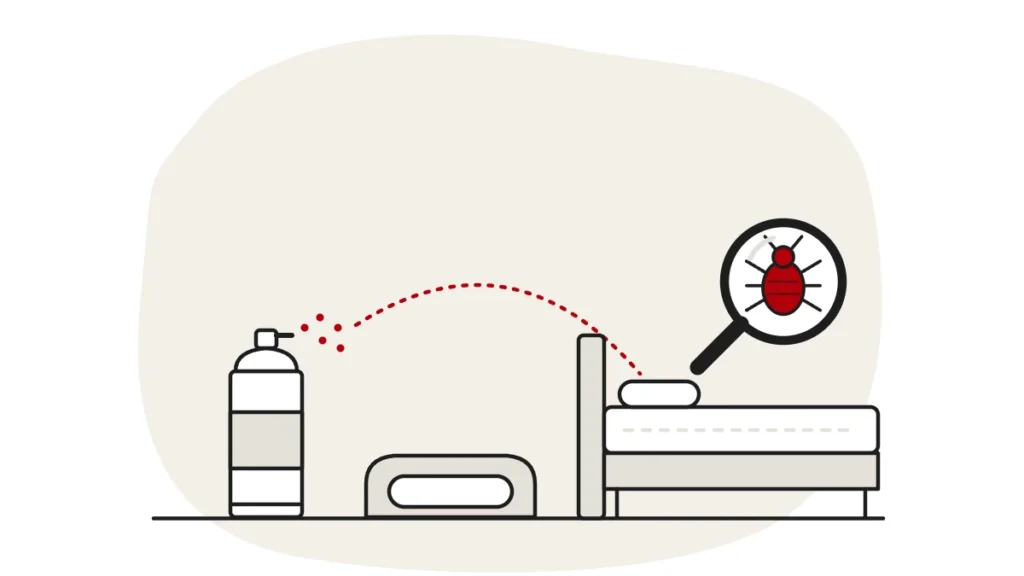
Flea spray may kill a bed bug it hits directly, but it won’t clear an infestation. Flea sprays are made for fleas, bed bugs may be resistant to some insecticides, and most bugs and eggs hide in seams and cracks a spray never reaches. Unless the label lists bed bugs, don’t use it for them.
Reviewed by James Rhoades, Owner, ThermoPest · Last reviewed 16 October 2026
If you’ve got a can of flea spray in the cupboard and you’re being bitten at night, it’s natural to reach for it. Before you do, here’s what flea spray can and can’t do against bed bugs, whether bed bug spray works on fleas, how to stay safe (especially with a cat in the home), and what to do instead.
Will flea spray kill bed bugs?
Sometimes, a few of them. Household flea sprays are insecticides, so a bed bug that gets a direct hit may die. That’s very different from getting rid of bed bugs.
What’s in flea spray?
Flea sprays vary, so the label is the only reliable guide to what’s in yours and what it’s for. Many contain pyrethroid insecticides. Permethrin is one example: the PDSA notes it is a common ingredient in household flea sprays and powders. Our guide on whether permethrin kills bed bugs goes into that ingredient in more detail.
Why Flea Spray Doesn’t Solve a Bed Bug Problem
- It’s made for a different insect. Fleas live on pets and develop in carpets, rugs and pet bedding. Bed bugs feed on people and hide close to where you sleep. A product aimed at one isn’t designed for the other.
- Resistance. The NHS says bed bugs may be resistant to some insecticides, and resistance is widely thought to be a big part of why bed bugs have made such a comeback. You can’t tell by looking whether the bugs in your home are resistant.
- Most bugs are hidden. Bed bugs often hide in the seams, folds and crevices of the mattress, base, bed frame and headboard, and can live in almost any crevice or protected place.
- The effect wears off. Most bed bug sprays sold for home use have limited effect once the spray has dried. A flea spray isn’t likely to do better.
- Eggs. Bed bug eggs are tiny and glued into cracks and joints. Don’t count on any household spray reaching them. Eggs that survive hatch, and the cycle carries on.
How fast does flea spray kill bed bugs?
There’s no honest answer to this, because flea spray isn’t a bed bug treatment. It can only affect a bug it actually reaches, and if that bug is resistant it may survive. The bigger risk is false reassurance: killing the few you can see makes it look as if the problem has gone, while the rest keep feeding and breeding out of sight.
Does bed bug spray kill fleas?
It might kill a flea it hits, but it won’t sort out a flea problem either, and you should only use a product on an insect its label lists. Fleas need a different approach because most of the problem isn’t the adult fleas you see. Eggs drop off pets onto floors, rugs, furniture and bedding, where they develop, so you need to treat every pet with a product your vet recommends and treat the home at the same time.
Our guide on how to get rid of fleas in your home walks through the steps. If fleas keep coming back, professional flea treatment uses heat or targeted spray, depending on the job.
Is there a spray for fleas and bed bugs?
Some household insect sprays list several insects on the label, sometimes including both. Even then, a single spray won’t deal with either problem on its own. Bed bugs hide in the bed and furniture, and fleas need the pets treated. If you think you might have both, find out what you’re dealing with first. Our guide to insects that are often mistaken for bed bugs explains how to tell bed bugs and fleas apart. One quick clue: bed bugs don’t fly or jump onto people and pets the way fleas do.
Can you use flea spray on a mattress or bed?
We wouldn’t advise it. You lie on a mattress for hours with your face close to the surface. Unless your product’s label specifically says it can be used on mattresses or bedding, don’t spray one. Even professionals usually won’t spray the sleep surface or seating areas.
For bedding and clothes, there are safer steps. The NHS advises washing them on a hot wash (60°C) and tumble drying on a hot setting for at least 30 minutes. For items you can’t wash, it suggests sealing them in a plastic bag in the freezer for 2 to 3 weeks. You only need to throw away items that can’t be washed or treated. A mattress encasement can also help, because it takes away hiding places in the seams and makes new signs easier to spot.
What about flea bombs, powders and pet flea treatments?
| Product type | Against bed bugs | Safety points |
|---|---|---|
| Flea spray | May kill a bug it hits; won’t reach hidden bugs or clear an infestation | Follow the label; often contains permethrin, which is toxic to cats |
| Flea bomb or fogger | Not a fix; tends to scatter bugs into other rooms and neighbouring flats | Fills the room with insecticide; keep people and pets out as the label says |
| Flea powder | Not a bed bug treatment; don’t put it on a bed or mattress | The PDSA lists household flea powders among products that can contain permethrin |
| Pet spot-on, tablet or collar | No. These treat fleas on the animal; bed bugs feed on people | Use only on the animal it’s labelled for; never put a dog product on a cat |
Do flea bombs kill bed bugs?
Don’t rely on them. Total release foggers are ineffective against bed bugs and shouldn’t be used to control them. Bed bugs hide in places the mist doesn’t reach, and foggers tend to scatter them into other rooms and neighbouring flats, which makes the problem bigger and harder to treat.
Does flea medicine for pets kill bed bugs?
No. Spot-ons, tablets and collars are made to treat fleas on the animal. Bed bugs feed mainly on people and don’t live on pets the way fleas do, so your pet’s flea treatment won’t protect you or reach the bugs in your bed. Never put a pet flea product on yourself, your bedding or your furniture.
Is flea spray safe to use at home?
Household flea sprays are meant to be used exactly as the label says. They’re still insecticides, so take care with them.
Take Extra Care If You Have a Cat
According to the PDSA, cats don’t have the protein needed to break permethrin down, so it can build up in their body. The PDSA says:
- poisoning is most common when a dog flea treatment is put on a cat by accident;
- cats can also be exposed through a treated dog, for example when grooming or sharing a bed;
- signs include drooling, wobbling or losing balance, twitching, tremoring and seizures, usually within a few hours but sometimes up to 36 hours later;
- left untreated, permethrin poisoning is usually fatal.
Check the label for permethrin before using any flea spray or powder in a home with a cat, and if you think your cat has been exposed, contact your vet straight away. The RSPCA warns that many spot-on flea treatments for dogs contain permethrin, which is poisonous to cats, and advises calling your vet immediately rather than waiting to see what happens.
General Care With Any Insecticide Spray
- Read the label first, and use the product only where and how it says.
- Keep children and pets out of the room until it’s dry and aired, and check the label for advice about fish tanks.
- Ventilate well and keep the spray away from your face and eyes.
- Keep aerosols away from flames and heaters, and don’t pierce or burn the can.
If someone feels unwell after using a spray, speak to a pharmacist, your GP or NHS 111. If someone swallows any, call NHS 111, or 999 if they’re seriously unwell. Keep the can to hand so you can say what’s in it. Bed bugs aren’t known to spread disease, and the NHS says their bites don’t usually cause other health problems, so there’s no need to take risks with chemicals to deal with them.
What should you do instead?
First, confirm what you’ve found: live bugs, small dark spots or pale shed skins in mattress seams, the bed frame and the headboard. The NHS says adult bed bugs are around 5mm long. Wash and dry bedding on hot as above, and try not to move to the sofa or a spare room, because bed bugs follow people. If you rent or live in a flat, tell your landlord or managing agent early. The NHS says DIY methods are unlikely to get rid of bed bugs completely and recommends contacting your local council or a pest control service.
ThermoPest’s bed bug heat treatment is heat-led, with targeted spray where it’s needed. Heat reaches into the seams, joints and cracks where bugs and eggs hide, and it doesn’t depend on whether the bugs are resistant to an insecticide. Return visits may be needed, and in flats we ask to inspect neighbouring flats too.
Thinking about other household fixes? See our guides on whether Indorex kills bed bugs, whether Dettol kills bed bugs and whether UV light kills bed bugs. For a wider look at your options, read our guide on how to get rid of bed bugs.
FAQs
Does flea treatment kill bed bugs?
Not reliably. Household flea sprays may kill a bed bug they hit directly, but they won’t reach the bugs and eggs hidden in your bed and furniture, and the NHS says bed bugs may be resistant to some insecticides. Pet flea treatments such as spot-ons and tablets do nothing for bed bugs.
Will flea and tick spray kill bed bugs?
Only use a product on insects its label lists. Even if a flea and tick spray kills a bed bug it hits, it won’t clear an infestation, for the same reasons as any flea spray. Many of these products are made for use on dogs, and some are dangerous to cats.
Can you spray flea spray on a mattress?
Only if the label specifically allows it, and we’d still avoid it. Even professionals usually don’t spray sleep surfaces. Hot wash and tumble dry bedding as the NHS advises, and consider a mattress encasement.
Will bed bug spray kill fleas?
It may kill a flea it hits if fleas are on the label, but it won’t solve a flea problem. You need to treat every pet with a product your vet recommends and treat the home, because flea eggs and larvae develop in carpets, furniture and pet bedding.
Is flea spray safe around cats?
Not always. The PDSA says permethrin is a common ingredient in household flea sprays and powders, and cats can’t break it down properly. Check the label before using anything in a home with a cat, and contact your vet straight away if you think your cat has been exposed.
Sprayed and still getting bitten?
It isn’t your fault, and it’s very common. An inspection will confirm whether it’s bed bugs, fleas or something else, and how far it’s spread. ThermoPest is a member of the BPCA and NPTA, and our technicians arrive in unmarked vans.