If you’ve slept in a bed with bed bugs, bag the clothes you slept in and, as the NHS advises, wash them at 60°C and tumble dry on a hot setting for at least 30 minutes. Check your luggage before it comes indoors, keep things where they are, and watch for signs at home over the next few weeks.
Reviewed by James Rhoades, Owner, ThermoPest · Last reviewed 16 October 2026
One night in an affected bed doesn’t mean you now have an infestation. Bed bugs spread by hiding in clothes, bags and furniture, so what matters is what you do in the next few hours and days. This guide covers what to do straight away, how to deal with bites, how to avoid taking bed bugs home, where to sleep if they’re in your own bed, and what to watch for afterwards.
What should you do straight away?
The aim is simple: stop any bugs that may have got into your things from reaching somewhere new. Work calmly and in this order.
1. Bag the Clothes You Slept In
Put your nightwear, the clothes you wore the day before and anything that was on or near the bed straight into a plastic bag and tie or seal it. Don’t shake them out or drop them on the floor or a sofa first.
When you can, wash them. The NHS advice is to wash on a hot wash (60°C) and tumble dry on a hot setting for at least 30 minutes. Check the care label first. For things that can’t be washed at that temperature, the NHS suggests putting them in a sealed plastic bag in the freezer for 2 to 3 weeks. Only throw away items that can’t be washed or treated.
2. Check Your Luggage and Bags
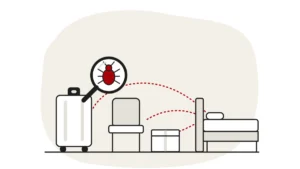
Bed bugs hide in seams, zips, pockets and folds. Before a bag comes into your home, look it over with a torch, paying attention to the seams, wheel housings and lining. The NHS advises not taking luggage or clothing indoors without checking it carefully. Our guide to checking and treating bed bugs in luggage walks through it step by step.
3. Don’t Move Things Around
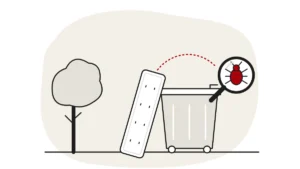
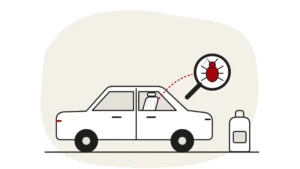
It’s natural to want to strip the room, move to another bed or throw things out. Try not to. Carrying bedding, mattresses or furniture through a home, a hallway or a car is one of the easiest ways to spread bed bugs. Keep things where they are, bag anything that needs to move, and take it straight to the washing machine.
How can you tell if you slept in a bed with bed bugs?
The bite is painless, so people seldom realise they’re being bitten, and some people have little or no reaction at all. So the bed is better evidence than your skin. The NHS lists these signs:
- bites, often on skin exposed while sleeping, such as the face, neck and arms;
- spots of blood on your bedding, from the bites or from squashing a bed bug;
- small brown spots on bedding or furniture, which are bed bug droppings.
Look along mattress seams and piping, the headboard and bed frame joints, and bedside furniture. You may also see pale shed skins or live bugs. The NHS describes adults as around 5mm long; they’re flat and reddish-brown. Our room-by-room guide on how to check for bed bugs shows where to look.
What do bed bug bites look like, and do you need a doctor?
This is general information, not medical advice. The NHS describes bed bug bites as raised and itchy, often in a line or grouped together, and says some people react more strongly, with intense itching or painful swelling. Bites can take a while to appear. For more on bite patterns, see what bed bug bites look like.
The NHS says bites usually clear up on their own in a week or so. To ease them:
- put something cool, like a clean, damp cloth, on the area to help with itching and swelling;
- keep the skin clean and try not to scratch, to lower the chance of infection;
- ask a pharmacist about treatments for itching, such as a mild steroid cream or an antihistamine, and whether they suit you. The NHS says children under 10 and pregnant women should check with a doctor before using steroid cream.
The NHS advises seeing a GP if bites are still very painful, swollen or itchy after trying pharmacy treatments, or if pain or swelling around the bites is spreading. The NHS says a severe allergic reaction (anaphylaxis) is possible but rare. Its insect bites and stings page says to call 999 if your lips, mouth, throat or tongue suddenly become swollen, or you’re struggling to breathe. Bed bugs aren’t known to spread disease. The NHS bedbugs page has the full guidance.
How do you avoid taking bed bugs home?
Bed bugs usually reach a home by hitching a ride in luggage, clothes or second-hand furniture. If you slept in an affected bed while away, a few precautions make a big difference.
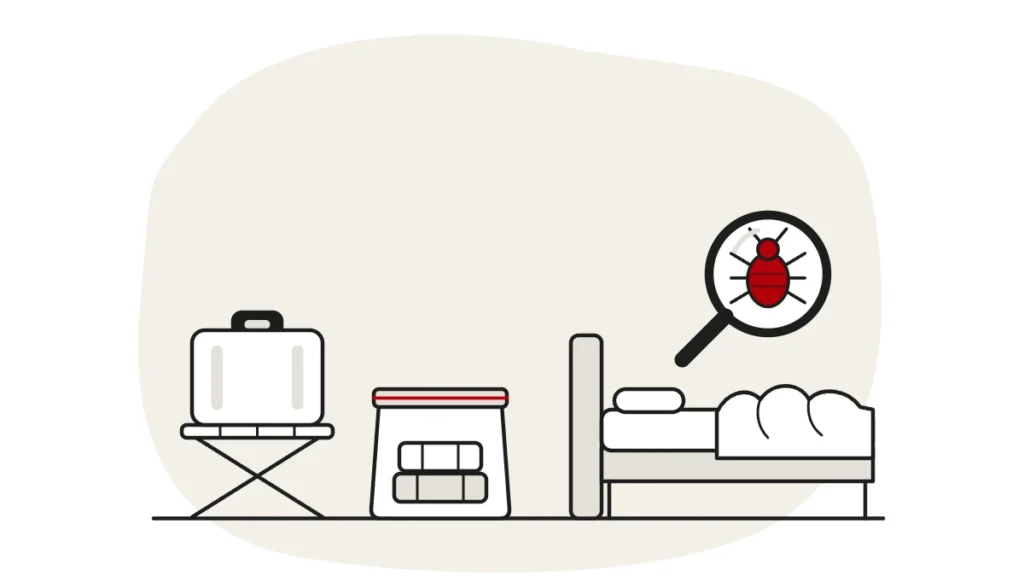
- Keep luggage off beds and soft furniture. In a hotel, use the luggage rack or the bathroom floor, away from the bed.
- Pack clothes in sealed bags for the journey home, keeping worn and clean clothes separate.
- Unpack somewhere with a hard floor, away from bedrooms and sofas, and take clothes straight to the washing machine.
- Check the empty case with a torch before you store it, especially seams and zips.
If you’re still in a hotel, tell reception what you found, with photos if you can. Our guide on how to check a hotel room for bed bugs covers what to look for and what to ask for.
| Where you slept | What to do now | What to watch for |
|---|---|---|
| Hotel, hostel or holiday let | Tell staff, bag clothes, check luggage before it comes indoors | New bites or marks on bedding at home over the following weeks |
| A friend’s or family member’s home | Tell them kindly, bag and wash what you wore, check your bag | The same signs in your own bed and sofa |
| Your own bed | Keep sleeping there, wash bedding hot, don’t move furniture or bedding around | Where the signs are, and whether they spread to other rooms |
Where should you sleep if you have bed bugs?
If the bed bugs are in your own bed, the usual advice is to keep sleeping in it until it’s been inspected and treated. It sounds wrong, but bed bugs follow people. Moving to the sofa, a spare room or a friend’s house can give them new places to settle, which makes the problem bigger and harder to treat.
Can you sleep in a bed with bed bugs?
Yes. It’s unpleasant, but it’s usually the best way to keep them in one place. A few steps can help in the meantime:
- pull the bed away from the wall and keep sheets and duvet off the floor;
- clear clutter from around the bed, as the NHS advises, so there are fewer places to hide;
- wash bedding at 60°C and tumble dry it hot, then keep clean bedding in a sealed bag until you use it;
- keep the mattress on its frame rather than on the floor.
Should you throw your mattress away?
Usually not. Bed bugs hide in the frame, headboard, furniture and skirting as well as the mattress, so getting rid of it rarely solves the problem, and carrying it out can spread bugs through stairwells and shared areas. Leave it in place until a technician has looked at the room.
What to Watch for at Home Over the Next Few Weeks
If a few bugs did travel home with you, it can take time before you notice anything. Check your bed regularly over the next few weeks, with a torch, in good light.
- new bites that appear overnight, especially in a line or small group;
- small blood spots or brown spots on sheets, pillowcases or the mattress;
- pale shed skins or live bugs along mattress seams, the headboard and bed frame joints;
- the same signs on a sofa or chair you sat on after the trip.
Avoid shop-bought foggers, bug bombs and smoke bombs while you wait. They tend to scatter bed bugs into walls and neighbouring rooms rather than clear them, which makes them harder to find and treat.
If nothing turns up after a few weeks of checks, that’s a good sign. If you’re in a flat, bear in mind that bed bugs can move between neighbouring homes, so signs can also come from next door.
What if you find signs at home?
Don’t panic, and don’t start moving things around. Take photos, keep a note of where you found each sign, and get a professional inspection to confirm what you’re dealing with. A bed bug inspection shows where the bugs are and how far they’ve spread, so treatment can be planned around it.
At ThermoPest, treatment is heat-led, with targeted spray where it’s needed, and a return visit may be needed. In flats, we ask to inspect neighbouring flats too. Our bed bug aftercare guidance explains what to do in the weeks after treatment, and our guide to how to tell if bed bugs are gone after treatment covers the signs to keep checking for. For costs, see our pricing page.
FAQs
What should I do if I slept in a bed with bed bugs?
Bag the clothes you slept in and wash them at 60°C, then tumble dry them hot for at least 30 minutes, which is the NHS advice. Check your luggage with a torch before it comes indoors, don’t move bedding or furniture around, and check your own bed for signs over the following weeks.
Should you sleep in another room if you have bed bugs?
Usually not. Bed bugs follow people, so moving to the sofa or a spare room can spread them to new places. Keep sleeping in your own bed, keep bedding off the floor, wash it hot, and arrange an inspection so the problem can be treated where it is.
Can bed bugs stay on your body?
Bed bugs don’t normally live on or attach to people the way lice or ticks do. They feed, usually at night, then crawl back to hiding places. They can, though, be carried in clothes, bags and luggage, which is why bagging and washing what you wore matters more than anything else.
Can you feel bed bugs biting you?
Often not. The bite is painless, so people seldom realise they’re being bitten at the time, and some people have little or no reaction. That’s why checking the bed for blood spots, brown spots, shed skins and live bugs is a better guide than your skin.
Do I need to throw away my bedding?
No. Wash sheets, duvet covers and pillowcases at 60°C and tumble dry them on a hot setting for at least 30 minutes, as the NHS advises. Only throw away items that can’t be washed or treated, and bag them before carrying them out.
Worried something came home with you?
If you’ve found bites, blood spots or bugs since your night in an affected bed, an inspection will confirm what you’re dealing with and where it is. ThermoPest is a member of the BPCA and NPTA, and our technicians arrive in unmarked vans.