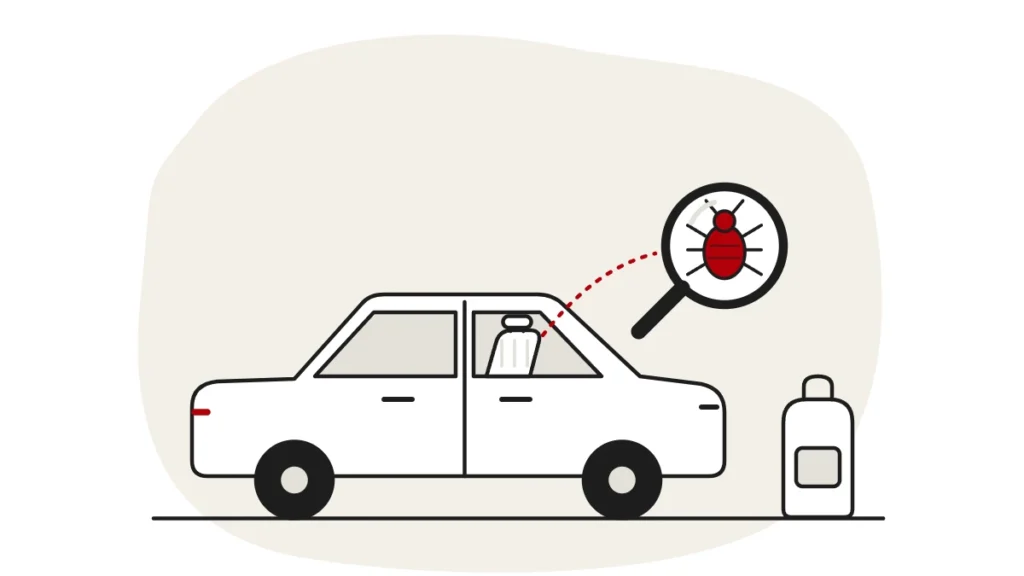
Yes, bed bugs can live in your car for a while, but a car is rarely where an infestation starts or settles. They usually arrive on bags, coats or furniture from an infested home, hotel or flat. If you find them in your car, check your home as well, because that’s usually where the bigger problem is.
Reviewed by James Rhoades, Owner, ThermoPest · Last reviewed 16 October 2026
Finding a bug on a car seat, or hearing that a friend with bed bugs sat in your car, is unsettling. The good news is that cars aren’t a comfortable home for bed bugs, and a few careful checks will tell you a lot. This guide covers how they get in, where to look, what to do in taxis and ride-shares, and how to clear them out.
Can bed bugs live in your car?
They can survive in a car, but they don’t thrive there. Bed bugs feed on human blood and prefer to live close to where people sleep, which is why the NHS lists bed frames, mattresses, clothing and furniture as their usual hiding places. A car gives them plenty of seams and gaps to hide in, but far fewer chances to feed than a bedroom does.
That matters, because a population needs regular meals to grow. A bug that ends up in your car is more likely to hide, wait, and then hitch a ride back out on your bag or coat than to start a large colony under the seats. It isn’t impossible for a car to become infested, especially if someone sleeps in it or carries infested belongings in it often, but it’s uncommon.
How long can bed bugs live in a car?
Longer than most people expect. Bed bug nymphs and adults can go months without feeding, and longer in cool conditions. So a car that’s left unused won’t necessarily starve them out quickly. Our guide to how long bed bugs can live without feeding explains what affects this.
Can bed bugs live in a car in winter?
Cold slows bed bugs down rather than killing them quickly. The NHS advice for killing them with cold is to bag items and keep them in a freezer for 2 to 3 weeks. A parked car doesn’t stay at freezer temperatures day and night for that long in a normal UK winter, so you can’t rely on a cold spell to clear them.
How do bed bugs get into a car?
Bed bugs don’t fly or jump. They crawl, and they travel by hitching a ride on things people carry. Common routes into a car include:
- bags, coats and clothes that have been in an infested home, hotel room or hostel;
- suitcases after a trip (see our guide to bed bugs in luggage);
- second-hand furniture, mattresses or bedding being moved;
- a passenger who has bed bugs at home, usually on their bag or clothing rather than on their body.
Bed bugs feed and then hide; they don’t live on people or animals the way fleas or lice can. If you’re wondering about the dog that rides in the back seat, our post on whether bed bugs bite cats or dogs covers the risk to pets.
My friend has bed bugs and sat in my car: what now?
Try not to panic. One journey with someone who has bed bugs at home doesn’t mean your car, or your home, now has them. Bugs are much more likely to travel in a bag or coat than to drop off onto a seat. Still, it’s sensible to check:
- Look where they sat. With a torch, check the seat seams, the gap between the seat and backrest, and the floor mat underneath.
- Vacuum that area. Use a crevice tool along the seams and under the seat. Empty the vacuum into a bag, seal it and put it in an outside bin.
- Wash anything fabric they touched. Blankets, cushions or removable seat covers can go on a hot wash. The NHS advises 60°C and then tumble drying on a hot setting for at least 30 minutes.
- Keep an eye on things. Check the seat again over the next few weeks, and watch for signs at home, especially around your bed.
If your friend often travels with you, ask them to keep bags in the boot until their home has been treated.
Signs of Bed Bugs in Your Car
The signs are the same as in a bedroom, just in different places:
- Live bugs: flat, oval and reddish-brown. The NHS says adults are around 5mm long. Young ones (nymphs) are smaller and paler.
- Small brown or black spots: the NHS describes these as bed bug poo. In a car, look along seams and stitching.
- Shed skins: pale, empty casings left behind as nymphs grow.
- Eggs: tiny, pale and usually tucked into a seam or crack.
- Bites: less common from a car, because bed bugs usually feed on people while they sleep. The NHS notes bites are often on skin exposed while sleeping, like the face, neck and arms.
Not every small bug in a car is a bed bug. If you’ve caught one, keep it in a sealed bag or photograph it clearly so it can be identified.
Where Bed Bugs Hide in a Car
Bed bugs look for tight, dark gaps close to where people sit. Work through the car slowly with a torch, starting with the seats.
| Where | What to check | Why it matters |
|---|---|---|
| Seat seams and stitching | Piping, folds and the join between seat and backrest | Closest hiding spot to where people sit |
| Under the seats | Seat runners, brackets and the carpet edge beneath | Dark, rarely disturbed and hard to vacuum |
| Floor mats and carpet | The underside of mats and where carpet meets the trim | Bugs that drop from bags often end up here |
| Child car seats | Fabric covers, straps and the gap where the seat meets the car seat | Lots of seams and padding in a small space |
| Boot | Lining edges, side pockets and the spare wheel area | Where luggage and moved furniture sit |
| Things kept in the car | Bags, coats, blankets and cushions left in the car | Soft items carry bugs in and out of the car |
Bed bugs can also tuck into small gaps in objects, so don’t forget chargers and gadgets you leave in the car. Our guide to whether bed bugs can live in electronics explains what to look for. For checking your home afterwards, see how to check for bed bugs room by room.
Bed Bugs in Taxis and Ride-Shares
Taxis and ride-share cars carry lots of passengers, so it’s natural to wonder about them. Bed bugs can turn up on public transport, so it’s not impossible to meet one. But the chances of picking up an infestation from a single ride are low, for the same reasons as private cars: trips are short, and nobody sleeps there.
The real risk is what you carry. A bug is more likely to end up in your backpack, coat or suitcase than on you, and those are the things that go into your bedroom. If you’re worried after a journey:
- keep bags off your bed and sofa when you get home, and check their seams;
- wash clothes you wore at 60°C and tumble dry them hot for at least 30 minutes, as the NHS advises;
- if you saw a bug in the car, tell the driver or the operator so the car can be checked.
The same thinking applies to buses and trains, as we explain in bed bugs on the Tube and trains.
How to Get Rid of Bed Bugs in Your Car
A light problem in a car can often be dealt with by careful cleaning and repeat checks. Take your time over it, because bed bugs and their eggs are small and easy to miss.
1. Clear the Car Out
Take out everything that isn’t fixed down: bags, blankets, coats, child seats and floor mats. Bag soft items before you carry them into the house, so any bugs can’t drop off on the way.
2. Vacuum Thoroughly
Use a crevice tool on every seat seam, under the seats, along the carpet edges and around the boot. Vacuuming won’t reach every egg, but it removes many bugs. Empty the vacuum or bag straight into a sealed bag and put it in an outside bin.
3. Wash What You Can
Removable seat covers, blankets and fabric child-seat covers can go on a 60°C wash and then a hot tumble dry for at least 30 minutes, following the NHS advice and the care label. Small items that can’t be washed can go in a sealed bag in the freezer for 2 to 3 weeks, as the NHS suggests. Our guide to how long bed bugs live in a sealed plastic bag explains why bagging alone isn’t a quick fix.
4. Consider a Steamer on Upholstery
A steamer can be used on fabric seats and carpet, but check the car or upholstery maker’s guidance first, as steam and moisture can damage some materials. It needs to be moved slowly and only treats the surface it touches. Our guide to whether a steamer kills bed bugs covers how to use one and its limits.
5. Check Again
Eggs can hatch after you’ve cleaned, so look again over the following weeks and repeat the vacuuming if you find anything.
What about bug bombs and sprays for cars?
Foggers, bug bombs and smoke bombs are sold for cars, but they don’t get into the seams and gaps where bed bugs hide, and they tend to scatter bugs into new hiding places rather than clear them. The NHS also warns that bed bugs may be resistant to some insecticides. We don’t recommend them for bed bugs.
Will a hot car kill bed bugs?
You may have read that parking in the sun will kill bed bugs. Don’t rely on it. Bagged items left for at least a day in a closed car in hot, sunny weather can sometimes be de-infested, but only if a thermometer confirms a lethal temperature is reached wherever bugs may be.
In the UK you can’t count on a car getting hot enough, and the places bed bugs hide, such as deep seat seams, under the seats and behind trim, may stay cooler than the air in the cabin. A sunny afternoon might kill some bugs on exposed surfaces and miss others completely.
That’s the difference with a professional heat treatment in your home. Bed bugs and their eggs die when held above about 50°C for long enough. We heat rooms to 50–60°C and hold that heat until the hardest-to-reach spots stay above 50°C. Rooms don’t heat evenly, so we place temperature monitors in known cold spots and hard-to-reach areas.
If Bed Bugs Keep Coming Back
If you clean the car and still find bugs, they’re almost certainly being brought back in from somewhere else, most often your home. That’s where an infestation can grow, because bed bugs can feed every night. The NHS says it’s very difficult to get rid of bed bugs yourself, and that home methods are unlikely to get rid of them completely.
At ThermoPest, our bed bug heat treatment is heat-led, with targeted spray where it’s needed, and it reaches the cracks and seams in your home where bugs and eggs hide. Return visits may be needed, and in flats we ask to inspect neighbouring flats too. If you’ve also found bugs in your car, tell us when you get in touch and the technician will advise. You can see typical costs on our pricing page.
How to Keep Bed Bugs Out of Your Car
- After staying away from home, check your luggage before it goes in the car, and keep it in the boot rather than on the seats.
- Check second-hand furniture and mattresses closely before you load them, and wrap them in plastic for the journey.
- If someone you know has bed bugs, offer lifts but ask them to put bags in the boot.
- Vacuum seats and mats regularly, so anything unusual gets spotted early.
- Don’t leave coats, blankets and bags living in the car.
FAQs
Can you get bed bugs from someone riding in your car?
It’s possible but unlikely from one journey. Bed bugs travel mainly in bags and clothing rather than on people’s bodies. If someone with bed bugs has been in your car, check and vacuum where they sat, wash any fabric items they touched at 60°C, and watch for signs over the next few weeks.
Can bed bugs live in car seats?
Yes, they can hide in the seams and stitching of car seats and in child car seats, and underneath them on the seat runners. These are the first places to check with a torch. Look for live bugs, small dark spots, pale shed skins and tiny eggs.
Can you get bed bugs from a taxi or ride-share?
The chance is low. Bed bugs can turn up on public transport, but short journeys give them little chance to move onto you. The bigger risk is a bug getting into your bag. If you’re worried, check bags before taking them into your bedroom and wash clothes on a hot wash.
Found bed bugs in your car?
If you’ve found bugs in the car, your home is the place to check next, and an inspection will confirm what you’re dealing with. ThermoPest is a member of the BPCA and NPTA, and our technicians arrive in unmarked vans.