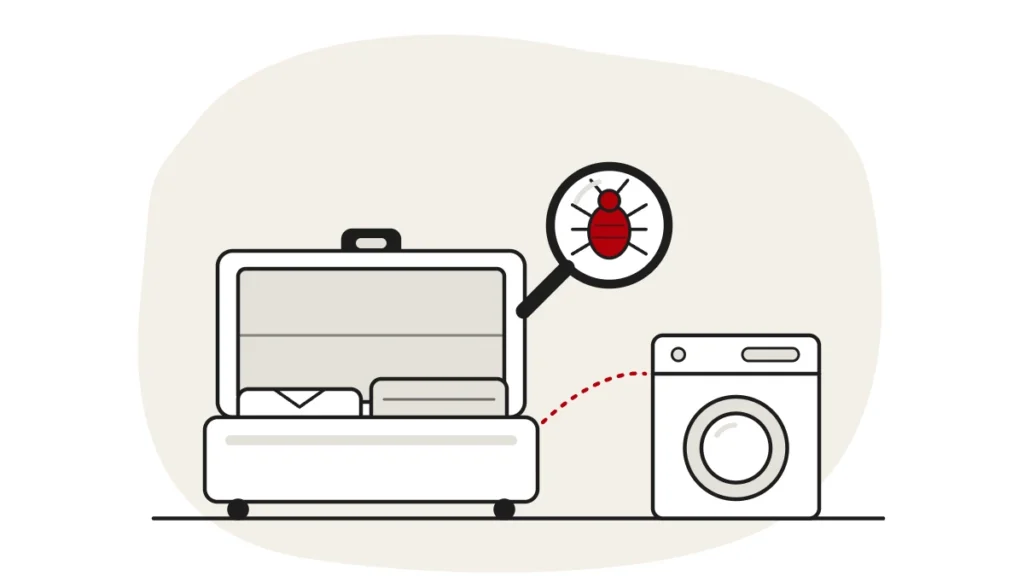
Bed bugs can live in luggage for months, hidden in seams, zips, pockets and linings, because they can go months without feeding. Unpack on a hard floor away from bedrooms, hot wash and tumble dry clothes, vacuum the case’s seams and store it sealed in a bag. If bites start at home, get an inspection.
Reviewed by James Rhoades, Owner, ThermoPest · Last reviewed 15 October 2026
Finding a bug on your suitcase after a trip, or waking up to new bites, is unsettling. The good news is that acting quickly, before anything spreads beyond the case, makes a real difference. Here’s how to check your luggage, treat it, and know when to call a professional.
Can bed bugs live in suitcases?
Yes. Bed bugs are flat, wingless insects that hide in tight, dark gaps close to where people sleep. A suitcase left on a hotel bed or floor offers exactly that: stitched seams, zip tracks, pockets, wheel housings and the space behind the lining. They can’t fly or jump, so they crawl in, usually at night, and stay hidden until the case is unpacked somewhere else.
Soft fabric cases have more places to hide, but the lining, zip and handle areas of a hard-shell case can hold bugs or eggs too.
How long can bed bugs live in luggage?
Longer than most people expect. Bed bugs can go months without feeding: typically about 1 to 4 months in heated buildings, and potentially up to a year or longer in cool conditions. So a case pushed into a cupboard can still hold live bugs when you next open it. For more on this, see how long bed bugs can survive without feeding.
Signs of Bed Bugs in Luggage: How to Check Your Suitcase
Check the case before it comes indoors if you can, or in a hallway, bathroom or on a hard floor, never on a bed. Use a bright torch and look for:
- live bugs: adults are reddish-brown and, according to the NHS, around 5mm long, about the size of an apple seed;
- smaller, paler young bugs (nymphs);
- tiny white eggs or empty eggshells stuck in seams;
- pale, papery shed skins;
- small dark spots, which are bed bug droppings.
Work slowly around:
- the zip tracks and the fabric either side of them;
- stitched seams, piping and corners;
- inside pockets and dividers;
- behind the lining where it lifts away;
- around the handles and wheels.
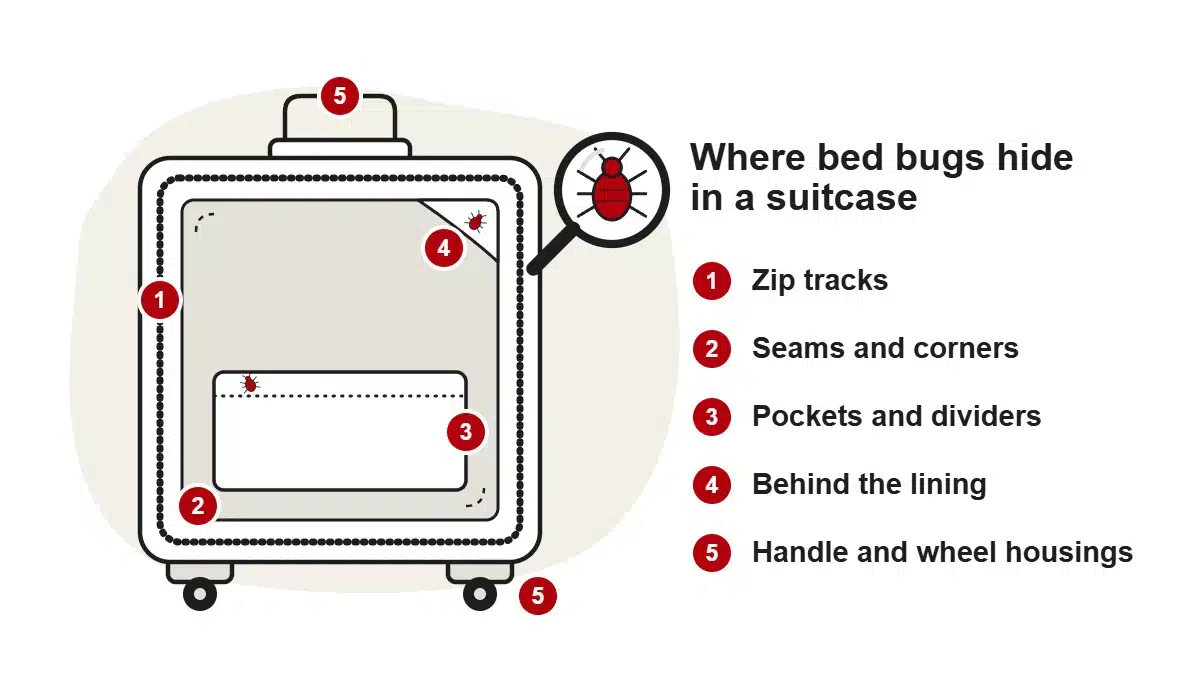
Don’t take a clear check as proof that nothing came home. Bed bugs are hard to spot in luggage, which is why washing and drying everything matters more than searching.
Did bed bugs come home in my luggage?
Bites after a holiday are a common way people find out. The NHS describes bed bug bites as raised and itchy, often in a line or grouped together, usually on skin left uncovered while sleeping, such as the face, neck and arms. Bites can take a while to show, so they don’t always point to the last place you slept.
Bites alone can’t confirm bed bugs, because other bites and rashes look similar. Our guide to bed bug bites vs hives explains the differences. If new bites keep appearing after nights in your own bed, check the mattress seams, bed frame and headboard for the signs listed above. The NHS says bites usually clear up on their own in a week or so; a pharmacist can suggest something for the itching, and you should speak to a GP or NHS 111 if a bite looks infected or you feel unwell.
How to Treat Luggage for Bed Bugs
If you think your case has picked up bed bugs, treat everything in it, including clean clothes you didn’t wear.
1. Unpack in the Right Place
Keep the case off beds, sofas and carpets. Unpack in a bath, on a hard floor, or outside if you can. Put clothes straight into sealed plastic bags or directly into the washing machine so nothing is left lying around.
2. Hot Wash and Hot Tumble Dry
The NHS advises washing affected clothing and bedding on a hot wash (60°C) and tumble drying on a hot setting for at least 30 minutes. Check care labels first.
3. Freeze or Bag What Can’t Be Washed
For things that can’t be washed, the NHS suggests putting them in a plastic bag in the freezer for 2 to 3 weeks. Our guide on how long bed bugs can live in a sealed plastic bag covers bagging items in more detail.
4. Vacuum the Empty Case
With a crevice tool, vacuum every seam, zip, pocket, corner and the wheel and handle housings. Then empty the vacuum straight into a sealed bag and put it in an outside bin. Vacuuming removes some bugs, but it can miss eggs tucked deep in seams, so don’t rely on it alone.
5. Store the Case Sealed and Away From Bedrooms
Once it’s treated, seal the case inside a large plastic bag and keep it out of bedrooms, ideally in a hallway cupboard, shed or garage. Check it again before your next trip.
| Item | What to do | Why |
|---|---|---|
| Clothes and bedding | Hot wash (60°C) and hot tumble dry for at least 30 minutes | NHS advice for items that may have been in contact with bed bugs |
| Delicates and shoes | Bag them, then hot dryer if the label allows, or freezer for 2 to 3 weeks | The NHS freezer method suits items that can’t be washed |
| Suitcase or backpack | Hot tumble dry soft bags if the label allows; otherwise vacuum every seam, zip, pocket and lining. Store sealed in a bag away from bedrooms | Seams, zips and linings are the main hiding places |
| Electronics and toiletry bags | Check by torch, keep bagged and out of the bedroom | They can’t be washed, so containment matters |
Do bed bug sprays for luggage work?
Shop-bought insect sprays may kill bugs they hit directly, but they rarely reach eggs and bugs tucked deep in seams and linings. The NHS notes that bed bugs may be resistant to some insecticides and that DIY methods are unlikely to get rid of them completely. If you use any spray, follow the label exactly and check it’s suitable for fabrics and indoor use. Avoid foggers and bug bombs: they tend to scatter bed bugs into new hiding places rather than clear them.
Can you heat treat luggage for bed bugs?
Heat is what kills bed bugs and their eggs, so it’s the most dependable option for a bag. Backpacks and shoes can often go in a tumble dryer on a hot setting, and a suitcase you’re worried about can be heat-treated or thrown away. A soft bag that fits in your tumble dryer, and whose care label allows it, can be dried hot like your clothes. A hard or wheeled case won’t fit, and a hairdryer or a quick pass with a steamer is unlikely to heat deep seams enough. If bugs may have reached your home, the case can be treated along with your rooms (see below).
Does leaving a suitcase outside or in quarantine kill bed bugs?
Not quickly. Because bed bugs can survive months without feeding, leaving a case in the garage or sealed in a bag for a few days won’t starve them. Bagging is useful for keeping them contained while you deal with the contents, not as a treatment on its own.
Can bed bugs survive in checked luggage or on a plane?
Yes, you should assume any bugs in a case will still be alive when you land, whether it travelled in the hold or the cabin. Don’t rely on the flight to kill them.
Aircraft themselves are generally a smaller risk than hotels, because bed bugs need somewhere undisturbed near a sleeping person to settle and breed. Bed bugs can occasionally be carried on board in someone’s bag or clothing, but bites noticed after a flight more often come from a hotel or holiday let, and can take a while to show. The bigger risk is where you sleep while you’re away.
Keep your bag zipped, off fabric seats where you can, and check your belongings after a long trip.
How to Keep Bed Bugs Out of Your Luggage While Travelling
- When you arrive, check the mattress seams, headboard and bedside furniture with your phone torch before you unpack. Our guide on how to avoid bed bugs in hotels walks through it.
- Keep your case on a luggage rack or a hard surface, never on the bed or the floor. Raising luggage off the floor on a stand or table makes it harder for bugs to climb in.
- Unpack only what you need and keep the rest zipped up, or in sealed packing bags or cubes.
- If you find signs, ask to move room, ideally not to one next door or directly above or below.
- When you get home, unpack straight into the washing machine.
The same habits help on everyday journeys too; see our tips on avoiding bed bugs on the Tube, buses and trains.
What if bed bugs have spread beyond the suitcase?
Treating the case won’t help if bugs have already moved into your bedroom. Signs include new bites after nights in your own bed, small dark spots or blood spots on sheets, and bugs or shed skins in mattress seams or the bed frame. Don’t move furniture or bedding between rooms, or sleep elsewhere in the home to escape the bites, as this can spread them.
At this stage professional treatment is the reliable route. ThermoPest’s bed bug heat treatment is heat-led, with targeted spray where it’s needed, and the heat reaches eggs and bugs deep in seams and cracks, including in bags and belongings in the treated rooms. If you live in the capital, see our bed bug treatment in London.
FAQs
Can bed bugs get into a closed or zipped suitcase?
They can. Bed bugs are flat and can squeeze through small gaps at the ends of zips and along seams. Keeping your case zipped and off the bed and floor lowers the risk a lot, but it’s still worth washing everything when you get home.
How long should I quarantine luggage for bed bugs?
There’s no short safe period, because bed bugs can survive months without feeding. Instead of waiting, deal with it: wash and tumble dry the contents, freeze or bag what can’t be washed, vacuum the empty case and keep it sealed in a bag away from bedrooms.
Should I throw away my suitcase?
Usually not. A case that’s been vacuumed thoroughly, heat-treated where possible and stored sealed away from bedrooms can usually be kept. If it’s old, badly torn or the lining is coming apart, giving bugs lots of hiding places, replacing it may be simpler. Seal it in a bag before you take it out so bugs aren’t scattered on the way.
How do I treat a backpack for bed bugs?
Empty it into a sealed bag, then check the care label. Many fabric backpacks can go through a hot wash and hot tumble dry like clothes. If not, vacuum every seam and pocket, then keep it sealed in a bag away from bedrooms.
Can you bring bed bugs back from holiday?
Yes, travel is one of the most common ways bed bugs get into homes. They crawl into luggage and clothes in hotels and holiday lets, then come home with you. Our guide on how you get bed bugs covers the other routes.
Worried bed bugs came home with you?
If you’ve found bugs in your luggage or new bites at home, an inspection will confirm what you’re dealing with and whether it has spread. ThermoPest is a member of the BPCA and NPTA, and our technicians arrive in unmarked vans.