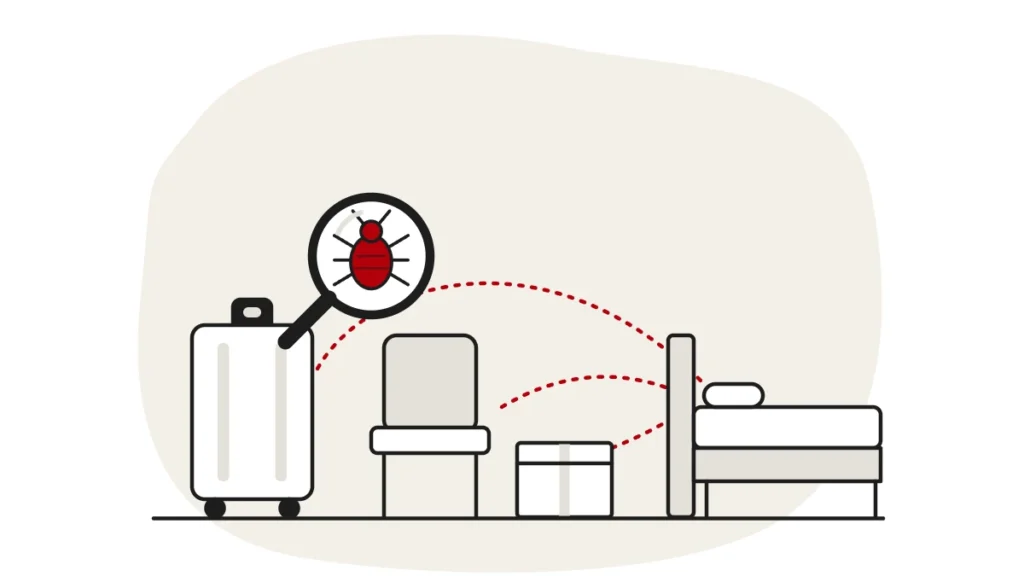
You get bed bugs by carrying them in. They hitch a ride in luggage, bags, coats, second-hand furniture and clothing, or crawl through from a neighbouring flat. Bed bugs don’t come from dirt, damp or pets, and they can’t fly or jump. They need people, so they turn up wherever people travel, sleep and share space.
Reviewed by James Rhoades, Owner, ThermoPest · Last reviewed 15 October 2026
Knowing how bed bugs arrive helps you avoid bringing them home, and if you already have them, it helps you work out where to look and what to check next. Below are the common routes in, the rarer ones people worry about, and what actually attracts bed bugs once they’re inside.
Where do bed bugs come from?
Bed bugs are small, flat, wingless insects that feed on blood, mostly human. They have lived alongside people for a very long time, and they spread the same way people do: by travelling with us and our belongings. They don’t appear out of nowhere or breed in rubbish. Every infestation starts with a bug, or a few eggs, being carried in from somewhere that already had them.
Adults are about the size of an apple seed and reddish-brown. Young bed bugs (nymphs) are smaller and paler, and eggs are tiny and white. All of them hide in seams, cracks and folds close to where people sleep or sit for long periods, which is exactly why they travel so well in bags and furniture.
How Do You Get Bed Bugs? The Most Common Ways
Travel and Hotel Stays
Hotels, hostels, holiday lets and overnight trains all have a steady flow of people, and any of them can bring bed bugs in. The bugs crawl into suitcase seams, pockets and folded clothes, then come home with you.
- Keep your case on a luggage rack or in the bathroom, not on the bed or the carpet.
- Check the mattress seams and headboard with your phone torch when you arrive.
- Unpack straight into the washing machine when you get home, not onto the bed.
Our guide on how to treat bed bugs in luggage covers what to do if you think your case has picked some up.
Second-Hand Furniture, Mattresses and Clothes
A second-hand sofa, bed frame or mattress can carry a whole colony in its seams and joints. Charity shops, vintage markets, online marketplaces and furniture left on the street are all common sources. Check upholstered items and bed frames closely before they come inside, and if you can’t check properly, it’s safer to pass.
Neighbouring Flats and Shared Buildings
In flats and terraces, bed bugs can move between homes through gaps around pipes, cables, sockets, skirting boards and shared walls, especially when a neighbour’s infestation grows or they try to treat it themselves. This is why we ask to inspect neighbouring flats when we treat a flat. Read more in can bed bugs come from neighbours?
Visitors, Bags and Coats
Guests, lodgers, family staying over and short-term lets all raise the chance of someone bringing a bug in. Bags and coats left on beds and sofas are the usual carriers.
Work, Public Transport and Shared Spaces
Offices, cinemas, buses and trains are places people sit for a while, so a bug can pass from one bag or coat to another. These places rarely have infestations of their own, but they’re part of how bed bugs move around. See our practical guide on how to avoid bringing bed bugs home from work.
Less Common Routes People Worry About
Delivery Parcels
It’s possible but rare. Warehouses are busy, well lit and have no one sleeping in them, so they’re poor places for bed bugs to live. The real risk is a parcel that comes from someone’s home, such as a second-hand item from an online marketplace. Open parcels in good light, away from beds and sofas, and put the outer packaging straight in the recycling.
Gyms and Changing Rooms
The risk at the gym is a bug getting into your bag, not the gym being infested. Bed bugs hide in dark fabric seams, so lockers, changing-room benches and kit bags are where a transfer could happen. Keep your bag zipped and off soft seating, and don’t leave it on your bed when you get home.
Storage Units
Storage doesn’t create bed bugs, but it can keep them alive. If infested furniture or bedding goes into storage, the bugs can survive a long time without feeding and become active again when the items come out, sometimes months later. Before storing, check and clean soft items and use sealed plastic boxes rather than cardboard. When collecting items from storage, check them outside or in a garage before bringing them indoors.
What causes bed bugs?
The only cause of a bed bug infestation is bed bugs being brought in. How clean or tidy a home is doesn’t cause them. That said, some things make an infestation more likely to take hold or harder to spot:
- frequent travel or lots of overnight guests;
- buying second-hand beds, sofas or upholstered chairs;
- living in a block of flats or shared house where infestations go untreated;
- clutter around the bed, which gives bugs more places to hide and makes early signs harder to see;
- trying shop-bought sprays or foggers, which tend to scatter bugs into other rooms rather than clear them.
Are bed bugs caused by poor hygiene?
No. Bed bugs feed on blood, not dirt or crumbs, so a spotless home can have them just as easily as a messy one. Hotels, new-build flats and well-kept homes all get bed bugs. Feeling embarrassed often delays people asking for help, which gives the infestation time to grow.
Do bed bugs come from pets or the garden?
No. Bed bugs don’t live on pets the way fleas do, although they can hide in pet bedding near where people sleep. They don’t come in from the garden, plants or soil either. If you’re finding insects on your pet, fleas are more likely.
What attracts bed bugs?
Bed bugs are drawn to people, not to the state of a room. They find a host by sensing body warmth and the carbon dioxide we breathe out, which is why they gather around beds, sofas and anywhere people sleep or sit still for hours. After feeding they retreat to the nearest dark crack or seam: mattress piping, bed frame joints, headboards, skirting boards and furniture close to the bed.
How Bed Bugs Spread Once They’re Inside
An infestation usually starts in the bedroom and stays close to the bed at first. It can spread to other rooms as numbers grow, when people move to the sofa or a spare room to escape the bites, or when bedding and furniture are moved around. That’s why you shouldn’t carry items from an infested room to the rest of the home. Our guide if one room has bed bugs, do they all? explains how to contain it.
How to Avoid Bringing Bed Bugs Home
- Check hotel beds and keep luggage off beds and floors.
- After a trip, unpack straight into the wash. The NHS advises washing bedding and clothes on a hot wash (60°C) and tumble drying on a hot setting for at least 30 minutes if you think they’ve been in contact with bed bugs. For items you can’t wash, it suggests sealing them in a plastic bag in the freezer for 2 to 3 weeks.
- Check second-hand furniture, mattresses and clothes before they come inside.
- Keep bags and coats off beds, at home and when visiting others.
- Use a mattress encasement, which makes signs easier to spot and removes hiding places in the seams.
- If you live in a flat, tell your landlord or managing agent early if neighbours report bed bugs.
There’s more detail in our guide on how to prevent bed bugs.
Think you’ve already brought them home?
Look for bites in a line or cluster on skin uncovered in bed, small dark spots on mattress seams, tiny blood spots on sheets, pale shed skins and live bugs in the seams of the bed and headboard. Bed bugs aren’t known to spread disease, but it’s still worth acting quickly. Don’t move furniture between rooms or use foggers. The NHS says DIY methods are unlikely to get rid of bed bugs completely and recommends contacting your council or a pest control service.
Professional bed bug heat treatment is heat-led, with targeted spray where it’s needed. The heat reaches eggs and bugs deep in seams and cracks. If you’re in the capital, see our bed bug treatment in London.
FAQs
Can bed bugs come from nowhere?
No. Bed bugs are always brought in from somewhere that already had them, usually in luggage, bags, second-hand furniture or clothing, or from a neighbouring flat. Because bites can take a while to appear and bugs hide well, it can feel as if they came from nowhere.
Can you get bed bugs from a clean home?
Yes. Bed bugs feed on blood, not dirt, so cleanliness doesn’t keep them away or attract them. Clean homes, hotels and new-build flats all get bed bugs. Clutter only makes them harder to find and treat.
Can you get bed bugs from visiting someone’s house?
You can, though it’s less likely after a short visit. The risk is higher if you sit or sleep on infested furniture or leave a bag or coat on a bed or sofa. Keep belongings on hard surfaces and check them when you get home.
Can bed bugs come through walls from a neighbour?
Yes, in flats and terraced houses bed bugs can travel through gaps around pipes, cables, sockets and skirting boards. That’s why neighbouring flats need checking when one flat in a building has bed bugs.
Do bed bugs come from outside?
Not from gardens, soil or plants. They come from other people’s homes, hotels and belongings. If you’re finding insects that came in from outside, they’re likely to be something else, such as carpet beetles or fleas from a pet.
Found signs of bed bugs?
An inspection will confirm what you’re dealing with and where they’ve spread. ThermoPest is a member of the BPCA and NPTA. Our treatment is heat-led, with targeted spray where it’s needed, and our technicians arrive in unmarked vans.