Bed bugs don’t usually feed every night. A bed bug typically feeds every few days, though some feed more often. Each feed takes several minutes, and most feeding happens at night while you sleep.
Reviewed by James Rhoades, Owner, ThermoPest · Last reviewed 15 October 2026
If you’re waking up with new bites, it can feel as though something is feeding on you constantly. Knowing how bed bugs actually feed explains why bites come and go, why they appear in lines, and why the bugs are so hard to catch.
How often do bed bugs feed?
Bed bugs typically feed every few days, although some may feed more often. On any given day, most of the bugs in a home are not feeding at all. They’re hidden away, digesting.
How often an individual bug feeds depends on what it needs at the time:
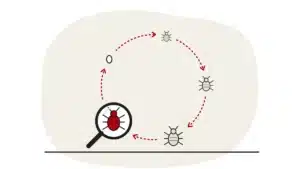
- Nymphs (young bed bugs) must take a blood meal before they can moult to the next stage. Nymphs shed their skin five times before reaching adulthood, with a blood meal needed between each moult.
- Adult females need to feed periodically to keep laying eggs. After a blood meal a female lays a few eggs a day for a short period, then has to feed again to produce more.
For how the stages fit together, see our guide to the bed bug life cycle, and for help telling young bugs apart, our page on bed bug nymphs.
Do bed bugs feed every night?
Not usually, at least not the same bug. Because each bed bug feeds every few days, a single bug is unlikely to bite you night after night. In an established infestation, though, different bugs are hungry on different nights, so new bites can still appear most nights.
Bites aren’t a reliable count of bugs either. Some people don’t react at all, even when bitten repeatedly.
Bed Bug Feeding at a Glance
| Question | Answer |
|---|---|
| How often? | Typically every few days; some feed more often |
| How long does a feed take? | Several minutes to fill up |
| What time? | Mainly at night, in the early hours, depending on the person’s schedule |
| Daytime feeding? | Hungry bugs may feed in the day, especially if that’s when you sleep |
| Do you feel it? | Usually not: the bite contains an anaesthetic and an anticoagulant |
| What do they eat? | Only blood |
When do bed bugs come out to feed?
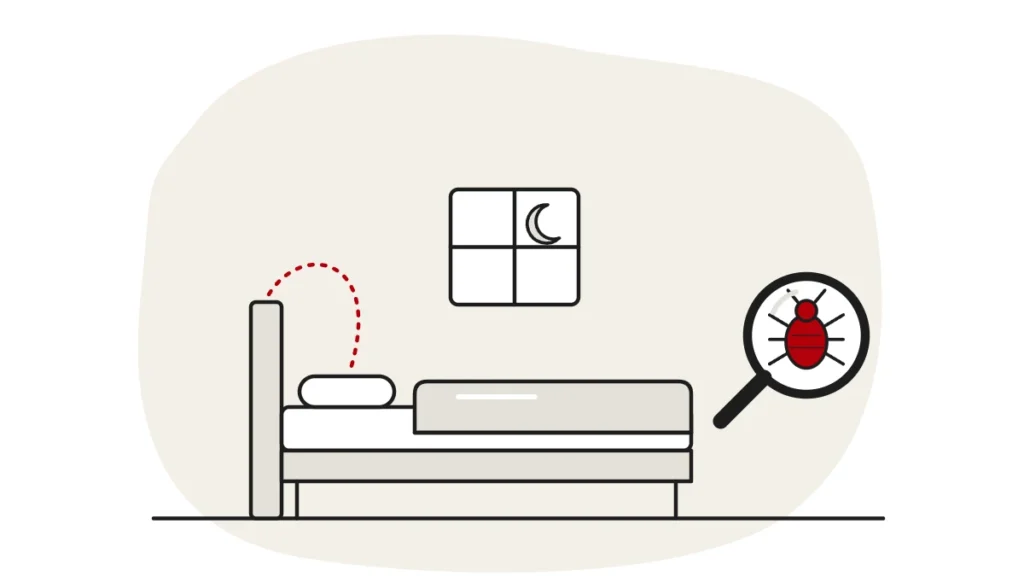
Bed bugs are active mainly at night, and usually bite people while they’re asleep. They tend to become active in the early hours, depending on the host’s schedule, when people tend to be in their deepest sleep.
Do bed bugs feed during the day?
They can. Hungry bed bugs may feed during the day, especially if that’s when the person normally sleeps. Shift workers and daytime nappers can be bitten in daylight.
Will keeping the lights on stop them?
Unlikely. In our experience, sleeping with the lights on is not likely to deter hungry bed bugs, as they adjust their feeding to your sleep pattern. We go into this in more detail in will sleeping with the lights on stop bed bugs?
How do bed bugs find you?
Bed bugs don’t hunt by sight. They’re attracted to the carbon dioxide you breathe out, and a rise in carbon dioxide in the room prompts hungry bugs to start searching. They’re also drawn to body heat, but they can only detect it at fairly close range.
That’s why they hide so close to where you sleep. Bed bugs prefer to hide close to where they feed, but will crawl longer distances in search of a meal if they need to. They reach you by crawling; they can’t fly. Our guide to whether bed bugs can climb or fly explains how they move around a room.
Because they depend on a sleeping person nearby, bed bugs are an indoor problem; see can bed bugs live outside?
How do bed bugs feed?
Bed bugs feed by piercing the skin with an elongated beak and drawing blood through it. They first probe the skin with their mouthparts to find a blood vessel. That probing can leave you with several bites from the same bug.
How long do bed bugs feed for?
A bed bug usually takes several minutes to fill up. You rarely feel it: when bed bugs bite, they inject saliva containing an anaesthetic and an anticoagulant, which stops you feeling the bite. Many people don’t notice bite marks until a day or more later, which is why it can be hard to tell where or when you were bitten.
Why are bites in a line or cluster?
The NHS says bed bug bites are often in a line or grouped together, usually on skin exposed while sleeping, like the face, neck and arms. Probing, with one bug leaving several bites, helps explain why. People sometimes call a row of three bites “breakfast, lunch and dinner”, but it’s a nickname, not a rule; bites can be single, in pairs or scattered. See where bed bugs bite on the body for the most common spots, and our guide to what bed bug bites look like for help reading the marks.
What happens after a bed bug feeds?
Bed bugs don’t stay on you. They don’t live on or attach to people like lice or ticks, and immediately after feeding they crawl to a secluded spot to digest. Our technicians usually find them back in a crack or crevice where other bed bugs are gathered, digesting and excreting the meal.
That’s what leaves the signs you can find. The NHS lists spots of blood on bedding, from bites or squashed bugs, and small brown spots on bedding or furniture, which are bed bug droppings. You may also see rusty or reddish smears from blood-filled bugs that have been crushed.
What does a bed bug look like before and after feeding?
An unfed adult is flat and brown. The NHS says adults are around 5mm long and can be dark yellow, red or brown. After a meal, a bed bug swells up, becoming longer and rounder and turning a deeper red as it fills with blood.
What do bed bugs eat?
Only blood. Bed bugs feed solely on the blood of animals. The common bed bug prefers people but will also bite other warm-blooded animals, including dogs, cats, birds and rodents. They don’t eat crumbs or food left in the bedroom, so a clean home can get bed bugs as easily as a messy one.
How long can bed bugs go between feeds?
Much longer than most insects. Nymphs and adults can go months without feeding, with cooler conditions letting them last longer. In a heated home, starved bed bugs are more likely to die from drying out than from hunger itself.
The practical point: it’s usually impractical to leave a home empty in the hope of starving bed bugs out. Bites stopping for a while doesn’t mean the bugs have gone. Our guide to how long bed bugs can live without feeding covers this in full.
If you’re wondering whether bed bugs need water as well as blood, or whether water can be used against them, our guide on whether bed bugs can survive in water covers both.
Breaking the Feeding Cycle
Because bed bugs spend most of their time hidden between feeds, catching them at night rarely works. Shop-bought sprays and foggers tend to scatter bed bugs into new hiding places rather than clear them. What matters is reaching the cracks, seams and furniture joints where they hide between meals, eggs included.
At ThermoPest our approach is heat-led, with targeted spray where it’s needed, and it is designed to reach those hiding places. Return visits may be needed depending on the infestation. Read how bed bug heat treatment works, or see our pricing.
FAQs
How often do bed bugs need to feed?
Bed bugs typically feed every few days, though some feed more often. Nymphs need a blood meal before each moult, and females need to feed to keep laying eggs. Between meals they hide close to the bed, digesting.
Do bed bugs only feed at night?
Mostly, but not only. Bed bugs are active mainly at night, but hungry bugs may feed during the day, especially if that’s when you normally sleep. They adjust to your sleep pattern rather than to daylight.
How often do baby bed bugs feed?
Each nymph needs a blood meal to moult to its next stage. Nymphs moult five times before becoming adults, so they need at least one meal for each stage. In a warm home they usually moult within days of feeding, but a nymph that can’t find a host stays at its current stage until it feeds or dies.
How many times do bed bugs bite in one night?
There’s no fixed number. One bug may probe several times before it settles to feed, which can leave a short line of bites. The total depends on how many bugs are hungry that night. Some people don’t react to bites at all, so you may be bitten more than you can see.
Do bed bugs spread disease when they feed?
Bed bugs are not known to spread diseases to people. The NHS says bites usually clear up on their own in a week or so. A pharmacist can help with itchy bites. The NHS says to see a GP if bites are still very painful, swollen or itchy after trying pharmacy treatments, or if the pain or swelling around the bites is spreading.
Waking up with new bites?
If you’re getting bites and finding small spots on your bedding, an inspection will confirm whether it’s bed bugs and where they’re hiding between feeds. ThermoPest is a member of the BPCA and NPTA, and our technicians arrive in unmarked vans.