Bed bug guides
Adult bed bugs are visible to the naked eye, about the size of an apple seed, though they often hide deep in mattresses, skirting boards, and furniture seams.

4.9 / 5 on Google



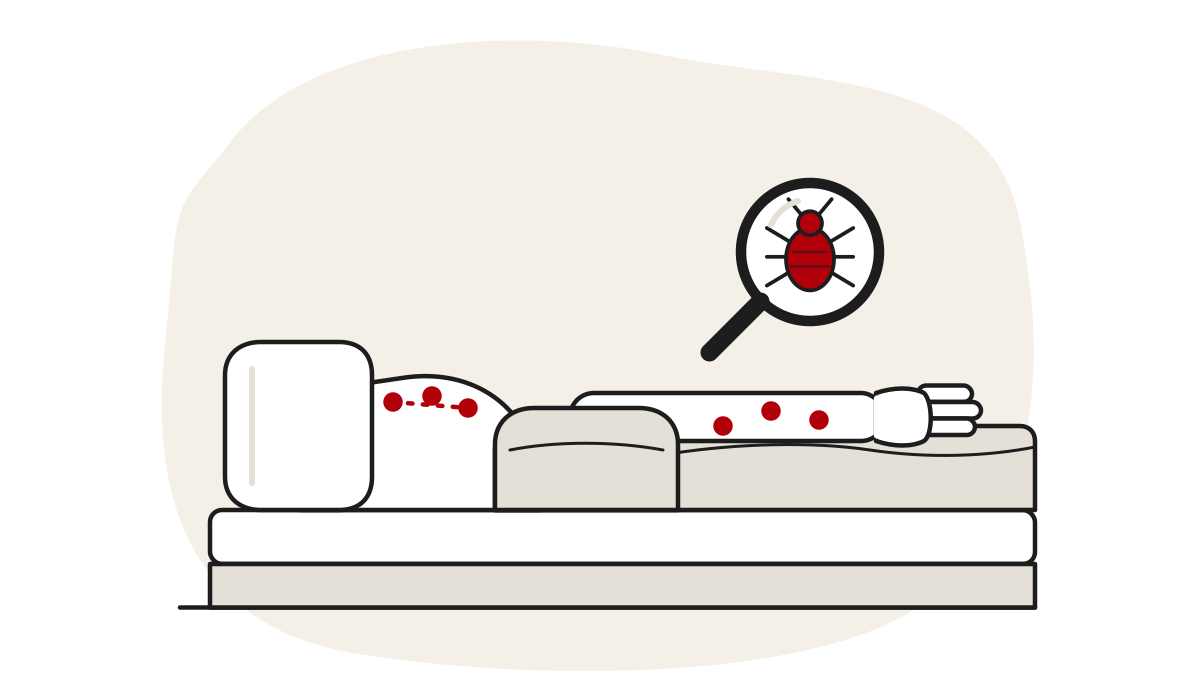
Bed bugs usually bite skin left uncovered while you sleep. The NHS says bites are often on the face, neck and arms. Hands, shoulders, the back of the neck, behind the ears and any leg or foot outside the duvet are common too, often in a short line or small group.
Reviewed by James Rhoades, Owner, ThermoPest · Last reviewed 15 October 2026
Finding a row of bites on your neck or arm after a night’s sleep is unsettling, and it’s natural to wonder why they’re there and not somewhere else. This guide explains where on the body bed bugs tend to bite, why those spots, whether they bite under clothes or burrow into skin, and how to check the bed. We’re pest specialists, not doctors, so we describe what to look for rather than diagnose. For what the bites themselves look like, see our main guide to bed bug bites.
Bed bugs feed on blood at night, while you’re asleep and still. They hide in and around the bed during the day, and they bite whatever skin they can reach easily from the mattress, pillow and covers. The NHS page on bedbugs says bites are often on skin exposed while sleeping, like the face, neck and arms. In practice, though, bed bugs will bite any part of the body they can reach.
The most common places to find bed bug bites are:
In short, there’s no single favourite spot. Bites follow how you sleep: what’s uncovered, and what’s touching the mattress or pillow.

The NHS says bites are often in a line or grouped together. A bed bug may feed, move a short distance and feed again, so bites often sit close together on one patch of skin, such as along a forearm or across the back of the neck. A row of bites that stops where your sleeve or waistband starts is a typical pattern.
Mostly, yes. Exposed skin is simply easiest to reach, which is why the NHS describes bites on skin exposed while sleeping. That’s also why bites often turn up right at the edge of your nightwear: at the collar, cuffs, waistband or the hem of your shorts.
Covering up can reduce the skin on offer, but it won’t stop the bites while bed bugs are still living in the bed. Loose pyjamas ride up and gaps open at the neck and wrists. We look at this in more detail in can bed bugs bite through clothes?
They can. The NHS lists the face and neck among the usual places, and behind the ears and along the hairline are skin that rests on or near the pillow all night. Bites in these spots are easy to miss, because you can’t see them in a normal mirror glance.
If you’re worried about bed bugs getting into your ear, our article on whether bed bugs can go in your ear covers the myth and the reality.
Yes, if that skin is uncovered or pressed against the mattress. Bites can appear on any part of the body. In practice:
Bites mostly on the ankles and lower legs, especially if you have pets, can also point to fleas rather than bed bugs. Our guide to what bed bug bites look like compares them with flea and mosquito bites, hives and heat rash.
No. Bed bugs feed on human blood by piercing the skin, but they do not live on people or burrow into the skin. After feeding they go back to their hiding places. During the day they hide on or around the bed: in mattress seams, divan bases, bed frames and headboards, cracks and crevices, and behind loose wallpaper.
So if you’re itching, look at the bed, not your body. If you think something is living in or under your skin, speak to a pharmacist or GP. For example, the NHS says scabies is an itchy rash caused by mites, which lay eggs in the skin, and a pharmacist can help.
Bed bugs usually bite at night while people sleep, but they can be opportunistic, feeding whenever there’s a chance. So day-time bites are possible, for example during a nap or on a sofa, but night-time bites are the typical sign.
You may not get new bites every night. Bed bugs can live for several months without a blood meal, and bite marks can take up to around two weeks to appear in some people, so bites can seem to come and go. Leaving the light on won’t solve it either: see will sleeping with the lights on stop bed bugs?
Bed bugs live where people sleep or rest for long periods, so bites aren’t only a home problem. They can be picked up in hotels, hostels and short-term lets, on sofas and upholstered chairs, and they can travel home in luggage, clothing and second-hand furniture. The NHS advises carefully checking second-hand furniture before bringing it indoors, and checking luggage and clothing if you’ve come from somewhere you know had bed bugs.
If you only get bitten in one room or on one piece of furniture, that’s a useful clue. Bed bugs don’t just live in mattresses: our guide to whether bed bugs live in duvets, pillows and carpets explains where else to look.
Where the bites are gives you a clue, not an answer. Bed bug bites can look very similar to mosquito or flea bites, and some people don’t react at all. To confirm it, look for the bugs and their signs. The NHS lists:
Our step-by-step guide on how to check for bed bugs shows where to look, and what bed bugs look like helps you recognise adults, young bugs and eggs. If you keep getting bitten but can’t find anything, read getting bitten at night but no bed bugs? or book a professional bed bug inspection.
This is general information, not medical advice. The NHS says bedbug bites usually clear up on their own in a week or so. It suggests putting something cool, like a clean, damp cloth, on the bites, keeping them clean and not scratching, to avoid infection. A pharmacist can advise on something to ease itching. See a GP if the bites are still very painful, swollen or itchy after pharmacy treatment, or if pain or swelling is spreading. The NHS says a severe allergic reaction is possible but rare, and its insect bites advice says to call 999 if your lips, mouth, throat or tongue suddenly swell, or you’re breathing very fast or struggling to breathe. Our guide on how to stop bed bug bites itching has more detail.
New bites will keep appearing while the bugs are still in the bed. The NHS says it’s very difficult to get rid of bed bugs yourself, and advises contacting your local council or a pest control service. In the meantime, it suggests washing affected bedding and clothing on a hot wash (60°C) and tumble drying on a hot setting for at least 30 minutes. Don’t rely on foggers, bug bombs or smoke bombs: the spray won’t reach the cracks and crevices where bed bugs hide.
At ThermoPest our approach is heat-led, with targeted spray where it’s needed, so it reaches the seams, joints and cracks where bed bugs and their eggs hide. Read how bed bug heat treatment works. ThermoPest is a member of the BPCA and NPTA, and our technicians arrive in unmarked vans. If you live in a flat, we’ll ask to inspect neighbouring flats too, and a return visit may be needed.
4.9 / 5 on Google
FAQs
Can’t see your question? Call 0808 189 2310 and speak to a specialist.
On skin left uncovered in bed. The NHS says bites are often on the face, neck and arms, and the shoulders and arms are often bitten too, frequently in lines. Hands, behind the ears, and legs or feet outside the duvet are common too.
Mostly. Uncovered skin is easiest to reach, so bites often appear at the edge of nightwear: the collar, cuffs or waistband. Covering up reduces the skin on offer, but it won’t stop the bites while bed bugs are still in the bed.
They can. Behind the ears and along the hairline is skin that rests on or near the pillow, and the NHS lists the face and neck among the usual places. Bites there are easy to miss, so use two mirrors or ask someone to check.
No. Bed bugs feed by piercing the skin but do not live on people or burrow into the skin. They go back to hiding places around the bed after feeding. If you think something is under your skin, speak to a pharmacist or GP.
Yes, if the skin is uncovered. Bites often appear in a band around the waist or lower back where a top has ridden up in the night. Bites can appear on any part of the body.
Usually not. Bed bugs mostly bite at night while people sleep, but they can be opportunistic, so day-time bites are possible, for example during a nap or on a sofa, but night-time bites are the typical sign.
Waking up with new bites?
If you’ve found bites and signs in the bed, an inspection will confirm what you’re dealing with. ThermoPest is a member of the BPCA and NPTA, and our technicians arrive in unmarked vans.
Prefer to call? 0808 189 2310
Talk to a specialist
Speak to a bed bug expert today. Tell us what you’ve found and we’ll come back to you with the right next step.
Enter Your Details To Request A Call Back
Enter Your Details To Request A Call Back


