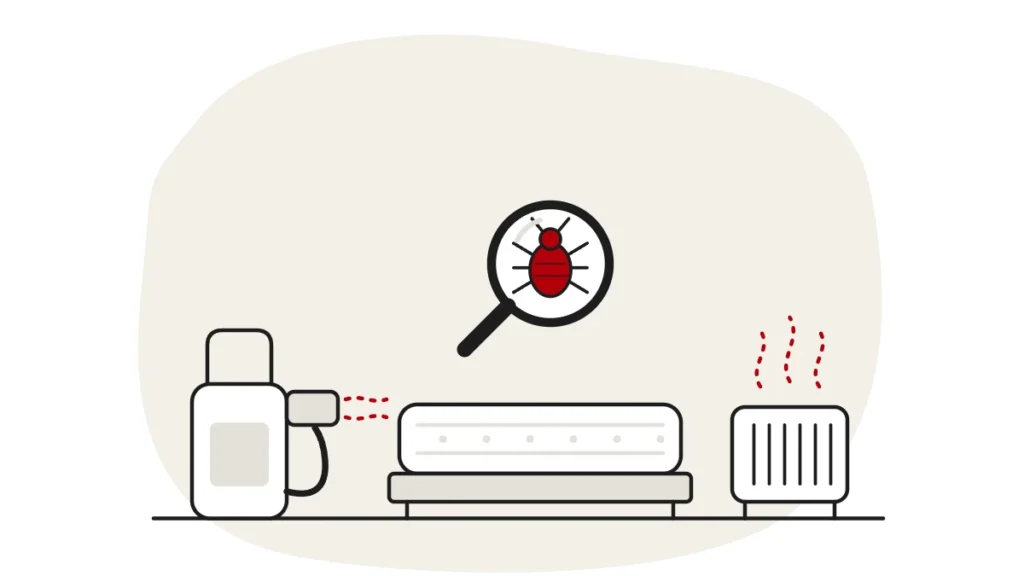
Nothing kills a whole bed bug infestation instantly. A few things kill the bugs they touch directly: steam, a hot wash and tumble dry, and some contact sprays. But bed bugs and their eggs hide in cracks, seams and furniture those methods never reach, so getting rid of them takes thorough treatment and follow-up, not a quick fix.
Reviewed by James Rhoades, Owner, ThermoPest · Last reviewed 15 October 2026
If you’ve just found bed bugs, wanting them gone tonight is completely understandable. This guide explains what really kills them on contact, what doesn’t work, which home remedies are dangerous, and what a realistic plan looks like.

What kills bed bugs instantly on contact?
A small number of methods kill bed bugs quickly, but only the ones they actually touch. That’s the catch: you rarely see more than a fraction of the bugs in a room.
Steam
Used correctly, a steamer kills bed bugs and eggs on contact. The steam needs to be at least about 54°C where it meets the surface, without a forceful airflow, and a diffuser helps stop the bugs being scattered. Steam kills the eggs it reaches, but it often misses some nymphs and adults, so it’s a useful part of a treatment rather than an efficient way to clear a mature infestation on its own. Steam also leaves no lasting protection, so any bug it misses carries on.
A Hot Wash and Tumble Dry
For bedding, clothes and soft items, the NHS advises washing on a hot wash (60°C) and tumble drying on a hot setting for at least 30 minutes. This is one of the most reliable things you can do at home, because the heat reaches right through the fabric. It only treats what goes in the machine, though, not the bed frame, sofa or skirting boards. Our guide to whether ironing, washing or drying kills bed bugs on clothes goes into more detail.
Contact Sprays
Many household bed bug sprays work mainly on contact. Most sprays sold to householders have limited effect once dry, so they only help if they hit the bugs directly. The NHS also warns that bed bugs may be resistant to some insecticides. If you’re looking at a particular product, our guides on whether Dettol kills bed bugs and whether Indorex kills bed bugs explain what each can and can’t do. Always follow the label.
Squashing and Vacuuming
Squashing a bug you can see kills that bug, and that’s about it. Vacuuming removes bugs rather than killing them, and vacuumed bugs can survive, so seal the contents in a bag and put it in an outside bin straight away.
| Method | Kills on contact? | Reaches hidden bugs and eggs? | Main limits |
|---|---|---|---|
| Steam | Yes, bugs and eggs it reaches | Only surface-level cracks and seams | Easy to miss bugs; no lasting effect |
| Hot wash and tumble dry | Yes, for items in the machine | No, fabrics only | Doesn’t treat furniture or the room |
| Contact spray | Sometimes, if it hits the bug | Rarely | Resistance; little effect once dry |
| Rubbing alcohol | No, not reliably | No | Fire risk; many eggs still hatched |
| Foggers and bug bombs | Not where bugs hide | No | Scatter bugs; fire and health risk |
What kills bed bugs instantly and permanently?
Nothing does both. Even methods that kill on contact can’t reach every bug and egg, and bed bugs are very good at hiding. Adults are only around 5mm long, according to the NHS, and younger bugs and eggs are smaller still. They tuck into mattress seams, bed frame joints, behind headboards, under skirting boards and inside furniture.
The NHS says it’s very difficult to get rid of bed bugs yourself, because they can be hard to find and may be resistant to some insecticides, and that home measures are unlikely to get rid of them completely. In our experience, getting rid of bed bugs takes real effort and follow-up visits are often needed. So if you see a product promising an instant, permanent result, treat that as a warning sign.
What temperature kills bed bugs?
Heat is lethal to bed bugs, but it isn’t instant at moderate temperatures. Both the temperature and how long it’s held matter, and eggs are tougher than adults, so they need more heat to be killed reliably.
That’s why you shouldn’t try to heat a room yourself with heaters or by turning up the thermostat: it doesn’t work and it’s dangerous. Professional heat treatment uses specialist equipment and monitoring to get heat into the places bugs hide.

What kills bed bugs and their eggs?
Eggs are the hardest part. They’re tiny, glued into seams and cracks, and they withstand more heat than adults. Some methods kill eggs they reach: a tumble dryer on a hot setting kills all bed bug life stages in the items inside, and steam kills the eggs it’s applied to. Many sprays are less reliable on eggs, which is one reason treatment usually includes a follow-up to deal with any bugs that hatch afterwards.
The NHS also suggests putting items that can’t be washed in a plastic bag in the freezer for 2 to 3 weeks. That’s slow, not instant, and many home freezers aren’t cold enough, so check the temperature with a thermometer.
Home Remedies: What Doesn’t Work and What’s Dangerous
When you’re desperate, it’s tempting to try anything. Some popular remedies don’t work, and some can hurt you or set your home on fire.
Rubbing Alcohol
Rubbing alcohol is a poor bed bug treatment. Dabbing it directly on bugs doesn’t reliably kill them, only very heavy soaking comes close, and sprayed eggs can still hatch. Soaking a bed or furniture in alcohol isn’t practical or safe: alcohol is highly flammable and can easily ignite with a spark or cigarette.
Petrol, Kerosene and Other Fuels
Never use petrol, paraffin, kerosene or any fuel on bed bugs or your furniture. These could harm you and your family and can easily ignite. Never use alcohol or fuel near a candle, cigarette, hob, heater or any flame.
Bleach, Lighters and Flames
Bleach, alcohol and cigarette lighters should not be used to control bed bugs. Don’t try to burn bugs out of a mattress or furniture.
Foggers, Bug Bombs and Smoke Bombs
If fogger spray doesn’t reach the cracks and crevices where bed bugs hide, those bugs won’t be killed, and misused foggers can harm your health or cause a fire or explosion. Bug bombs should not be used to control bed bugs. They also tend to scatter bed bugs into new hiding places, including neighbouring rooms and flats, which makes the problem harder to treat.
Diatomaceous Earth and Other Dusts
Diatomaceous earth is often sold as a natural fix, but it will seldom do much to eliminate an infestation. Dusts like this may take months to work, and pool or food-grade diatomaceous earth should not be used, because breathing it in can harm you. Gadgets such as UV wands are another popular idea; see does UV light kill bed bugs?
Garden or Outdoor Insecticides
Use pesticides carefully according to the label directions, and only products that list bed bugs on the label. Never use a garden or outdoor product indoors, and never use more than the label says.
How to Get Rid of Bed Bugs Fast (And Safely)
There’s no instant fix, but there’s plenty you can do today to reduce numbers and stop them spreading:
- Strip the bed and put bedding and clothes from around the bed straight into sealed bags, then wash at 60°C and tumble dry on hot for at least 30 minutes, as the NHS advises.
- Vacuum mattress seams, the bed frame, skirting boards and carpet edges, then bag and bin the contents outside.
- Clear clutter from around the bed so there are fewer hiding places.
- Keep sleeping in your own bed if you can. Moving to the sofa or another room can spread bugs to new places.
- Don’t throw out furniture or bring in second-hand furniture without checking it carefully first.
- Don’t use foggers, alcohol or fuels.
For a fuller walkthrough, read our guide on how to kill bed bugs. These steps help, but the NHS is clear that they’re unlikely to clear an infestation on their own.
How Professional Heat Treatment Works
At ThermoPest our treatment is heat-led, with targeted spray where it’s needed. Specialist heaters raise the temperature through the room and its furniture, so heat gets into the seams, joints and cracks that steam and sprays can’t reach. Bed bugs and their eggs die when held above about 50°C for long enough. We heat rooms to 50–60°C and hold that heat until the hardest-to-reach spots stay above 50°C, with temperature monitors in known cold spots and hard-to-reach areas. It isn’t instant, and depending on what we find, a return visit may be needed. You can usually go back into a home 2 hours after heat treatment, unless your technician advises otherwise. If you live in a flat, we’ll ask to inspect neighbouring flats too, because bed bugs can move between them.
Read how our bed bug heat treatment works, find out about bed bug treatment in London, or see our bed bug treatment prices.

FAQs
Does rubbing alcohol kill bed bugs instantly?
No. Alcohol dabbed directly on bed bugs doesn’t reliably kill them, only a heavy soaking comes close, and sprayed eggs can still hatch. Alcohol is also highly flammable, so it’s a fire risk on beds and furniture.
What kills bed bugs permanently overnight?
Nothing reliably clears an infestation overnight. Steam and a hot wash and tumble dry kill bugs and eggs they reach, but bugs hidden in furniture and cracks survive. Getting rid of them usually needs a thorough treatment and a follow-up check.
What spray kills bed bugs instantly?
Some contact sprays kill bed bugs they hit directly, but most household sprays have limited effect once dry, and the NHS says bed bugs may be resistant to some insecticides. A spray won’t reach eggs and bugs hidden deep in furniture.
Does bleach kill bed bugs?
Bleach isn’t a bed bug treatment and shouldn’t be used to control bed bugs. It can damage fabrics and furniture and give off harmful fumes, especially if mixed with other cleaning products.
Do bug bombs kill bed bugs?
Not where it matters. Fogger spray won’t kill bed bugs hiding in cracks and crevices it doesn’t reach, and misuse can cause a fire or harm your health. Bug bombs shouldn’t be used against bed bugs, and foggers tend to scatter bugs into new hiding places.
Found bed bugs and want them gone?
If you’ve found bugs, bites or dark spots on the mattress, an inspection will confirm what you’re dealing with and where they’re hiding. ThermoPest is a member of the BPCA and NPTA, and our technicians arrive in unmarked vans.