Bed bug guides
Adult bed bugs are visible to the naked eye. How big each stage is, what they look like and why they’re so hard to spot.

4.9 / 5 on Google


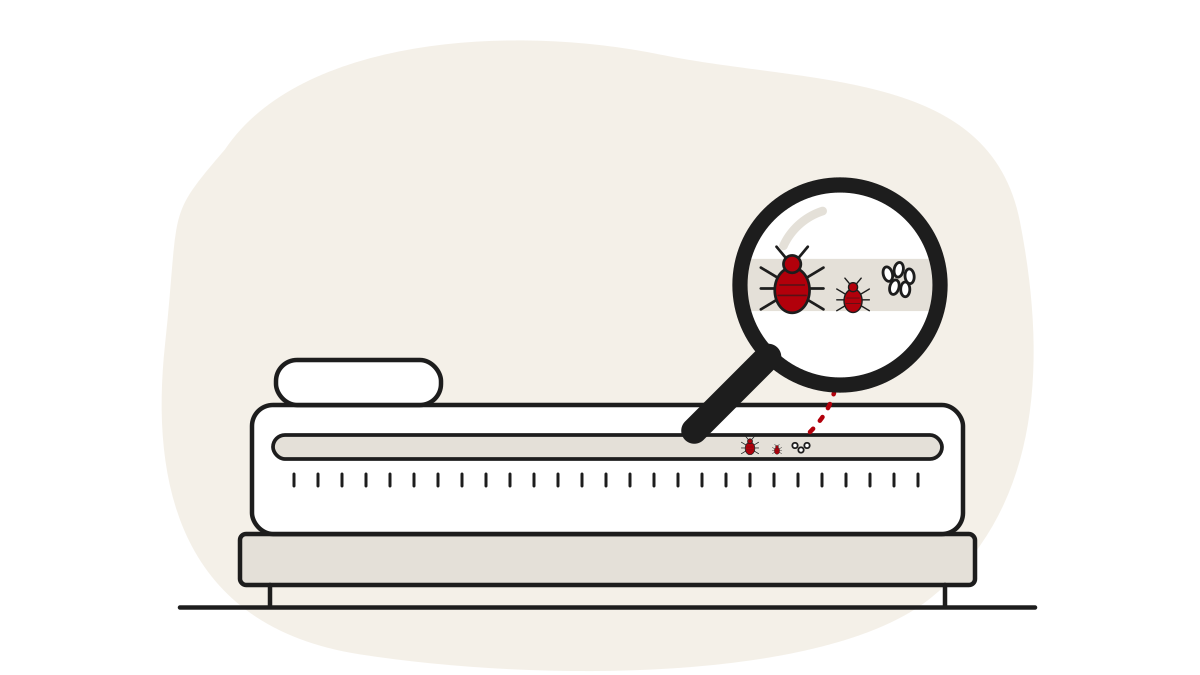
Yes. Adult bed bugs are visible to the naked eye. The NHS says adults are around 5mm long and dark yellow, red or brown. Young bed bugs (nymphs) and eggs are much smaller and paler, so they’re easy to miss. Bed bugs also hide in tight gaps during the day, so you often see their signs before the bugs.
Reviewed by James Rhoades, Owner, ThermoPest · Last reviewed 16 October 2026
If you’ve found something small and brown on your sheets, or you’re waking up with bites, you’ll want to know whether you’d actually spot a bed bug if you had them. This page explains how visible each stage is, what bed bugs look like to the human eye and why they’re so hard to find. Adult sizes and colours follow NHS guidance, and the rest comes from our experience as bed bug specialists.
You can see adult bed bugs without a magnifying glass, as long as they’re out in the open. The younger the bug, the harder it is. This is how each stage compares:
| Stage | Size | Colour | Can you see it? |
|---|---|---|---|
| Adult | Around 5mm long (NHS) | Dark yellow, red or brown (NHS) | Yes, if it isn’t tucked into a gap |
| Adult after feeding | Swollen and longer | Reddish-brown | Yes, and it’s easier to spot |
| Nymph (young bed bug) | Smaller than adults; newly hatched ones are no bigger than a pinhead | Translucent or whitish-yellow | Hard; unfed nymphs can be nearly invisible to the naked eye |
| Egg | About 1mm, the size of a pinhead | Pearl-white | Very hard; eggs are hard to see without magnification |
So if you have adult bed bugs, you can see them. Whether you actually do depends on where they’re hiding and how many there are.
The NHS says adult bed bugs are around 5mm long. An adult is often compared to an apple seed in size and colour. It’s small, but easy to see on a pale sheet.
Nymphs start much smaller. Newly hatched nymphs are straw-coloured and no bigger than a pinhead, and young bed bugs look like the adults but smaller and lighter in colour. They shed their skins as they grow. Our guide to identifying bed bug nymphs explains each stage.
Eggs are the hardest to see. They’re about 1mm in size and pearl-white, which makes them even harder to spot on light-coloured fabric. See what bed bug eggs look like and where to find them.
To the naked eye, an adult bed bug looks like a small, flat, oval, brown seed with legs. It has no wings, and its body is reddish-brown, oval and flattened.
A bed bug that has just fed looks different. Fed adults look balloon-like, reddish-brown and more elongated. Unfed adults are flatter and browner. Nymphs look like smaller, paler versions of the adults.
Plenty of other small brown insects get mistaken for bed bugs, including carpet beetles and booklice. If you’re not sure what you’ve found, our guides on what bed bugs look like and bugs that look like bed bugs have photos to compare against.
Yes. Bed bugs walk; they can’t fly or jump. A live adult crawling across a sheet, pillow or wall is easy to see.
You’re most likely to catch one moving at night. Bed bugs are active mainly at night and hide close to where people sleep during the day. Checking the bed with a torch at night, after the room has been dark for a while, gives you the best chance of seeing one out in the open.
Bed bugs are visible, but they’re very good at staying out of sight:
This is why the NHS says bed bugs are very difficult to get rid of yourself: they can be hard to find. Our guide to common bed bug hiding spots shows where they usually are.
Not always. In a new or small infestation there may be only a few bugs, deep in the seams of the mattress or the joints of the bed frame. Many people find the signs first. The NHS lists:
Our technicians also look for pale yellow shed skins and dark spots that can bleed into fabric like a marker pen. To look for these properly, follow our room-by-room guide on how to check for bed bugs, or our step-by-step mattress check.
Seeing bed bugs out in the open during the day is less common. It can mean there are a lot of them and they’ve run out of hiding space, but it isn’t a reliable measure on its own.
Don’t use foggers or bug bombs. They tend to scatter bed bugs into new hiding places rather than reach them. If bed bugs are confirmed, our bed bug heat treatment is heat-led, with targeted spray where it’s needed. If you live in a flat, we’ll ask to inspect the neighbouring flats too, because bed bugs can move between them.
4.9 / 5 on Google
FAQs
Can’t see your question? Call 0808 189 2310 and speak to a specialist.
Sometimes, but not often. Bed bugs feed mainly at night while you’re asleep, and the bite is painless, so most people don’t feel them. If you’re awake and one is on your skin, you can see it, because adults are around 5mm long (NHS). They usually walk back to their hiding places after feeding rather than staying on you.
Up close, an adult bed bug is flat and oval, with legs and antennae but no wings. Adults are reddish-brown, and after a meal they look balloon-like and more elongated. Nymphs look like smaller, paler adults.
Only just. Eggs are about 1mm, the size of a pinhead, and pearl-white, so they’re hard to see without magnification, especially on light fabric. A bright torch and a magnifying glass help when you check seams and joints.
They’re visible if they’re out, but they usually aren’t. Bed bugs are active mainly at night and hide close to where people sleep during the day. In daylight you’re more likely to find dark spots, shed skins or blood spots than live bugs.
Yes, an adult on fabric is visible, especially on light colours. They tend to hide in seams, pockets and folds rather than sit on the surface. If you think clothes have been in contact with bed bugs, the NHS advises a hot wash at 60°C and a hot tumble dry for at least 30 minutes.
Not necessarily, but don’t ignore it. A single bug can come in on a bag, coat or piece of furniture. Because nymphs and eggs are so hard to see, one visible adult can also mean more are hiding. Check the bed carefully and, if you find any other signs, book an inspection.
They can stay out of sight for a long time. Their flattened bodies fit into crevices no wider than a toothpick, and a visual inspection alone can fail to show they’re there. Bed bug traps and interceptors placed around the bed can help catch bugs you can’t see.
Think you've spotted a bed bug?
If you think you’ve seen a bed bug, an inspection will confirm what you’re dealing with. We’re BPCA and NPTA members, and we arrive in unmarked vans.
Prefer to call? 0808 189 2310
Talk to a specialist
Speak to a bed bug expert today. Tell us what you’ve found and we’ll come back to you with the right next step.
Enter Your Details To Request A Call Back
Enter Your Details To Request A Call Back


