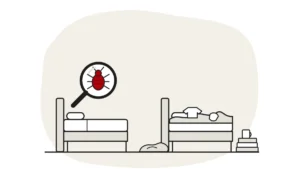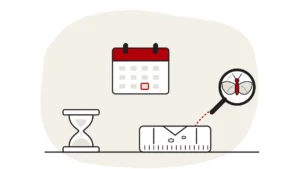
Bed bugs can live for months in a sealed plastic bag. Adults and nymphs can go months without feeding: about 1 to 4 months in a heated building, and potentially a year or longer in cool conditions. A sealed bag holds them in. It doesn’t kill them.
Reviewed by James Rhoades, Owner, ThermoPest · Last reviewed 15 October 2026
Bagging is still one of the most useful things you can do when you find bed bugs. It stops them spreading from one room to the next and keeps clothes and bedding safe until they can be washed, dried or frozen. This guide explains how long bugs last in a bag, why bags don’t suffocate them, and how to bag, label and move your things properly.
How long can bed bugs live in a sealed plastic bag?
Inside a bag, bed bugs can’t reach a person to feed, so the real question is how long they can survive without a blood meal. The answer is: a long time.
Nymphs and adults can persist for months without feeding, which is unusual for insects. As a rough guide:
- Warm, heated homes: a more typical time without feeding is about 1 to 4 months.
- Cool places: potentially up to a year or longer at around 13°C or less.
So a bag left in a warm bedroom won’t be clear in a week or two, and a bag left in a cold garage, shed or loft could still hold live bugs many months later. Cool storage slows them down; it doesn’t finish them off.
What about eggs?
Eggs are glued to fabric, seams and folds, and they can still hatch inside a sealed bag. That means a bag you closed with only a few adults inside can also contain young bed bugs (nymphs) by the time you open it. Treat every bag as if it holds all life stages.
Why There’s No Safe “Wait It Out” Date
Survival depends on temperature, the bugs’ life stage and how recently they fed, none of which you can know for a bag of clothes. That’s why we don’t suggest leaving bags sealed until the bugs die. Washing, drying or freezing the contents is quicker and far more certain.
Can bed bugs suffocate in plastic bags?
Don’t rely on it. Ordinary bin bags and storage bags aren’t truly airtight, and there’s no reliable evidence that sealing items in plastic suffocates bed bugs in any time you could plan around. People often search for how long bed bugs can live without oxygen, but a household bag simply isn’t the low-oxygen setting that question assumes.
Think of the bag as a container, not a treatment. Its job is to keep bugs in one place until the items inside are dealt with.
Do bed bugs die in vacuum-sealed bags?
Vacuum storage bags squeeze most of the air out, but they’re made for storage, not for killing insects. Don’t treat vacuum-packing as a way to get rid of bed bugs. If you use them, use them for clean, treated items, as described below.
Can bed bugs get out of plastic bags?
Not through intact plastic. Bed bugs don’t chew; they feed by piercing skin, so they can’t eat or bite their way through a bag. They get out through gaps: a loose knot, a split seam, a tear from a coat hanger or zip, or a bag that wasn’t closed properly in the first place.
Can bed bugs climb plastic?
Smooth, clean plastic is hard for bed bugs to grip. That’s why plastic interceptor traps work: bugs can’t climb out of their slippery inner surface. The outside of a used, creased bag is a different matter: folds, knots, dust and fabric caught in the seal all give them something to hold. Assume bugs can be on the outside of a bag that was filled in an infested room.
Can bed bugs live on plastic or in plastic containers?
Plastic isn’t somewhere bed bugs choose to hide, but they can crawl over it and shelter in whatever is inside or in the gaps around a lid. A plastic storage box with a well-fitting lid is good for keeping clean, treated items separate. It won’t make infested items safe.
How to Bag Items Properly
A few minutes of care at this stage stops you moving bed bugs around your home while you sort things out.
- Bag items where they are. Take a bag to the bed, wardrobe or chair rather than carrying an armful of clothes through the house.
- Use strong bags. Thick bin bags or clear heavy-duty bags tear less easily. Clear bags let you see what’s inside without opening them.
- Don’t overfill. Leave enough room to twist the neck and tie it tightly. Overstuffed bags split.
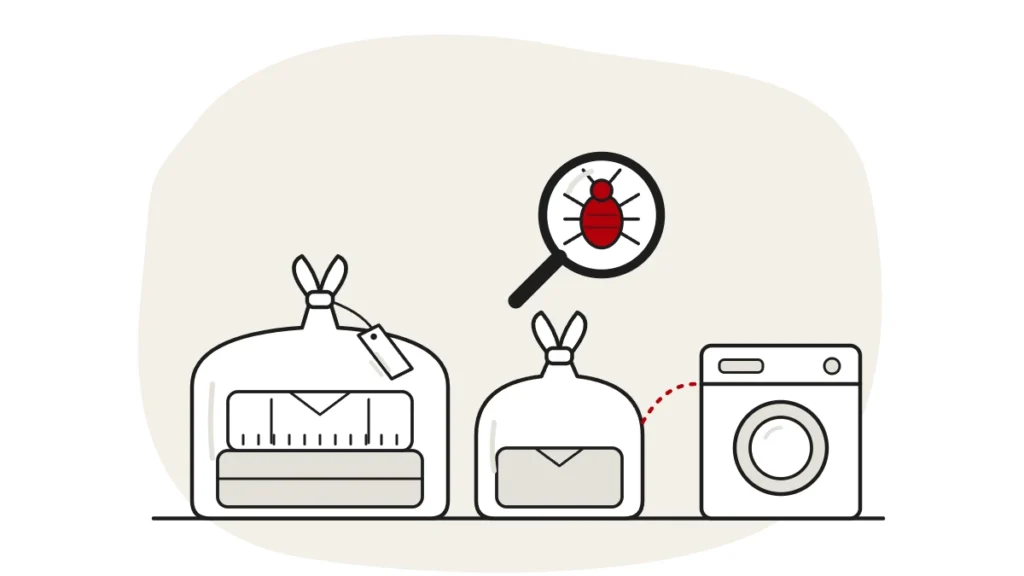
- Seal, then double-bag. Twist, fold over and tie or tape the first bag, then put it inside a second bag and seal that too. If the inner bag tears, the outer one still holds.
- Label each bag. Write what’s inside and whether it’s untreated or treated, for example “bedding: not washed yet” or “jumpers: washed and dried”. It stops treated and untreated items getting mixed up.
- Keep bags off beds and sofas. Stand them on a hard floor away from the bed, ideally in the room you’ll treat them from or near the washing machine.
Moving Bagged Items
- Carry bags straight to where they’ll be treated: the washing machine, tumble dryer or freezer.
- Open the bag over or into the machine drum and tip the contents in, so loose bugs fall in rather than onto the floor.
- Seal the empty bag in a fresh one and put it in an outside bin.
- If you use a shared or public laundry, keep items bagged until they go into the machine. Our guide on heat-based ways to clear bed bugs from clothes covers laundry, dryers and ironing in more detail.
- Moving house or taking things to a relative’s? Don’t move bags of untreated items to a new home. Treat them first so you don’t take the problem with you.
How long should you leave clothes in bags after bed bugs?
Only as long as it takes to treat them. Bagging is a holding step, not a waiting period. Once items are in bags, plan to wash, dry or freeze them as soon as you reasonably can. The table below sets out the options, with the source for each.
| What you’re dealing with | What to do | Source |
|---|---|---|
| Clothes and bedding that can be washed | Hot wash at 60°C, then tumble dry on a hot setting for at least 30 minutes | NHS |
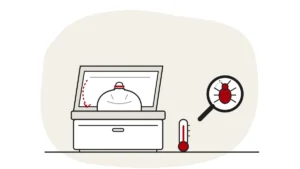
| Items that can’t be washed | Put them in a plastic bag in the freezer for 2 to 3 weeks | NHS |
| Items you’re throwing away | Bag or wrap them in plastic before carrying them out, so bugs don’t drop off on the way | ThermoPest |
| Items waiting for a professional treatment | Follow your technician’s instructions on what to bag and what to leave in place | Your treatment provider |
Always check the care label before a hot wash or tumble dry. For a closer look at which fabrics and garments are most at risk, see can bed bugs live in clothing?
Why You Shouldn’t Store Bagged Items Indefinitely
- Bugs can survive for months, especially somewhere cool, so the problem is still there when you open the bag.
- Bags get knocked, torn and moved, and every move is a chance for bugs to escape somewhere new.
- Bags left in lofts and garages get forgotten, then opened months later after the rest of the home has been treated.
Once Items Are Treated
Put washed, dried or frozen items straight into clean, new bags or sealed plastic boxes, and label them as treated. Keep these clean bags away from untreated rooms until the infestation has been dealt with.
Disposing of Bagged Items
You don’t need to throw things away just because they’ve had bed bugs on them. Most clothes, bedding and soft toys can be washed, dried or frozen. If you do decide to get rid of something, bag or wrap it in plastic first so bugs aren’t shaken off as it’s carried out. Mark large items such as mattresses so nobody takes them home. Our guide on how to dispose of bed bug-infested items explains the safest way to do it.
Bagging Won’t Clear an Infestation
Bags protect your belongings; they don’t reach the bugs living in mattress seams, bed frames, skirting boards and furniture joints. Those bugs will keep feeding, and any you’ve missed will find your clean clothes again.
Avoid shop-bought foggers, bug bombs and smoke bombs. They tend to scatter bed bugs into new hiding places, including other rooms and neighbouring flats, which makes the problem harder to treat.
Professional treatment deals with the room itself. At ThermoPest our approach is heat-led, with targeted spray where it’s needed, so it reaches the cracks and seams where bugs and eggs hide. If you’ve booked with us, our bed bug heat treatment preparation guide explains what to do with clothes, bedding and other belongings before the visit. Follow-up visits may be needed, and in flats we ask to inspect neighbouring flats too, because bed bugs can move between them.
FAQs
How long does it take for bed bugs to die in a plastic bag?
There’s no reliable time. Bed bugs typically survive about 1 to 4 months without feeding in a heated home, and potentially a year or longer in cool conditions. Washing, drying or freezing the contents is much more reliable than waiting.
Can you suffocate bed bugs in bags?
Don’t count on it. Household bags aren’t fully airtight, and there’s no reliable evidence that bagging suffocates bed bugs within a practical time. Use bags to contain items, then wash at 60°C and tumble dry hot for at least 30 minutes, or freeze for 2 to 3 weeks, as the NHS advises.
Can bed bugs survive in a vacuum-sealed bag?
Yes, you should assume they can. Vacuum storage bags remove most of the air but are made for storage, not for killing insects. Treat items first, then use vacuum bags or sealed boxes to keep clean things separate.
Can bed bugs get out of plastic bags?
Not through intact plastic, because bed bugs can’t chew. They escape through loose knots, tears and split seams. Double-bag, tie each bag tightly, don’t overfill, and keep bags on a hard floor away from beds and sofas.
How long should I keep clothes in bags after bed bugs?
Only until you can wash, dry or freeze them. Bagging is a holding step. Once items are treated, move them into clean, labelled bags or sealed boxes and keep them away from untreated rooms until the infestation has been dealt with.
Bagging things up and not sure what’s next?
If you’ve found bed bugs on clothes or bedding, the bugs in the room itself still need dealing with. ThermoPest is a member of the BPCA and NPTA. Our technicians arrive in unmarked vans and will tell you exactly what to bag before treatment.