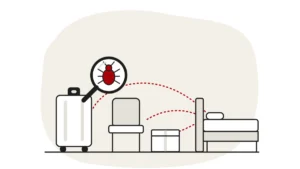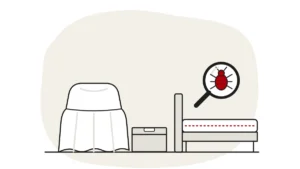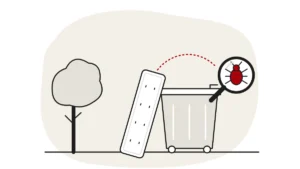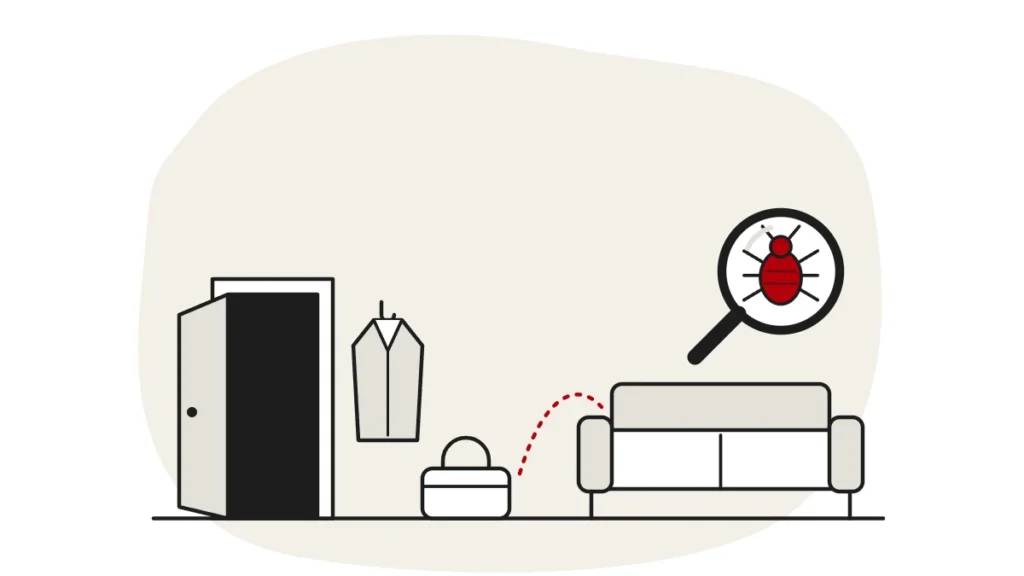
Yes, someone can bring bed bugs to your home, but not in the way people often fear. Bed bugs don’t live on people the way lice do. They travel tucked into bags, coats, luggage and other belongings, so the risk comes from what a visitor puts down, not from sitting next to them or a hug.
Reviewed by James Rhoades, Owner, ThermoPest · Last reviewed 16 October 2026
If a friend has just told you they’ve got bed bugs, or someone stayed over and you’re now lying awake wondering, this guide explains how likely it really is, how bed bugs hitch a ride, what to do before and after a visit, and the signs to watch for in the weeks afterwards.
Can a person carry bed bugs?
Not on their body, as a rule. Bed bugs normally don’t live on or attach to people the way lice or ticks do. They feed on blood while you sleep, then crawl off to a hidden spot nearby to digest it.
What a person can do is carry them on their belongings. The British Pest Control Association (BPCA) says bed bugs latch onto items such as luggage, clothing and second-hand furniture and are transported into homes that way, and its public advice leaflet says they’re commonly introduced after attaching themselves to luggage, bags and clothes. A bug or a few eggs in a bag seam or a coat hem can travel with someone without them having any idea.
Can bed bugs spread from person to person?
Not directly. Bed bugs aren’t contagious like a cold or head lice, and you can’t catch them by shaking hands, hugging, or sitting next to someone on a bus. They don’t jump or fly.
It’s also worth knowing they aren’t known to spread disease. The BPCA says that, while bed bugs can harbour various pathogens, transmission to humans hasn’t been proven and is believed to be unlikely. The NHS says the bites can be itchy but don’t usually cause other health problems. The worry is real, but the risk to your health is low.
How likely is it that a visitor brings bed bugs into your home?
For a short visit, the chance is low. You’re unlikely to pick up bed bugs by simply walking into an infested home during the day, and the same logic works the other way round: a guest who pops in for a cup of tea and keeps their coat on is unlikely to leave bed bugs behind.
The risk goes up when:
- the visitor comes from a home with a heavy or long-standing infestation;
- they bring bags, a suitcase or bedding, especially for an overnight stay;
- their bag or coat goes on your bed or sofa, where any bug that crawls out is close to someone to feed on;
- they sleep in your home, so bugs have a host nearby straight away;
- items are brought from their home to yours, such as clothes, cushions or furniture.
Not every exposure leads to an infestation, but it doesn’t take many bugs to start one, so a few simple precautions are worthwhile.
How can visitors carry bed bugs in?
Bed bugs like tight, dark places, and the things people carry around are full of them. Luggage, clothing, beds, furniture and other belongings are the usual ways bed bugs are carried into homes, and they can also come in on shoes.
| Item | Where bed bugs hide | What to do |
|---|---|---|
| Handbags and backpacks | Seams, zips, inside pockets and linings | Keep them on a hard floor or a hard chair, not the bed or sofa |
| Coats and jackets | Hems, cuffs, collars and pocket seams | Hang on a hook or coat stand in the hallway |
| Suitcases and holdalls | Piping, wheel housings, folds and inner pockets | Keep on a hard floor away from the bed; don’t store under it |
| Bedding and pillows | Seams and piping | Use your own bedding for guests where you can |
| Furniture and cushions | Joints, staples, zips and fabric folds | Don’t take items from an infested home until it’s been treated |
What to Do Before and After a Visit
Before Someone Visits
- Set up a drop zone. A hard floor in the hallway, a coat hook and a hard chair are all better places for bags and coats than a bed or sofa.
- Keep the bedroom out of it. There’s no need for guests’ bags to go into bedrooms during a short visit.
- Clear clutter near the bed. The NHS advises keeping clutter away from your bed and vacuuming regularly. It also makes it far easier to spot anything early.
After Someone Visits
- Check where their things were. With a torch, look at the floor, skirting and furniture around where bags and coats were put down, and the seams of any cushions or sofa they sat on.
- Wash anything that may have been in contact. The NHS advises a hot wash at 60°C and tumble drying on a hot setting for at least 30 minutes for affected bedding and clothing. For guest bedding after an overnight stay from an infested home, do this straight away.
- Vacuum slowly along sofa seams, skirting boards and the area where bags sat, then empty the vacuum outside in a sealed bag.
- Don’t spray. Shop-bought sprays, foggers and bug bombs tend to scatter bed bugs into new hiding places. If there’s nothing there, spraying achieves nothing; if there is, it makes the problem harder to find and treat.
If you sleep in a bed with bed bugs, will you bring them home?
It’s possible, and staying overnight carries more risk than a daytime visit, because you’re sleeping where the bugs feed and your bags and clothes are close by for hours. That doesn’t mean you will. A few habits lower the risk a lot:
- Keep your bag zipped and off the bed and floor around it, ideally on a hard surface such as a table or a luggage rack. The same advice works for travel.
- Take only what you need, and pack clothes in a sealed plastic bag inside your case.
- When you get home, unpack in the hallway or bathroom rather than the bedroom, put clothes straight into the wash at 60°C and tumble dry them hot for at least 30 minutes, as the NHS advises.
- Check your bag’s seams, pockets and zips with a torch before putting it away.
The same habits help after a hotel stay; our guide on dealing with bed bugs in luggage covers suitcases in more detail. If the risk is at your workplace rather than a friend’s home, see our practical guide on how to avoid bringing bed bugs home from work.
My friend or relative has bed bugs: what should I do?
First, be kind. Bed bugs feed on blood, not dirt, so anyone can get them, in any home. People often feel embarrassed, and someone who’s been made to feel ashamed is less likely to tell anyone or get it treated, which is worse for everyone. If they’ve told you, they’ve done the right thing.
Visiting Them
You don’t have to stop seeing them. Our advice for visiting a home with bed bugs is practical:
- bring in only what you need, and avoid putting coats and bags on beds;
- sit on hard, non-upholstered chairs rather than sofas or beds;
- wrap anything you carry out in plastic;
- wash or dry your clothes on a hot setting when you get home.
Meeting somewhere else, such as a café or your garden, is also fine until their home has been treated. Say it gently and make it about the bugs, not them.
Having Them to Stay
If it can wait, it’s sensible to put off overnight stays until their home has been treated. If it can’t, ask them to bring as little as possible, with clothes washed and dried hot first and packed in a sealed bag. Keep their bag on a hard surface away from the bed, give them your own bedding, and wash it at 60°C afterwards.
Helping Them Deal With It
Encourage them to get it confirmed and professionally treated rather than trying sprays or foggers. The BPCA says DIY treatments often fail, and its leaflet says self-treating a bed bug infestation with amateur pesticides is highly unlikely to be successful. If they rent, their landlord may need to be involved; our guide to what to do if your landlord won’t treat bed bugs explains the steps. If they live in a flat, our guide on whether bed bugs can come from neighbours explains why the flats around them should be checked too.
Signs to Watch for After a Visit
Bed bugs hide well, and the first signs are easy to miss. Over the following weeks, keep an eye out for:
- Bites on skin left uncovered in bed. The BPCA describes them as red, irritating bites, often in rows on the neck, shoulders, back, legs or arms. Some people don’t react to bites at all, so don’t rely on bites alone.
- Spots of blood on sheets or pillowcases, which the NHS lists as a sign.
- Small brown spots on the mattress, sheets or bed frame, which the NHS says are bed bug droppings.
- The bugs themselves. The NHS says adults are around 5mm long and can be dark yellow, red or brown. Young bugs are smaller and paler.
- Pale shed skins in mattress seams, along the bed frame and behind the headboard.
Our guide on how to check for bed bugs shows where to look. If you find something, catch it on clear tape or in a sealed bag so it can be identified, and avoid moving things between rooms. If you’ve already found them in one room, read whether bed bugs in one room means they’re in all of them.
For itchy bites, the NHS advises a cool, damp cloth, keeping the area clean and not scratching. A pharmacist can suggest something to ease the itch, and you should see a GP or contact NHS 111 if bites are still very painful, swollen or itchy after pharmacy treatment, or the pain or swelling is spreading.
Who is responsible if someone brings bed bugs into your home?
This is general information, not legal advice. Checked: October 2026. In practice it’s rarely possible to show exactly where bed bugs came from, especially in a home with regular visitors. If you rent, tell your landlord in writing as soon as you find signs; who has to deal with it depends on your tenancy and where you live in the UK. Keep dated photos and a note of what you’ve found. Our guides to bed bug laws and regulations and bed bugs and the Renters’ Rights Act explain more.
If Bed Bugs Have Got Into Your Home
The earlier an infestation is found, the easier it is to deal with. Our treatment is heat-led, with targeted spray where it’s needed, and heat reaches the seams, joints and gaps where bugs and eggs hide.
Bed bugs and their eggs die when held above about 50°C for long enough. We heat rooms to 50–60°C and hold that heat until the hardest-to-reach spots stay above 50°C. Rooms don’t heat evenly, so we place temperature monitors in known cold spots and hard-to-reach areas.
Residential rooms can usually be re-entered two hours after a heat treatment, unless the technician advises otherwise. Return visits may be needed. Read how our bed bug heat treatment works.
FAQs
If someone has bed bugs and comes to your house, will you get them?
Not necessarily, and after a short visit it’s unlikely. Bed bugs don’t live on people, so the risk comes from bags, coats and other belongings. Keep their things on a hard floor or chair, away from beds and sofas, and check those spots afterwards. Overnight stays carry more risk than a quick visit.
Can you get bed bugs by hugging someone?
No. Bed bugs don’t live on skin or hair the way lice do, and they don’t jump or fly, so a hug, a handshake or sitting next to someone won’t pass them on. They travel in belongings, such as a bag seam or a coat hem.
Can you get bed bugs from walking into someone’s house?
It’s unlikely. You’re unlikely to pick up bed bugs by simply walking into an infested home during the day. To lower the risk further, sit on hard chairs, keep your coat and bag off beds and sofas, and wash your clothes hot when you get home.
Do bed bugs live on clothes?
Not usually on the clothes you’re wearing, but they can hide in clothes that have been left near where they live, such as on a bedroom floor. The NHS says bed bugs can hide on clothing. Washing at 60°C and tumble drying hot for at least 30 minutes, as the NHS advises, deals with washable items.
My friend has bed bugs and sat in my car. What should I do?
Don’t panic: a short journey is low risk. Vacuum the seats, seams and footwells, and check where they sat with a torch. Bed bugs prefer to live near where people sleep, so a car isn’t a place they usually settle. If you find anything, catch it so it can be identified.
Worried a visitor has brought bed bugs in?
If you’ve found bites, marks on the mattress or a bug you can’t identify, an inspection will confirm what you’re dealing with. ThermoPest is a member of the BPCA and NPTA, and our technicians arrive in unmarked vans.