Bed bug guides

4.9 / 5 on Google


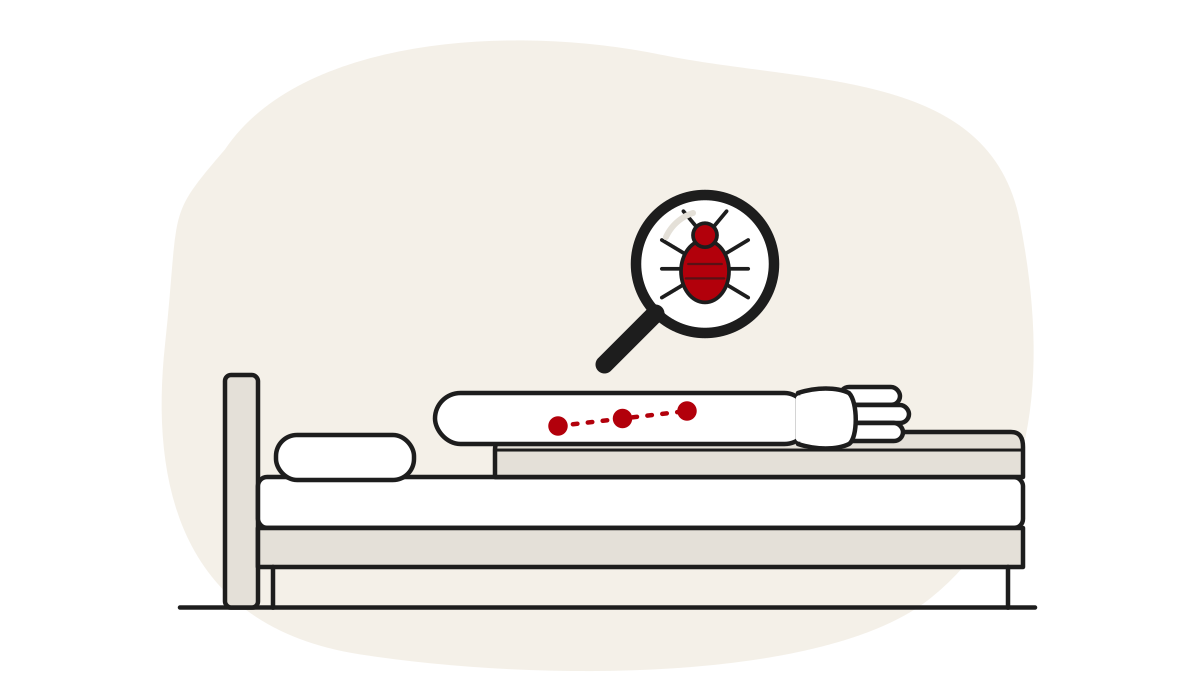
Bed bug bites are small, raised, itchy bumps, often in a line or a tight group on skin left uncovered in bed, such as the face, neck and arms. The NHS says they usually look red or pink on white skin, and brown, red or purple on black or brown skin, where they can be harder to see.
Reviewed by James Rhoades, Owner, ThermoPest · Last reviewed 15 October 2026
Waking up with new bites and not knowing why is unsettling. This guide shows what bed bug bites look like, the patterns they make, where they tend to appear, how they compare with other bites and rashes, and when to speak to a pharmacist, GP or NHS 111. We’re pest specialists, not doctors, so we describe the signs rather than diagnose them. The health guidance below comes from the NHS page on bedbugs.
Bed bugs feed on blood while you sleep. The NHS describes their bites as raised and itchy, often in a line or grouped together. Some people notice them the next morning, but for many the marks take a few days to appear.
Bites usually look like small red or pink bumps. Some have a slightly darker spot in the middle. Scratched bites can look redder and more swollen than fresh ones.
The NHS says bites may look brown, red or purple and may be harder to see. They can be easier to feel than to spot, so run your hand over the skin and check in good light. A line or group of raised bumps is a stronger clue than colour alone.
People react very differently. The NHS notes that some people have a strong reaction, with intense itching and possibly painful swelling, so a few bites can look like larger welts. Some people show no physical signs at all. That’s why one person in a bed can be covered in bites while their partner has none.

The pattern is often more telling than any single bite. A bed bug may feed, move a little and feed again, which is why bites so often sit close together.
Small or very faint bites don’t tell you much on their own. Young bed bugs (nymphs) feed too, and how big a bite looks depends mostly on how your skin reacts.
Bed bugs bite skin they can reach while you’re asleep. The NHS says bites are often on skin exposed while sleeping, like the face, neck and arms, but any skin they can reach is at risk, including the hands. In practice that often means:
For a fuller guide to the most common spots, see where bed bugs bite on the body. If you’re wondering whether pyjamas help, we cover that in can bed bugs bite through clothes?

Bites don’t always show up straight away. Many people don’t notice bite marks until a day or several days after the bite, and in some people they can take up to around two weeks to appear. So the bites you see today may come from a night some days ago, which can make it hard to link them to a hotel stay, a visitor or a second-hand item.
Fresh bites tend to look pinker and itchier. Over the following days they usually flatten and fade, and scratched bites may scab. The NHS says bites usually clear up on their own in about a week. If new bites keep appearing while old ones fade, the bugs are probably still nearby. Our guide on how long bed bug bites last and how to stop the itch goes into more detail.
Bed bug bites can look very similar to mosquito or flea bites, so the marks alone rarely settle it. Use the table as a rough guide, then check the bed.
| Mark | Typical look | Where | Clues |
|---|---|---|---|
| Bed bug bites | Small, raised, itchy bumps, often in a line or group | Skin uncovered in bed: face, neck, arms, hands | New bites after nights in the same bed; spots on sheets or mattress seams |
| Mosquito bites | Single, puffy bumps, scattered at random | Any exposed skin | Time outdoors or a window open; the buzzing |
| Flea bites | Tiny, very itchy bumps in small groups | Mostly ankles and lower legs | Pets in the home; bites after sitting on carpets or sofas |
| Hives | Raised welts that change shape and size | Anywhere, including under clothes | Welts fade and move within hours; a possible trigger |
| Heat rash | Tiny spots or a prickly rash | Where you sweat: skin folds, under clothes | Eases once you cool down |
Hives cause the most confusion, because a strong reaction to bites can look like hives. Our guide to bed bug bites vs hives explains how to tell them apart, including a simple pen-circle test. If your skin reacts badly, see our guide to allergic reactions to bed bug bites.
It’s common to have bites and find nothing in the bed. Bed bugs are small, flat and good at hiding in seams, joints and cracks, and a light infestation can be easy to miss. Equally, the marks may be something else: other insects, a skin condition or a reaction to a new product. Our guide to getting bitten at night with no bed bugs in sight covers what to check next.
This section is general information, not medical advice. Bed bugs aren’t known to spread disease, and the NHS says their bites do not usually cause other health problems. The NHS suggests:
A pharmacist can advise on treatments for itching, such as a mild steroid cream or an antihistamine, and check they’re suitable for you. The NHS says children under 10 and pregnant women should get advice from a doctor before using hydrocortisone cream.
The NHS advises seeing a GP if bites are still very painful, swollen or itchy after pharmacy treatment, or if pain or swelling around the bites is spreading, as you may have an infection. If you can’t get a GP appointment, contact NHS 111.
A severe allergic reaction is rare, but the NHS says to call 999 if your lips, mouth, throat or tongue suddenly swell, your throat feels tight or you’re struggling to swallow or breathe. See the NHS page on insect bites and stings for the full list of warning signs.
Children’s skin can react strongly, and young children find it hard not to scratch. Don’t try to work it out alone. The NHS advises calling 111 for advice about a child under 5 who has been bitten, and seeing a GP if a baby under 1 has an insect bite. Speak to a pharmacist or GP before using any cream on a child.
The marks on your skin are only half the evidence. The NHS lists signs to look for around the bed:
With a torch, check mattress seams, piping and labels, the bed frame joints and headboard, and nearby furniture. Our step-by-step mattress check shows where to look, and what bed bugs look like helps you recognise adults, nymphs and eggs. If the bites keep coming but you can’t find anything, a professional bed bug inspection will confirm what you’re dealing with.
Treating the bites won’t stop new ones while the bugs are still in the bedroom. The NHS says getting rid of bed bugs yourself is very difficult and unlikely to be complete, and advises contacting your local council or a pest control service. In the meantime, the NHS suggests washing affected bedding and clothing at 60°C and tumble drying on hot for at least 30 minutes. Avoid foggers, bug bombs and smoke bombs: they tend to scatter bed bugs into new hiding places, including neighbouring rooms.
At ThermoPest our approach is heat-led, with targeted spray where it’s needed, so it reaches the seams, joints and cracks where bugs and eggs hide. Read how bed bug heat treatment works. ThermoPest is a member of the BPCA and NPTA, and our technicians arrive in unmarked vans. If you live in a flat, we’ll ask to inspect neighbouring flats too, because bed bugs can move between homes. A return visit may be needed to make sure the problem is cleared.
4.9 / 5 on Google
FAQs
Can’t see your question? Call 0808 189 2310 and speak to a specialist.
Not always straight away. Many people don’t notice bite marks until a day or several days after being bitten, and in some people they can take up to around two weeks to appear. That delay can make it hard to know where or when you were bitten.
Usually, yes. The NHS describes them as raised and itchy, and some people have intense itching and swelling. Others barely react, and some people show no physical signs at all. Try not to scratch, and ask a pharmacist about something to ease the itch.
Both people are probably being bitten, but reactions vary a lot. In our experience, bites affect each person differently, and some people have no visible marks. So a partner with no bites doesn’t mean there are no bed bugs. Check the mattress seams and bed frame for signs.
Bed bugs aren’t known to spread disease, and the NHS says bites usually clear up on their own in about a week. Scratching can lead to infection, so see a GP if pain or swelling spreads. Call 999 if your lips, mouth or throat swell or you struggle to breathe.
Keep the bites clean, use a cool, damp cloth for the itch and help them avoid scratching. The NHS advises calling 111 about a child under 5 who has been bitten, and seeing a GP for a baby under 1. Ask a pharmacist or GP before using any cream on a child.
You can have bites and not find any bugs, because bed bugs hide well and a light infestation is easy to miss. The marks may also be something else, such as other insect bites or a rash. If you can’t find anything but the bites keep coming, an inspection will confirm what’s going on.
Not sure if it's bed bugs?
Found bites and not sure if it’s bed bugs? An inspection will confirm what you’re dealing with. ThermoPest is a member of the BPCA and NPTA, and our technicians arrive in unmarked vans.
Prefer to call? 0808 189 2310
Talk to a specialist
Speak to a bed bug expert today. Tell us what you’ve found and we’ll come back to you with the right next step.
Enter Your Details To Request A Call Back
Enter Your Details To Request A Call Back


