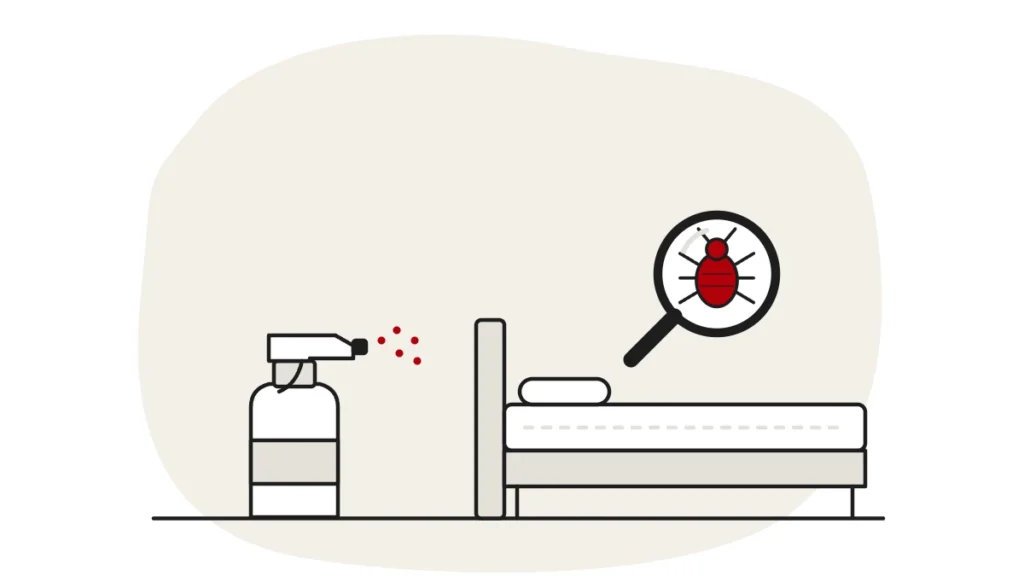
Sometimes, but not reliably. Permethrin is a pyrethroid insecticide, and it can kill bed bugs it reaches directly. But many bed bug populations are now resistant to pyrethroids, and a spray can’t reach the bugs and eggs hidden in seams and cracks. On its own, permethrin is very unlikely to clear an infestation.
Reviewed by James Rhoades, Owner, ThermoPest · Last reviewed 15 October 2026
If you’ve read that permethrin is the answer to bed bugs, it’s worth knowing what the evidence says before you spray anything. Below is what it is, why resistance matters, how to stay safe (especially with a cat), and what to do instead.
What is permethrin?
Permethrin is a synthetic insecticide from the pyrethroid group. Pyrethroids are man-made chemicals modelled on pyrethrins, the natural insecticides found in chrysanthemum flowers. They work by attacking an insect’s nervous system. Other pyrethroids you may see on labels include cypermethrin, deltamethrin and bifenthrin.
In the UK you’re most likely to come across permethrin in two very different places:
- Household insect sprays. The PDSA notes that permethrin is found in some household flea sprays, as well as in dog spot-ons, shampoos, sprays and collars.
- A medicine for scabies. Permethrin cream is a medicine. NHS prescribing guidance, such as NHS Lanarkshire’s scabies guidance, lists it as a treatment for scabies, a skin condition caused by mites.
These are not interchangeable. A medicinal cream is made to go on skin for a specific condition. A household spray is made to go on surfaces. Neither is a reliable bed bug treatment.
Is permethrin effective against bed bugs?
Permethrin can kill a bed bug that gets a direct dose, as long as that bug isn’t resistant. The problem is that resistance to pyrethroids, the group permethrin belongs to, has been found in bed bugs around the world.
What the Research Says About Resistance
- It’s been found in many countries. Pyrethroid resistance has been documented in many parts of the world, in both the common bed bug and the tropical bed bug.
- Bed bugs resist in several ways. Researchers have found bugs with thicker or remodelled outer skin that lets less insecticide in, bugs with more of the enzymes that break insecticides down, and genetic changes (known as kdr mutations) that stop the insecticide working on their nerves.
- Resistance to one pyrethroid often means resistance to others. Bugs that tolerate one insecticide in this class often tolerate others in the same class too. So switching from permethrin to cypermethrin, for example, may not help.
Closer to home, the NHS says bed bugs may be resistant to some insecticides. You can’t tell by looking whether the bugs in your home are resistant, which is why a spray that “works” on a few bugs can still leave the infestation going.
Does permethrin kill bed bug eggs?
Don’t count on it. Bed bug eggs are tiny, pale and glued into seams, joints and cracks, often deep inside the bed frame or headboard where a surface spray doesn’t reach. We haven’t found a UK label or official source that says a household permethrin spray deals with bed bug eggs. Any eggs that survive will hatch, and the cycle starts again.
Can you spray permethrin on your bed or mattress?
We wouldn’t advise it. A mattress is where you lie for hours with your face close to the surface. Unless your product’s label specifically lists mattresses, don’t spray one. Even professionals usually won’t spray the sleep surface or seating areas.
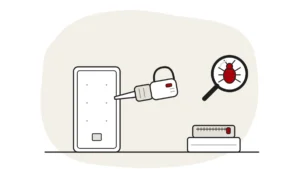
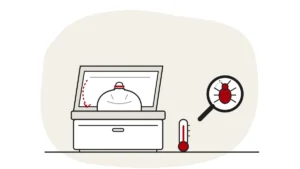
If you’ve already used a product, follow the label on your can exactly, and never use it anywhere the label doesn’t list. For bedding and clothes, there are safer steps you can take. The NHS advises washing them on a hot wash (60°C) and tumble drying on a hot setting for at least 30 minutes. For items you can’t wash, it suggests sealing them in a plastic bag in the freezer for 2 to 3 weeks.
Does permethrin cream work for bed bugs?
No. Permethrin cream is a medicine for scabies. It isn’t meant to treat bed bugs, and it won’t do anything about the bugs hiding in your bed and furniture. Please don’t put it on bedding, furniture or anyone’s skin to try to deal with bed bugs.
If your bites are very itchy, or you’re unsure whether it’s bed bugs or something else such as scabies, speak to a pharmacist, who can tell you if you need to see a GP. If you’re worried or feel unwell, call NHS 111. Bed bugs aren’t known to spread disease, and the NHS says their bites don’t usually cause other health problems.
Is permethrin safe to use at home?
Permethrin products sold for home use are meant to be used exactly as the label says. They’re still insecticides, so treat them with care.
Cats Are Highly Sensitive to Permethrin
This is the most important safety point. According to the PDSA, cats don’t have the protein needed to break permethrin down, so it can build up in their body to toxic levels. The PDSA says:
- poisoning most often happens when a dog flea treatment is put on a cat by accident;
- cats can also be poisoned through contact with a treated dog, for example when grooming or sharing a bed;
- common signs include drooling, twitching and seizures, which can appear within a few hours or take up to 36 hours.
If you have a cat, don’t use permethrin products around it, and if you think your cat has been exposed, contact your vet straight away.
General Care With Any Insecticide Spray
- Follow the label, and use the product only where it says.
- Keep children and pets out of the room until it’s dry and aired, and check the label for advice about fish tanks.
- Ventilate well and keep the spray away from your face and eyes.
- Keep aerosols away from flames and heaters, and don’t pierce or burn the can.
If someone feels unwell after using a spray, speak to a pharmacist, your GP or NHS 111. If someone swallows any, call NHS 111, or 999 if they’re seriously unwell. Keep the can to hand so you can say what’s in it.
Why won’t a permethrin spray clear a bed bug infestation?
An infestation is a population living in places you can’t see, at every stage from egg to adult. To clear it, a treatment has to reach those hiding places, deal with eggs as well as bugs, and be checked afterwards. A DIY spray struggles with all three:
- Most bugs are hidden. Bed bugs often hide in the seams, folds and crevices of the mattress, base, bed frame and headboard, and can live in almost any crevice or protected place.
- The effect wears off. Most bed bug sprays sold to householders have limited effect once the spray has dried.
- Resistance. If the bugs in your home tolerate pyrethroids, spraying more won’t change that.
- False reassurance. Killing the bugs you can see can make it look as if the problem has gone, while the rest keep breeding out of sight.
Foggers and bug bombs aren’t the answer either. Total release foggers are ineffective against bed bugs. They also tend to scatter bugs into other rooms and neighbouring flats rather than clear them. The NHS says there are some things you can try yourself, but these are unlikely to get rid of bed bugs completely, and recommends contacting your local council or a pest control service.
For more on what you can and can’t do on your own, see our guide on whether you can get rid of bed bugs yourself. If you’re wondering how professional insecticides fit in, our guide to chemical bed bug treatment and its limits explains more.
What about other sprays that contain permethrin?
Some household flea sprays contain permethrin alongside other ingredients. Our guide on whether Indorex kills bed bugs looks at one of the best known, and our guide on whether flea spray kills bed bugs covers flea sprays more generally. The same limits apply. For other household fixes, see our guides on whether Dettol kills bed bugs and whether UV light kills bed bugs.
What should you do instead?
Confirm what you’ve found first: live bugs, small dark spots or pale shed skins in mattress seams, the bed frame and headboard. Adult bed bugs are around 5mm long, according to the NHS. Wash and dry bedding on hot as above, don’t move to the sofa or another room (bugs follow people), and tell your landlord or managing agent if you rent or live in a flat. Then get an inspection so you know how far it’s spread before anything is treated.
ThermoPest’s bed bug heat treatment is heat-led, with targeted spray where it’s needed. Heat reaches into the seams, joints and cracks where bugs and eggs hide, and it doesn’t depend on whether the bugs are resistant to an insecticide. Return visits may be needed, and in flats we ask to inspect neighbouring flats too. For a wider look at your options, see our guide on how to get rid of bed bugs.
FAQs
Will permethrin kill bed bugs on contact?
It can kill a bed bug it hits directly, if that bug isn’t resistant. Pyrethroid resistance has been found in bed bugs in many parts of the world, so some bugs may survive even a direct spray. It won’t reach the bugs hidden in your bed and furniture.
Does permethrin spray kill bed bug eggs?
Don’t rely on it. Eggs are glued deep into seams and cracks where a surface spray is unlikely to reach, and we haven’t found an official UK source saying a household permethrin spray deals with them. Eggs that survive will hatch.
Can I spray permethrin on my bed?
We wouldn’t advise it, unless your product’s label specifically allows it. Even professionals usually avoid spraying sleep surfaces. Hot wash and tumble dry bedding as the NHS advises, and consider a mattress encasement instead.
Does cypermethrin kill bed bugs better than permethrin?
Not necessarily. Cypermethrin is also a pyrethroid, and resistance to one pyrethroid often means resistance to others in the same class, so switching between them may not help.
Is permethrin safe for cats?
No. The PDSA says cats can’t break permethrin down properly and can be poisoned by it, including through contact with a treated dog. If you think your cat has been exposed, contact your vet straight away.
Tried a spray and still getting bitten?
You’re not alone, and it isn’t your fault. An inspection will confirm what you’re dealing with and how far it’s spread. ThermoPest is a member of the BPCA and NPTA, and our technicians arrive in unmarked vans.