Bed bugs can survive outside for a while, but they don’t live there. They’re indoor insects that depend on people for food and shelter, so they don’t set up home in gardens, grass or trees. The real risk is furniture, bags or bedding that sits outside briefly and then carries live bugs back indoors.
Reviewed by James Rhoades, Owner, ThermoPest · Last reviewed 15 October 2026
If you’ve seen a mattress dumped by the bins or are wondering whether putting things in the shed will help, this guide explains what happens to bed bugs outdoors, how weather affects them, and which outdoor spaces are worth checking.
Do bed bugs live outside?
No. Bed bugs feed on blood, mostly human, and after each feed they hide in a dark crack close to where people sleep or sit. That’s why they’re found in mattress seams, bed frames, headboards and sofas, not in soil, grass or plants. In our experience the mattress, bed base, bed frame and headboard are their usual hiding places, followed by upholstered chairs and sofas.
A bed bug outside is almost always one that has been carried there on something from a home, such as a mattress, sofa, bag or bedding. Airing cushions or bedding on a balcony or patio isn’t a treatment: the bugs come back in with them.
Can bed bugs live in grass or in the garden?
No. Bed bugs don’t live in lawns, flower beds, hedges or woodland, and they don’t come in from the garden on your shoes. If you’re finding small insects that seem to come from outside, they’re more likely to be something else, such as carpet beetles, fleas from a pet, or other garden bugs. Our guide to how you get bed bugs explains the routes that do matter.
How long can bed bugs survive outside?
There isn’t a single figure for outdoor survival, because it depends on the temperature, how sheltered the bug is, its life stage and when it last fed. What we do know is that bed bugs are good at going without food. Nymphs and adults can go months without feeding, and they survive longer without a blood meal at cooler temperatures; in a heated home, a few months is more typical.
So bed bugs tucked inside a mattress or sofa left outside won’t die off in a day or two, and if it’s brought indoors they can start feeding again. Our guide on how long bed bugs can survive without feeding goes into this in more detail.
Will bed bugs die outside?
Some will, eventually, but you can’t rely on it. A bug exposed on a bare surface in bad weather is in a far worse position than one hidden deep in upholstery. Eggs are glued into seams and joints, so they stay put when furniture is left out.
Can bed bugs survive outside in the rain?
Bed bugs aren’t adapted to living in the rain, and a bug caught on an exposed surface in a downpour may be washed away. But most bed bugs on an item left outside aren’t sitting on the surface. They’re inside seams, folds, joints and the padding of mattresses and sofas, where rain may not reach them, or may only soak the outer layers.
Rain doesn’t drown bed bugs quickly either: they float, cling on and can recover after a soaking. We explain why in can bed bugs survive in water?
Can bed bugs survive outside in winter?
Cold slows bed bugs down, but it takes sustained, severe cold to kill them. Bed bugs will die at temperatures below freezing (0°C), but only if the freezing temperatures are kept up for a long time, often a week or two or more.
Bed bugs can survive surprisingly hard frosts for days at a time, and killing every life stage, including eggs, needs deep cold held for several days without a break.
Outdoor temperatures go up and down, and bugs inside a mattress or sofa are partly sheltered from the coldest air, so leaving things outside over winter, or in an unheated shed, isn’t a dependable way to kill bed bugs. If you want to use cold for small items, the NHS suggests putting items that can’t be washed in a plastic bag in the freezer for 2 to 3 weeks.
Can bed bugs survive outside in summer?
Yes, often more easily than in winter. Warm weather doesn’t harm bed bugs in the way people sometimes hope, and a typical British summer’s day isn’t hot enough to rely on to kill them. An item left out in the sun may heat up on the surface, but the inside of a mattress, sofa or bag stays cooler, and that’s where the bugs and eggs are.
Where Bed Bugs Can Turn Up Outside the Home
Bed bugs don’t live outdoors, but these are the places where they can survive for a while and then get carried back in.
| Place | Risk of bed bugs | What to do |
|---|---|---|
| Garden, lawn, flower beds | Very low | Nothing special; bed bugs don’t live in soil or plants |
| Garden furniture and cushions | Low, unless brought out from an infested room | Check seams and folds if the cushions were indoors |
| Car | Possible, if bugs are carried in on bags or clothes | Check seats and seams; keep infested items bagged |
| Shed or garage | Possible, if infested items are stored there | Don’t rely on storage to kill bugs; check items before bringing them in |
| Furniture left on the street | Higher | Leave it alone; don’t take it home |
| Bins and bin stores | Possible, where infested items are dumped | Bag infested items before carrying them out |
Cars
Bed bugs can end up in a car on bags, coats, luggage or furniture, and seats have plenty of seams to hide in. Large infestations in cars are unusual because people don’t sleep in them, but a few bugs can be carried from the car into the home. Our guide to whether bed bugs can infest cars explains how to check and what to do.
Sheds and Garages
Moving an infested bed, sofa or boxes of clothes into the shed or garage doesn’t kill the bugs. They can go a long time without feeding, and an outbuilding doesn’t stay cold enough for long enough. When the items come back in, so can the bugs, so check stored items carefully outside first.
Furniture Left Outside
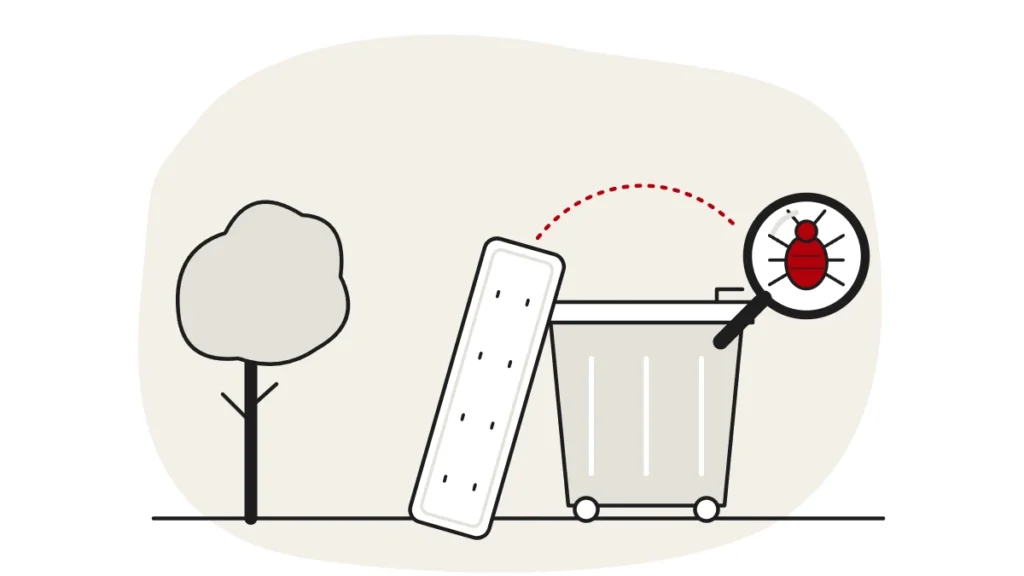
This is the outdoor route that matters most. Mattresses, sofas and bed frames left on pavements, in front gardens or by communal bins are sometimes there because they had bed bugs. Discarded beds and sofas might be infested and should be left alone, so don’t bring them into your home. The NHS also advises not bringing second-hand furniture indoors without carefully checking it first.
Bins and Bin Stores
Infested mattresses and bedding often end up in bin stores and by communal bins, and bugs can move out of items while they’re being carried down stairwells and corridors. If you’re getting rid of something infested:
- Wrap or bag it in plastic in the room before you move it. This helps stop bed bugs falling off on the way out.
- Mark it clearly or make it unusable so no one else takes it home. This helps limit spread.
- Use your council’s bulky waste collection or your building’s arrangements rather than leaving it in the street.
- Don’t throw away furniture before you’ve had the room checked. It’s often unnecessary, and the bugs are usually in the room as well as the furniture.
For small items, our guide to how long bed bugs can live in a sealed plastic bag explains how to bag things safely.
Can you get bed bugs from outside?
Not from the outdoors itself. You won’t pick them up from a lawn or a park. You can bring them home on something that came from an infested place, such as street furniture or second-hand items. Most bed bugs arrive through travel, second-hand furniture, visitors and neighbouring flats.
How far can bed bugs travel outside?
Not far on their own. Bed bugs can’t fly or jump; they travel distances by being carried, not by crawling. In flats and terraces they can move between homes through gaps around pipes, cables and shared walls, but that’s indoors, not across gardens. Read more in can bed bugs climb or fly?
Think something from outside brought bed bugs in?
Look for bites in lines or clusters, small dark spots on mattress seams, tiny blood spots on sheets, pale shed skins and live bugs in the bed and headboard. Bed bugs aren’t known to spread disease; a pharmacist can advise on itchy bites. While you’re arranging help:
- Wash bedding and clothes on a hot wash (60°C) and tumble dry on a hot setting for at least 30 minutes, as the NHS advises.
- Don’t move furniture to other rooms, the garden or the shed.
- Don’t use foggers, bug bombs or smoke bombs; they tend to scatter bed bugs into other rooms.
The NHS says it’s very difficult to get rid of bed bugs yourself and recommends contacting your council or a pest control service. ThermoPest’s bed bug heat treatment is heat-led, with targeted spray where it’s needed, so it reaches the seams and cracks where bugs and eggs hide. In flats, we ask to inspect neighbouring flats too. For homes you can usually go back in 2 hours after treatment unless your technician advises otherwise, and some infestations need a return visit.
FAQs
Can bed bugs live outdoors permanently?
No. Bed bugs need people to feed on and sheltered places close to where people sleep. They can survive outside for a time, especially hidden inside furniture, but they don’t form lasting colonies in gardens, grass or the wild.
Does rain kill bed bugs?
Not reliably. Rain may wash away a bug on an exposed surface, but bugs hidden in seams and padding can survive a soaking. Bed bugs float and cling on, and can recover after being wet.
Will leaving a mattress outside kill bed bugs?
Unlikely. Bugs and eggs deep in the seams are sheltered from rain, sun and cold, and they can go months without feeding. Leaving a mattress outside also risks someone else taking it home. Bag it, mark it and use a proper bulky waste collection.
Worried something has brought bed bugs in?
If you’ve spotted bites or signs after bringing in furniture, bags or stored items, an inspection will confirm what you’re dealing with and where the bugs are. ThermoPest is a member of the BPCA and NPTA, and our technicians arrive in unmarked vans.