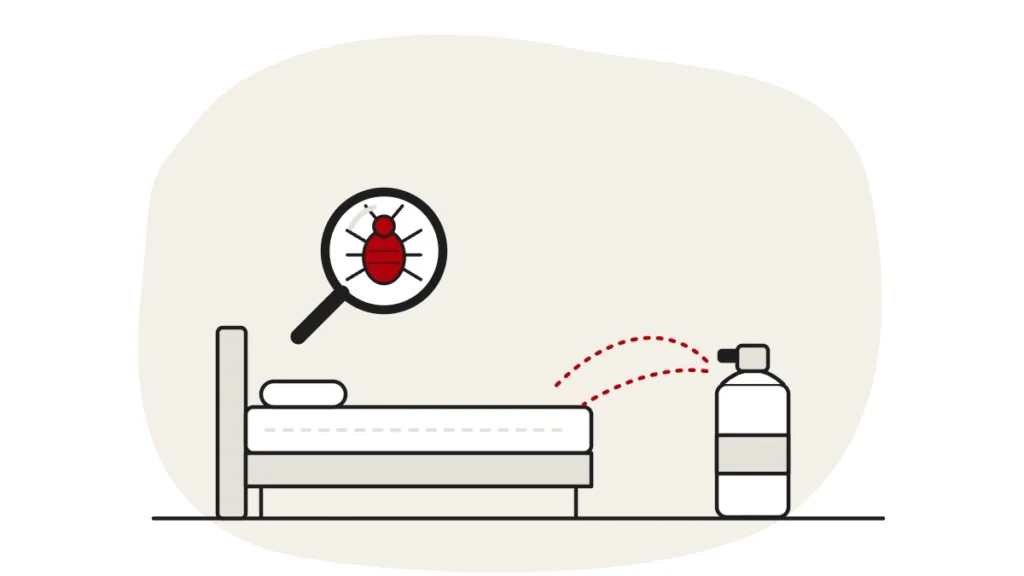
Not reliably. The Raid sprays sold in UK supermarkets are made for crawling insects such as ants, cockroaches and spiders, and their labels don’t list bed bugs. A direct hit might kill a bug you can see, but many bed bugs resist this type of insecticide, and spray can’t reach the hidden bugs and eggs.
Reviewed by James Rhoades, Owner, ThermoPest · Last reviewed 16 October 2026
If you’ve just found a bed bug, grabbing the can of Raid from under the sink is an understandable first move. Below is what’s actually in the UK Raid spray most people have at home, what household sprays can and can’t do against bed bugs, how to use it safely if you already have, and why a spray on its own won’t end an infestation.
What is Raid, and is it made for bed bugs?
Raid is a long-established household insecticide brand. The range you’ll usually find in UK supermarkets covers crawling insects and flying insects, rather than bed bugs specifically.
Take Raid Ant & Cockroach Killer, a crawling insect aerosol you’ll find in UK supermarkets. According to the product information on the Sainsbury’s and Morrisons websites:
- Active ingredients: cypermethrin 0.092% and imiprothrin 0.092%. Cypermethrin is a pyrethroid, the same family of insecticides found in many household bug sprays.
- What it’s for: crawling insects, naming ants, cockroaches and spiders. Bed bugs aren’t mentioned.
- How it’s used: sprayed directly onto insects and into the places they hide or travel, such as around cupboards, bins, window and door frames, and cracks and crevices.
- Where not to use it: the Sainsbury’s listing says it’s for indoor use only and shouldn’t be applied to soft furnishings.
Raid products sold in other countries can differ from the UK range, and you may come across them online. If you’ve bought one, read its label carefully: it will say where it can and can’t be applied. Whatever the brand, though, the limits below apply to household sprays in general.
Does regular Raid kill bed bugs on contact?
It might kill a bed bug that’s soaked directly, but it’s far from certain. Pyrethroids work by attacking an insect’s nervous system, and bed bugs in many places have adapted to them.
Pyrethroid resistance in bed bugs has been found in many parts of the world. There are three main ways bed bugs survive insecticides:
- A thicker outer shell that slows the insecticide getting in.
- Detox enzymes that break the chemical down before it does harm.
- Changes in the nerve target (known as kdr) that make the insecticide less effective when it does reach it.
The NHS also notes that bed bugs may be resistant to some insecticides. So even a direct hit can leave a bug walking away. You won’t know in advance whether the bed bugs in your home are resistant, and the ones you can see are only a small part of what’s there.
Will Raid ant and roach spray kill bed bugs?
This is the spray most people have in the cupboard, and the question we see most. It isn’t labelled for bed bugs, and it’s a pyrethroid-based spray, which is the type many bed bug populations tolerate. It may kill some exposed bugs, but it won’t reach the rest of the infestation.
The bigger problem is where bed bugs live. They spend most of their time packed into mattress seams and piping, bed frame joints, headboards, the inside of divan bases, skirting boards and furniture close to the bed. A spray only works where it lands, and it doesn’t get deep into screw holes, joints and folds of fabric. Our guide on how to check for bed bugs shows the places to look.
There’s another limit: most bed bug sprays intended for householders have limited effect after the spray has dried. So bugs that come out of hiding later, once the surface is dry, are unlikely to be affected.
Does Raid kill bed bug eggs?
Don’t rely on it. Bed bug eggs are tiny, pale and glued into seams and cracks, usually in the same hidden places as the adults. A surface spray is very unlikely to reach most of them, and the UK product information doesn’t claim to affect eggs. Any eggs left behind will hatch, which is why people often get a quiet week after spraying, then new bites.
Our guide on whether permethrin kills bed bugs explains why eggs are hard to reach even with stronger insecticides.
Can I spray Raid on my bed?
We’d advise against it. The Sainsbury’s product information for Raid Ant & Cockroach Killer says it shouldn’t be applied to soft furnishings, and some products shouldn’t be used on beds and seating at all. Professionals treating beds and sofas work on the seams, folds and crevices, and usually won’t spray the surface you sleep or sit on.
Spraying your mattress or pillows means sleeping on insecticide residue, and it still won’t reach the bugs and eggs inside the seams and base. For bedding and clothes, heat does the work. The NHS advises washing affected bedding and clothing on a hot wash (60°C) and tumble drying on a hot setting for at least 30 minutes. For items you can’t wash, it suggests sealing them in a plastic bag and putting them in the freezer for 2 to 3 weeks.
Is Raid safe to use if you’ve already sprayed?
Used as the label says, it’s a legal household product. If you’ve already used it around the bedroom, these points come from the UK product information and the label warnings it lists:
- Ventilate. The product information says to air rooms for 15 minutes after spraying, ventilate treated areas thoroughly and use it only in well-ventilated areas.
- Keep it off people and pets. The label says not to spray onto people or pets, and to keep it out of reach of children.
- Cover fish tanks and cages. It says to remove or cover fish tanks, terrariums and animal cages and turn off aquarium air filters while you spray. The label also warns that it’s very toxic to aquatic life.
- Keep it away from food. Remove or cover food, utensils and food preparation surfaces before spraying.
- Mind the fire risk. It’s an extremely flammable aerosol. Keep it away from heat, sparks and naked flames, and the product information says treated surfaces can be a fire risk until they’re dry.
- Don’t breathe the spray or get it on your skin, and wash your hands afterwards.
If You Have a Cat
Take extra care. The PDSA warns that permethrin, a chemical found in a number of dog flea products and household flea sprays, is safe to use on dogs but extremely poisonous to cats in high doses. Raid Ant & Cockroach Killer contains a different pyrethroid, cypermethrin, so keep cats well away from treated areas until they’re dry and aired, and follow the label. If you think your cat has come into contact with an insecticide, call your vet straight away. The PDSA lists drooling, twitching and seizures among the signs of permethrin poisoning, and advises contacting your vet immediately for an emergency appointment.
If a Person Feels Unwell
If spray gets in your eyes, rinse them with water for several minutes, as the label says. If someone swallows a product, has breathing problems or feels unwell after using it, speak to a pharmacist, your GP or NHS 111, and have the can with you so you can say what’s in it.
Will a Raid fogger or bug bomb kill bed bugs?
No. Foggers and bug bombs fill the air with insecticide that settles on open surfaces, not in the cracks where bed bugs hide. They tend to scatter bugs into other rooms and, in flats, towards neighbouring homes. Bug bombs should not be used to control bed bugs: they’re ineffective and can cause fires. Our guide on whether smoke bombs kill bed bugs covers this in detail.
Why won’t spraying clear a bed bug infestation?
An infestation is a population living in places you can’t see, at every stage from egg to adult. To clear it, a treatment has to reach those hiding places, deal with eggs as well as bugs, and be checked again afterwards. A household spray falls short on each point:
| Question | Household crawling insect spray | Professional treatment |
|---|---|---|
| Labelled for bed bugs? | The UK Raid crawling insect spray isn’t | Professional products and methods are chosen for bed bugs |
| Reaches seams, joints and voids? | Only where it lands | Heat moves through furniture and fabrics; targeted spray goes into harbourages |
| Deals with eggs? | Not reliably | Heat reaches eggs when the room is held at a lethal temperature |
| Affected by resistance? | Yes, pyrethroid resistance is widespread | Heat isn’t affected by insecticide resistance |
| Safe on beds and sofas? | Not for soft furnishings, according to the product information | Applied by trained technicians to suit each surface |
The NHS says there are things you can try yourself, but these are unlikely to get rid of bed bugs completely, and recommends contacting your local council or a pest control service. That isn’t a criticism of Raid. It does the job it’s made for on ants and cockroaches. A bed bug infestation just needs a different approach.
Other household products people try run into the same problems. See our guides on whether Indorex kills bed bugs, whether flea spray kills bed bugs and whether Dettol kills bed bugs.
What kills bed bugs and their eggs?
There’s no single household spray that reliably kills bed bugs and their eggs. That’s why professional treatment usually combines methods rather than relying on one chemical. Heat is the main one we use, because it reaches into seams, joints and cracks where sprays struggle, and resistance doesn’t affect it.
Bed bugs and their eggs die when held above about 50°C for long enough. We heat rooms to 50–60°C and hold that heat until the hardest-to-reach spots stay above 50°C. Rooms don’t heat evenly, so we place temperature monitors in known cold spots and hard-to-reach areas.
ThermoPest’s bed bug heat treatment is heat-led, with targeted spray where it’s needed. Return visits may be needed, and in flats we ask to inspect neighbouring flats too, because bed bugs move between homes. For more on how insecticides fit in, read our guide to chemical treatments for bed bugs.
What should you do instead of spraying?
- Confirm what you’ve found. Look for live bugs, small dark spots and pale shed skins in mattress seams, the bed frame and headboard. Keep a bug in a sealed bag or take a clear photo.
- Wash and dry on hot. Follow the NHS advice above for bedding and clothes. Bag items in the bedroom and carry them straight to the machine.
- Don’t move to the sofa or another room. Bed bugs follow people, and moving spreads them.
- Don’t throw the bed out yet. Carrying furniture through the home can drop bugs along the way. Only get rid of items that can’t be washed or treated.
- Tell your landlord or managing agent if you rent or live in a flat, so neighbouring homes can be checked.
- Get an inspection so you know how far it’s spread before anything is treated. If you’re booking treatment, our preparation guide explains how to get your home ready.
For a wider look at your options, see our guide on how to get rid of bed bugs.
FAQs
Does Raid kill bed bugs on contact?
It may kill a bug that’s soaked directly, but not reliably. Many bed bug populations are resistant to pyrethroids, the type of insecticide in household Raid sprays, and most of the bugs in an infestation are hidden where the spray can’t reach.
Why do bed bugs come back after I spray?
Usually because the spray missed bugs hidden in seams, joints and furniture, eggs hatched after it dried, or the bugs were resistant to it. A quiet spell followed by new bites is a common pattern after spraying.
Is there a Raid bed bug spray in the UK?
The Raid crawling insect spray sold in UK supermarkets lists ants, cockroaches and spiders, not bed bugs. Raid products sold in other countries can differ and sometimes appear online. Whatever you use, follow its label, and remember that no household spray reaches every hiding place.
What spray actually kills bed bugs?
No household spray reliably clears bed bugs on its own. Professional technicians use targeted spray into hiding places as part of a wider treatment, and heat is used because insecticide resistance doesn’t affect it.
Can I sleep in my bed after spraying Raid?
Don’t spray the bed itself. The product information says it shouldn’t be used on soft furnishings. If you’ve sprayed nearby, air the room as the label says, let surfaces dry, and wash bedding on a hot wash before using it.
Sprayed and still getting bitten?
That’s very common, and it isn’t your fault. An inspection will confirm what you’re dealing with and how far it’s spread. ThermoPest is a member of the BPCA and NPTA, and our technicians arrive in unmarked vans.